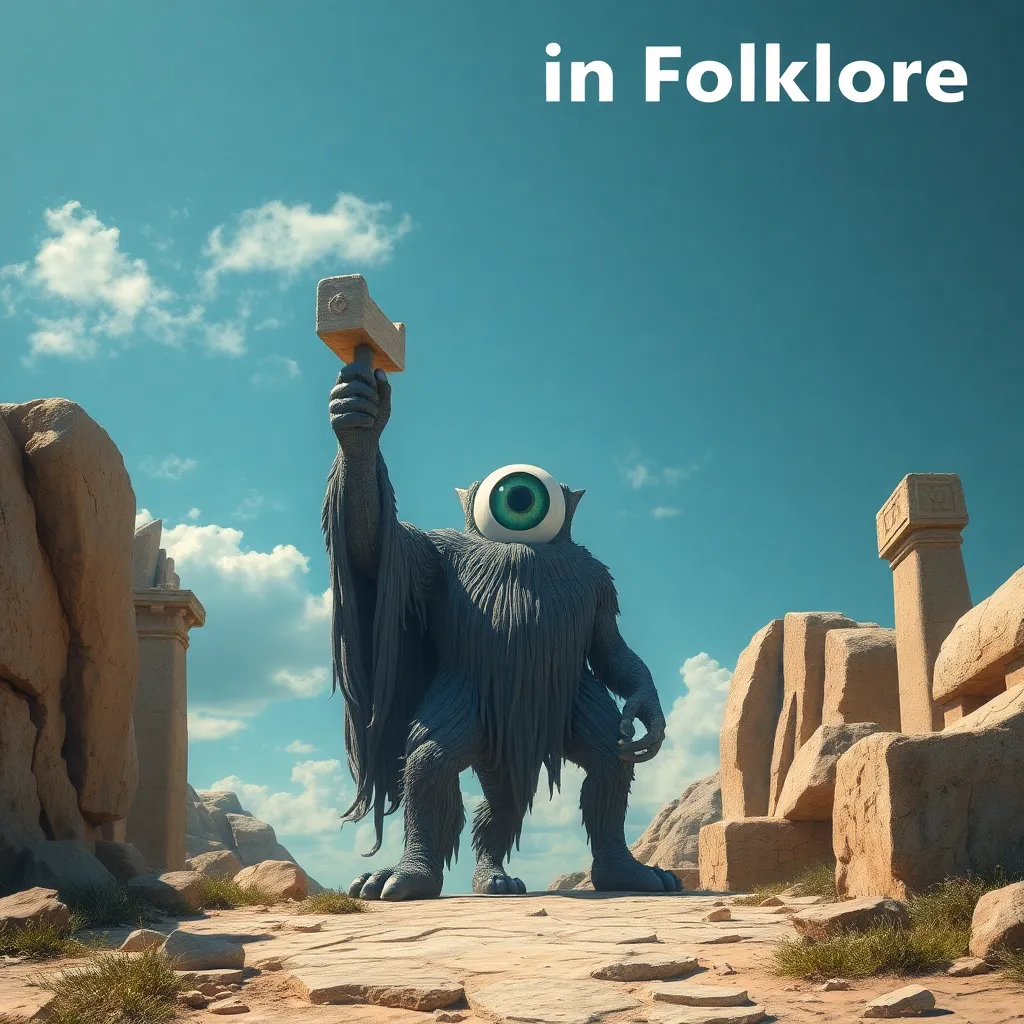
The Cyclops in Folklore: Global Perspectives on the One-Eyed Giant
I. Introduction
The Cyclops, a legendary creature characterized by a single eye in the center of its forehead, has captured the imagination of various cultures throughout history. These one-eyed giants are often depicted as brutish and formidable, yet they embody complex themes that resonate across time and geography.
In this article, we will explore the Cyclops’s portrayal in different cultures, tracing its origins in Greek mythology to its representations in modern literature and media. Understanding the Cyclops in folklore is crucial, as it reveals the fears, values, and beliefs of the societies that created these myths.
II. The Origin of the Cyclops in Greek Mythology
In Greek mythology, Cyclopes are often depicted as gigantic beings with a single eye. They are primarily known from Homer’s “Odyssey,” where the most famous Cyclops, Polyphemus, plays a pivotal role in the hero Odysseus’s journey.
Polyphemus is described as a shepherd living on a remote island, characterized by brute strength and a savage nature. His encounter with Odysseus leads to a tale of cunning and survival, showcasing the classic battle between human intellect and brute force.
The significance of Polyphemus extends beyond mere storytelling; he symbolizes the dangers of isolation and the perils of underestimating one’s adversaries. The legacy of Greek mythology influenced later interpretations of Cyclopean figures in various cultures, establishing a lasting archetype for the one-eyed giant.
III. Cyclopean Creatures in Ancient Cultures
Cyclopean beings are not exclusive to Greek mythology. Other ancient cultures also reference one-eyed creatures:
- Mesopotamian References: Ancient texts from Mesopotamia include mentions of one-eyed beings, often associated with chaos and destruction.
- Roman Mythology: In Roman lore, Cyclopes are portrayed similarly to their Greek counterparts, with an emphasis on their role as craftsmen who forged lightning bolts for Jupiter.
- Comparison with Other Giants: Cyclopes are often compared to giants in other mythologies, such as the Norse Jotnar and the biblical Nephilim, both representing powerful forces of nature.
IV. The Cyclops in Asian Folklore
Across Asia, various cultures have their interpretations of one-eyed beings:
- Indian Mythology: In Hindu texts, Rakshasas are often depicted as one-eyed demons with supernatural powers, embodying chaos and mischief.
- Chinese Folklore: The concept of one-eyed giants appears in some Chinese legends, where they are portrayed as formidable adversaries to heroes.
- Japanese Interpretations: In Japan, mythological beings like the “Ishikuma” are depicted as one-eyed creatures, often associated with protective or destructive powers.
V. The Cyclops in African Legends
African mythology also features one-eyed beings, each with unique cultural significance:
- Exploration of One-Eyed Beings: In various African traditions, one-eyed creatures often symbolize imbalance or the consequences of greed.
- Cultural Significance: Tribes may view Cyclopean figures as cautionary tales, reflecting societal fears and moral lessons.
- Storytelling Traditions: Oral histories often include tales of one-eyed giants, reinforcing communal values and shared experiences.
VI. The Cyclops in Modern Literature and Media
The Cyclops continues to evolve in contemporary storytelling:
- Adaptations: Many modern adaptations of the Cyclops can be found in fantasy literature and films, often portraying them as misunderstood or tragic figures.
- Metaphorical Analysis: The Cyclops serves as a metaphor for isolation, obsession, and the struggle between civilization and barbarism in modern narratives.
- Impact on Pop Culture: The image of the Cyclops has permeated pop culture, influencing everything from video games to animated series, showcasing its enduring appeal.
VII. Symbolism and Themes Associated with the Cyclops
The Cyclops embodies numerous symbolic themes:
- Symbol of Isolation: The single eye of the Cyclops represents a narrow focus, often associated with isolation and a lack of insight.
- Themes of Monstrosity: Cyclopean stories frequently explore the boundary between humanity and monstrosity, questioning what it means to be ‘other.’
- Reflection of Societal Fears: The Cyclops can also symbolize societal fears, such as the fear of the uncontrolled or the consequences of unchecked power.
VIII. Conclusion
The Cyclops holds a significant place in folklore across various cultures, representing a complex interplay of fear, fascination, and moral lessons. From its origins in Greek mythology to its various interpretations worldwide, the Cyclops remains a compelling figure in storytelling.
By studying the Cyclops and its many representations, we gain insights into the cultural psyche of different societies and the universal themes that connect us all. The enduring legacy of the Cyclops in folklore and modern narratives emphasizes the importance of preserving and studying global myths, as they continue to shape our understanding of humanity.