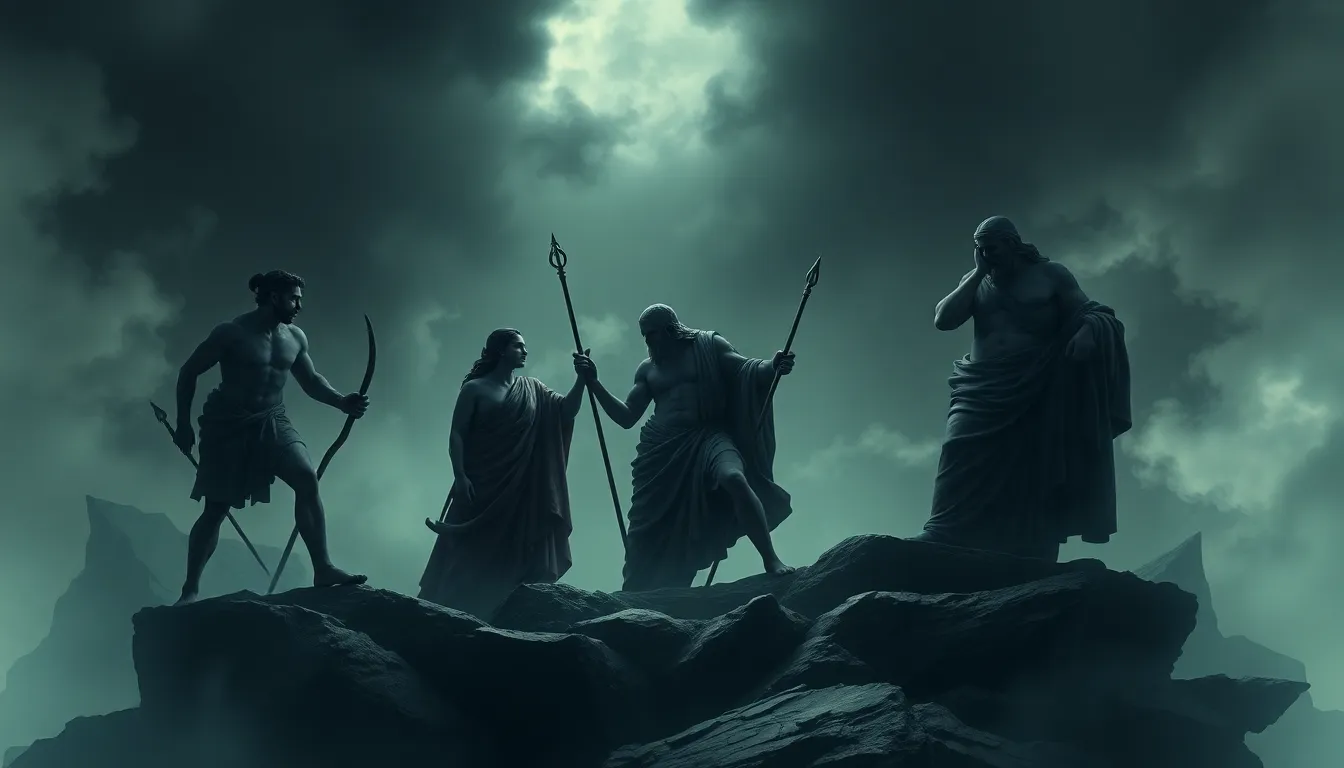
The Dark Side of Hesiod: Exploring His Themes of Conflict and Strife
I. Introduction
Hesiod, one of the earliest and most influential poets of ancient Greece, stands as a foundational figure in the landscape of Greek literature. His works, particularly “Theogony” and “Works and Days,” weave together themes of creation, human labor, and the moral fabric of society. However, beneath the surface of his poetry lies a profound exploration of darker themes such as conflict and strife.
This article aims to delve into these themes, examining how Hesiod portrays the chaotic elements of existence that shape the human experience. In the context of Greek culture and philosophy, understanding these conflicts becomes essential, as they offer insight into the ancient worldview and its implications for humanity.
II. Hesiod’s Background and Historical Context
A. Brief Biography of Hesiod
Hesiod is believed to have lived around the 8th century BCE in Ascra, a small village in Boeotia, Greece. Unlike Homer, whose works focus on the heroic and epic, Hesiod’s poetry reflects the lives of ordinary people and their struggles. His two primary works, “Theogony” and “Works and Days,” provide a unique lens through which we can view the mythology and ethos of ancient Greece.
B. The Socio-Political Landscape of Ancient Greece During Hesiod’s Time
Hesiod’s era was marked by significant social and political upheaval. The transition from a tribal society to a more structured city-state system brought about conflicts over land, resources, and power. This tumultuous backdrop influenced Hesiod’s writing, as he grappled with themes of justice, morality, and the human condition.
C. How Hesiod’s Experiences May Have Influenced His Writings
Hesiod’s personal experiences, including his struggles with land disputes and his encounters with the divine, shaped his worldview. His poetry often reflects a deep sense of injustice and the harsh realities of life, which can be attributed to the socio-political challenges he faced in his lifetime.
III. The Genesis of Conflict: Theogony and the Birth of the Gods
A. Exploration of the Themes of Chaos and Conflict in “Theogony”
In “Theogony,” Hesiod presents a cosmogony that begins with Chaos, the primordial void from which everything emerges. This initial state of chaos is not a peaceful beginning; rather, it sets the stage for conflict and power struggles among the deities. The birth of the gods is fraught with violence, with figures like Cronus overthrowing Uranus, and Zeus battling the Titans.
B. The Role of Violence and Strife in the Genealogy of the Gods
Hesiod’s depiction of divine genealogy showcases a pantheon built on conflict. The gods themselves are born from strife, and their relationships are defined by rivalry and discord. For example:
- Uranus and Gaia’s tumultuous relationship leads to the birth of the Titans.
- Cronus’s fear of being overthrown results in his violent actions against his father and children.
- The Titanomachy, the war between the Titans and Olympians, epitomizes the cyclical nature of conflict among the divine.
C. The Implications of Divine Conflict on Human Existence
The chaos and violence among the gods reflect the inherent conflicts of human life. Hesiod suggests that the struggles of the deities mirror those of mortals, as humans are caught in a web of divine machinations and conflicts that shape their destinies.
IV. The Human Condition: Works and Days
A. Examination of Works and Days as a Reflection of Human Struggle
“Works and Days” serves as a practical guide for living, but it is also steeped in the realities of human struggle. Hesiod addresses the difficulties of farm life, the importance of hard work, and the inevitability of suffering. His emphasis on labor highlights the notion that conflict is an intrinsic part of the human experience.
B. Themes of Labor, Injustice, and the Harsh Realities of Life
Throughout “Works and Days,” Hesiod discusses the injustices faced by the working class, particularly in the context of the agricultural economy. He writes about:
- The importance of justice (Dike) in society.
- The exploitation of the poor by the wealthy.
- The need for perseverance amidst adversity.
C. The Portrayal of Conflict Between Man and Nature, and Man Versus Man
Hesiod also explores the conflict between man and nature, emphasizing the challenges posed by the environment. He portrays nature as both a source of sustenance and a formidable adversary, requiring constant labor and vigilance. Additionally, the conflicts among individuals are evident in his discussions of competition, jealousy, and strife within communities.
V. The Role of Strife: Two Kinds of Strife
A. Analysis of the Dual Nature of Strife as Presented in Hesiod’s Works
Hesiod presents two distinct types of Strife (Eris) in his works: one that is destructive and another that can be constructive. This duality reflects the complexity of human nature and societal dynamics.
B. The Constructive vs. Destructive Aspects of Strife
Destructive Strife leads to chaos, war, and division, while constructive Strife can inspire competition and progress. Hesiod illustrates this through various examples:
- Destructive Strife can lead to discord and suffering.
- Constructive Strife can motivate individuals to strive for excellence and improvement.
C. How These Interpretations Can Be Applied to Human Behavior and Societal Development
The understanding of Strife’s dual nature can be applied to contemporary society. While conflict can lead to negative outcomes, it can also drive innovation, creativity, and social change. Hesiod’s insights into Strife encourage a nuanced understanding of human behavior and societal progress.
VI. Hesiod’s Influence on Later Thinkers
A. Reception of Hesiod’s Themes in Classical Philosophy
Hesiod’s exploration of conflict and human struggle has resonated through the ages, influencing classical philosophers such as Plato and Aristotle. They engaged with Hesiod’s ideas, examining the moral implications of conflict and the nature of justice.
B. Comparisons with Other Ancient Writers and Their Treatment of Conflict
Hesiod’s themes of conflict can be compared with those of other ancient writers, such as Homer, who also grappled with the nature of war and human struggle. However, while Homer often glorified heroism, Hesiod took a more pragmatic approach, focusing on the everyday struggles faced by ordinary people.
C. The Enduring Legacy of Hesiod’s Ideas in Modern Interpretations of Conflict
The legacy of Hesiod’s themes continues to inform modern discussions of conflict, ethics, and the human condition. His insights into the complexities of Strife and the nature of existence remain relevant in contemporary philosophical and social discourse.
VII. The Relevance of Hesiod’s Themes Today
A. How Hesiod’s Exploration of Conflict Resonates in Contemporary Society
In today’s world, the themes of conflict and strife presented by Hesiod are more relevant than ever. From political struggles to environmental challenges, the human experience is marked by conflict at multiple levels.
B. The Application of His Insights into Modern Conflicts and Struggles
Hesiod’s insights can be applied to various contemporary issues, such as:
- Social justice movements seeking to address systemic inequality.
- Environmental activism highlighting the conflict between industrialization and nature.
- The impact of globalization on local cultures and economies.
C. The Importance of Understanding Historical Perspectives on Conflict to Inform Current Discourse
Understanding Hesiod’s perspectives on conflict provides valuable historical context that can inform current discussions and approaches to resolving disputes. His work encourages a reflection on how conflict can shape both individual lives and broader societal trends.
VIII. Conclusion
In conclusion, Hesiod’s exploration of conflict and strife reveals key themes that resonate across time. From the chaotic birth of the gods in “Theogony” to the struggles depicted in “Works and Days,” Hesiod offers profound insights into the darker aspects of human existence.</p