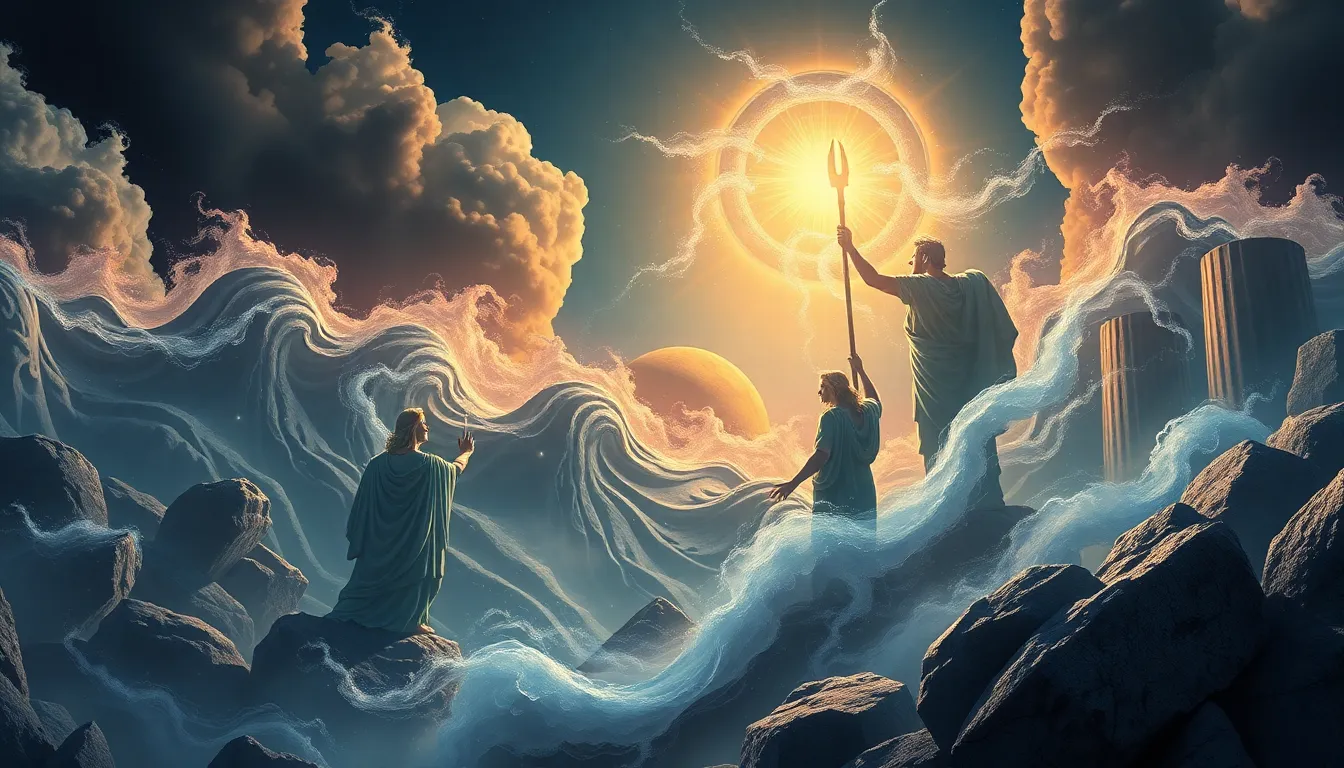
The Divine Influence: How Heroes Shaped Greek Mythology
I. Introduction
Greek mythology is a rich tapestry of stories that have shaped Western culture and thought. It encompasses a vast array of gods, goddesses, and mythical creatures, weaving together the beliefs, values, and experiences of ancient Greek society. Among the most compelling figures in these narratives are the heroes, whose adventures and challenges provide insight into the human condition and the ancient Greek worldview.
The role of heroes in Greek mythology is significant, as they often serve as intermediaries between the divine and the mortal. These figures exemplify virtues such as bravery, strength, and intelligence, while also grappling with their flaws and destinies. This article explores the essential characteristics of Greek heroes, their stories, and their enduring impact on both ancient and contemporary culture.
II. Definition of Heroes in Greek Mythology
A. Characteristics of Greek heroes
Greek heroes are often defined by a set of common traits:
- Extraordinary Abilities: Many heroes possess superhuman strength, courage, or intelligence.
- Divine Heritage: A significant number of heroes are born from the union of a god and a mortal.
- Flawed Nature: Despite their strengths, heroes often have significant flaws, leading to their downfalls.
- Quest or Journey: Heroes typically embark on significant quests that test their abilities and resolve.
B. Distinction between gods and heroes
While heroes can exhibit divine characteristics, they differ from gods in crucial ways:
- Heroes are mortal and subject to death, while gods are immortal.
- Gods reside on Mount Olympus, while heroes often interact with the mortal world.
- Heroes may receive divine assistance but ultimately must rely on their own skills and choices.
C. The concept of heroism in ancient Greek culture
In ancient Greek culture, heroism was a complex concept that involved both achieving great deeds and embodying the ethics of the time. Heroes were celebrated not only for their physical abilities but also for their moral integrity and their contributions to society. The ancient Greeks viewed heroes as idealized figures that reflected their aspirations and values.
III. Major Heroes and Their Stories
A. Heracles: The epitome of strength and perseverance
Heracles, known for his incredible strength and heroic feats, is perhaps the most famous of Greek heroes. Born to Zeus and Alcmena, he faced numerous challenges throughout his life, including the infamous Twelve Labors imposed upon him as penance for killing his wife and children in a fit of madness sent by Hera.
The Twelve Labors include:
- Slaying the Nemean Lion
- Slaying the nine-headed Lernaean Hydra
- Capturing the Golden Hind of Artemis
- Capturing the Erymanthian Boar
- Cleaning the Augean Stables
- Slaying the Stymphalian Birds
- Capturing the Cretan Bull
- Stealing the Mares of Diomedes
- Obtaining the Belt of Hippolyta
- Obtaining the Cattle of Geryon
- Fetching the Apples of the Hesperides
- Capturing Cerberus, the three-headed dog
Heracles’ story highlights themes of redemption, strength, and the struggle against one’s fate.
B. Achilles: The tragic hero of the Trojan War
Achilles is another quintessential Greek hero, best known for his role in the Trojan War as depicted in Homer’s “Iliad.” A demigod, the son of Peleus and the sea nymph Thetis, Achilles was invulnerable except for his heel. His swift and fierce nature made him a formidable warrior.
The narrative of Achilles is a poignant tale of glory and tragedy, encapsulated in his conflict with Agamemnon, the Greek leader, and his deep bond with Patroclus, whose death spurred Achilles into a rage that led to significant consequences for both the Trojans and the Greeks. Achilles’ story reflects the themes of honor, mortality, and the quest for fame.
C. Odysseus: The cunning strategist and adventurer
Odysseus, the hero of Homer’s “Odyssey,” is celebrated for his intellect and resourcefulness. King of Ithaca, he is best known for his ten-year journey home after the fall of Troy, which involved numerous trials, including encounters with the Cyclops, Circe, and the Sirens.
His cleverness and adaptability are highlighted in his use of the Trojan Horse strategy, which led to the Greeks’ victory in Troy. Odysseus embodies the ideal of cleverness over brute strength, illustrating the value of intellect and strategic thinking in overcoming challenges.
IV. The Intersection of Divine and Heroic
A. Heroes as demi-gods: The lineage of divine parentage
Many Greek heroes are considered demi-gods, having one divine parent and one mortal parent. This lineage grants them extraordinary abilities and often places them in the midst of divine conflicts. For instance, Heracles is the son of Zeus, and Achilles is the son of Thetis, a sea goddess.
B. The influence of gods on heroes’ fates and actions
Gods frequently intervene in the lives of heroes, influencing their decisions and fates. For example:
- Hera’s jealousy toward Heracles leads him to face numerous challenges.
- Athena aids Odysseus in his journey home, providing guidance and support.
- Achilles’ fate is foretold by Thetis, who seeks to protect him from the war’s consequences.
C. Key myths highlighting divine intervention
Several myths illustrate the profound impact of gods on heroic narratives. For example, the story of the Trojan War itself is heavily influenced by the whims of gods like Aphrodite, Hera, and Athena, who each support different factions, showcasing the interplay of divine power and human ambition.
V. Cultural Impact of Heroes on Greek Society
A. Heroes as role models and moral exemplars
Greek heroes served as role models for virtue and bravery. Their stories were used to teach values such as loyalty, honor, and resilience. The lessons learned from their adventures were integral to the moral education of ancient Greeks.
B. The reflection of societal values in heroic tales
Heroic narratives often reflect the values and ideals of ancient Greek society. The emphasis on honor, courage, and the pursuit of glory in battle highlights the importance of these traits in a culture that valued military prowess and heroism.
C. Festivals and cults dedicated to heroes
Heroes were celebrated through various festivals and cults, such as the Heracleia, dedicated to Heracles, and the Panathenaea, which honored Athena and featured contests that often included heroic themes. These events reinforced the cultural significance of heroes in public life and worship.
VI. The Evolution of Heroes in Mythology
A. Changes in heroic narratives over time
Over the centuries, the portrayal of heroes evolved. Earlier epics emphasized their physical prowess, while later interpretations began to focus on psychological depth and moral dilemmas, reflecting changing societal values and philosophical thought.
B. Influence of historical events on hero myths
Historical events, particularly wars and political changes, influenced the depiction of heroes. For instance, the rise of city-states and democracy in ancient Greece led to a re-evaluation of heroism, with more emphasis on civic duty and personal sacrifice for the greater good.
C. Transition from ancient to classical representations
The transition from ancient to classical representations of heroes saw a