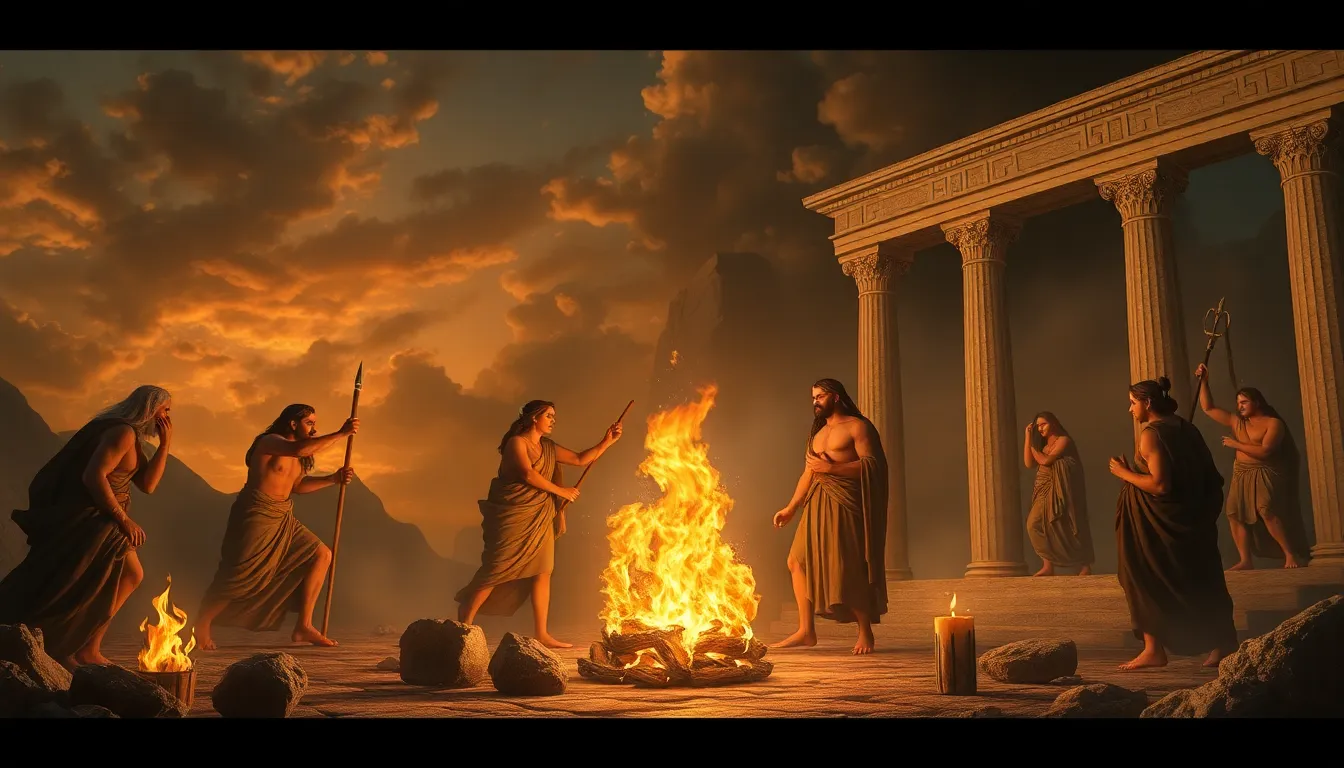
The Divine Sacrifices in the Myths of the Olympians
I. Introduction to Olympian Myths
Greek mythology is a rich tapestry of stories that detail the lives, adventures, and moral lessons of gods and heroes. At the center of these narratives is the Olympian pantheon, a group of twelve principal deities who resided on Mount Olympus. These gods, each with their own distinct personalities and realms of influence, played crucial roles in shaping the myths that have persisted through the ages.
One of the most significant themes in these myths is the concept of sacrifice. Sacrifice, in various forms, serves as a pivotal element in the interactions between gods and mortals, often driving the plots of these ancient stories. This article explores the divine sacrifices made by the Olympians, highlighting their importance in the broader context of Greek mythology.
II. The Concept of Sacrifice in Ancient Greek Culture
In ancient Greek culture, sacrifice was a fundamental aspect of religious practice and social customs. It symbolized a range of meanings, from devotion and gratitude to atonement and communion with the divine.
A. Definition of sacrifice in religious and cultural contexts
Sacrifice can be defined as the act of offering something valuable to a deity as a gesture of respect, worship, or supplication. This could include:
- Animal sacrifices, such as sheep, goats, or oxen.
- Cereal offerings, which often included grain and bread.
- Libations of wine or oil poured out in honor of the gods.
B. Types of sacrifices: offerings to gods and self-sacrifice
There are two primary types of sacrifices in Greek mythology:
- Offerings to gods: These were made to gain favor or appease the deities, often performed during religious festivals.
- Self-sacrifice: Individuals, particularly heroes, often made personal sacrifices for the greater good, showcasing their loyalty, love, or moral integrity.
C. The role of sacrifice in maintaining cosmic order and favor from deities
Sacrifice was believed to be essential in maintaining cosmic balance and harmony. By offering sacrifices, mortals sought to ensure the goodwill of the gods, which was crucial for prosperity, fertility, and protection from calamities. The delicate interplay of sacrifice and divine favor illustrates the interconnectedness of human existence and the divine.
III. Prominent Instances of Sacrifice Among the Olympians
A. Zeus and the Titan Prometheus
Among the most notable narratives of sacrifice in Greek mythology is the story of Zeus and Prometheus, a Titan who defied the gods for humanity’s sake.
1. The act of stealing fire for humanity
Prometheus, known for his intelligence and cunning, stole fire from the gods and gifted it to humanity, enabling progress and civilization. This act of sacrifice was not only a gift but also a rebellion against Zeus, who intended to keep fire away from mortals.
2. Consequences and the theme of suffering for the greater good
As punishment for his transgression, Zeus condemned Prometheus to eternal torment, where he was bound to a rock and had his liver eaten daily by an eagle, only for it to regenerate each night. This myth embodies the theme of suffering for a noble cause, illustrating the profound sacrifices made by those who seek to uplift others.
B. Demeter and the Abduction of Persephone
Another poignant example of sacrifice is found in the myth of Demeter and her daughter Persephone.
1. The sacrifice of her happiness for the cycle of seasons
When Hades abducted Persephone to be his wife in the Underworld, Demeter, the goddess of agriculture, was plunged into despair. In her grief, she withdrew her blessings from the earth, leading to famine and suffering among humanity.
2. Impact on humanity and the earth’s fertility
Demeter’s sacrifice of her happiness for the sake of her daughter ultimately resulted in the establishment of the seasons. After much negotiation, it was agreed that Persephone would spend part of the year with Hades and part with Demeter, symbolizing the cycle of life and death and the importance of familial bonds.
IV. The Tragic Sacrifices of the Olympian Heroes
A. Heracles and the Twelve Labors
Heracles, one of the most celebrated heroes in Greek mythology, is renowned for his incredible feats and sacrifices.
1. Overview of his sacrifices and trials
As punishment for killing his wife and children in a fit of madness sent by Hera, Heracles was tasked with completing twelve seemingly impossible labors. These included slaying the Nemean Lion, capturing the Golden Hind of Artemis, and retrieving the apples of the Hesperides.
2. The duality of heroism and suffering
Heracles’ journey represents the duality of heroism and suffering, as he faced immense physical and emotional challenges. Each labor not only tested his strength but also required him to confront his inner demons, ultimately leading to his redemption.
B. Orpheus and the Descent to the Underworld
The story of Orpheus is another powerful example of sacrifice, particularly in the context of love and loss.
1. The sacrifice of love for the sake of his beloved Eurydice
Orpheus, a gifted musician, descended into the Underworld to retrieve his wife, Eurydice, who had died from a snake bite. His love for her drove him to confront the dangers of the Underworld, where he charmed Hades and Persephone with his music.
2. Themes of loss, hope, and the consequences of divine intervention
Despite his pleas and music, Orpheus was given one condition: he must not look back at Eurydice until they reached the surface. In a moment of doubt, he turned to look at her, causing her to vanish forever. This tragic outcome highlights the themes of loss, the fragility of hope, and the consequences of defying divine orders.
V. The Role of Female Olympians in Sacrificial Myths
A. Athena and the Defense of Athens
Athena, the goddess of wisdom and warfare, is a prominent figure in sacrificial myths, particularly regarding her role in protecting the city of Athens.
1. The sacrifices made for wisdom and protection
Athena’s birth itself was a form of sacrifice; she emerged fully grown from Zeus’s forehead after he swallowed her pregnant mother, Metis. This act symbolizes the dual nature of wisdom and strength, where sacrifice is necessary for the greater good of civilization.
2. Exploring the balance between power and sacrifice
Throughout her myths, Athena often sacrifices her own desires for the welfare of Athens, advising heroes like Odysseus and Perseus in their quests, showcasing the balance of power and responsibility.
B. Artemis and the Sacrifice of Iphigenia
Artemis, the goddess of the hunt, also embodies themes of sacrifice, particularly in the tragic tale of Iphigenia.
1. The dynamics of familial loyalty and divine will
In the myth, Agamemnon, the leader of the Greek forces, offended Artemis and was required to sacrifice his daughter, Iphigenia, to appease her and ensure safe passage to Troy. This heartbreaking decision highlights the conflict between familial loyalty and the demands of the divine.
2. Consequences of individual sacrifice for the greater good
In some versions of the myth, Iphigenia is saved by Artemis, who replaces her with a deer at the altar. However, the underlying theme remains: the individual sacrifices made for the greater good often come with profound emotional costs.
VI. The Interplay of Fate and Free Will in Divine Sacrifices
A. The impact of fate on the Olympian characters
Fate plays a crucial role in Greek mythology, often determining the outcomes of characters’ lives. The Fates, three goddesses, weave the destinies of both mortals and gods, illustrating the concept of predestined paths.
B. Instances where free will leads to sacrificial decisions
Despite the influence of fate, many characters exercise free will, making choices that lead to significant sacrifices. For instance, Heracles willingly undertook his labors to atone for his past, demonstrating the power of personal agency in the face of destiny.
C. The philosophical implications of destiny vs. autonomy in myth
The tension between fate and free will in