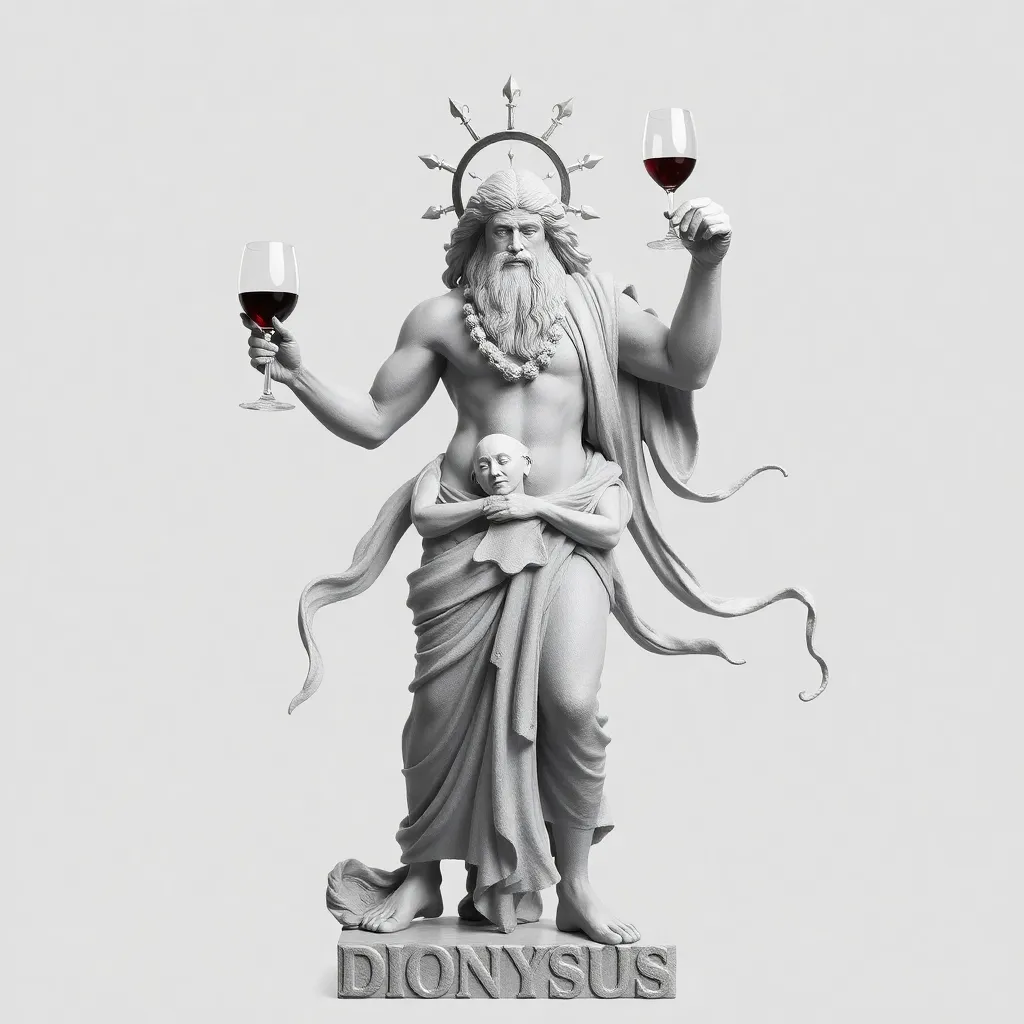
The Dual Nature of Dionysus: God of Wine and Madness
I. Introduction
Dionysus, one of the most intriguing figures in Greek mythology, embodies the duality of human nature through his roles as the God of Wine and the God of Madness. His character is a blend of joy and chaos, representing the complexity of pleasure and destruction that defines the human experience. This article aims to explore the multifaceted nature of Dionysus, examining his historical context, symbolism, and lasting impact on culture and society.
II. Historical Context of Dionysus
The worship of Dionysus has ancient origins, tracing back to the earliest agrarian societies in Greece. Initially celebrated as a fertility deity, his character evolved over time, merging with various local gods and customs.
A. Origins and evolution of the Dionysian cult
The Dionysian cult likely began in the rural regions of Greece, where agricultural practices revolved around the cultivation of grapes. As his worship spread, it incorporated ecstatic rituals, music, and dance, signifying the joyous aspects of wine and fertility.
B. The role of Dionysus in ancient Greek society
Dionysus played a crucial role in ancient Greek society, representing the liberating power of nature and the importance of wine in social rituals. Festivals such as the Dionysia were central to cultural life, celebrating both the joys of wine and the more profound aspects of human existence.
C. Influence on literature and art
Dionysus has significantly influenced literature and art throughout history. His stories have inspired countless works, reflecting themes of ecstasy, madness, and the thin line between joy and despair.
III. Dionysus as the God of Wine
As the God of Wine, Dionysus is associated with the pleasures of life, intoxication, and festivity. His influence can be seen in various aspects of ancient Greek culture.
A. Symbolism of wine in ancient Greece
Wine was more than just a beverage; it held deep symbolic meaning in ancient Greek society. It represented:
- Transformation and rebirth
- Joy and communal bonding
- Divine ecstasy and inspiration
B. Rituals and celebrations associated with Dionysus
Rituals dedicated to Dionysus often involved:
- Processions with wine and offerings
- Choral performances and theatrical plays
- Frenzied dances under the influence of wine
C. The concept of ecstasy and liberation through wine
Wine served as a means of achieving ecstasy and liberation, allowing individuals to transcend their daily lives and connect with the divine. Dionysian rituals often emphasized the idea of losing oneself in the experience of intoxication.
IV. Dionysus as the God of Madness
In addition to his association with wine, Dionysus also represents madness, which is intricately linked to creativity and inspiration.
A. Interpretation of madness in the context of Dionysus
Madness in the context of Dionysus can be seen as both a destructive force and a source of artistic inspiration. It represents the darker side of ecstasy, where joy can quickly turn into chaos.
B. The connection between madness, creativity, and inspiration
Many artists and thinkers have explored the relationship between madness and creativity. Dionysus embodies this connection, showing how the boundary between genius and insanity is often blurred.
C. Examples of madness in mythological tales involving Dionysus
Several myths illustrate the theme of madness associated with Dionysus, including:
- The story of King Pentheus, who is driven mad by his refusal to acknowledge Dionysus’ divinity.
- The Maenads, female followers of Dionysus, who succumb to frenzied states, embodying the chaotic aspects of his worship.
- The tale of Lycurgus, who faced dire consequences for opposing Dionysian worship and was ultimately driven mad.
V. The Dichotomy of Pleasure and Destruction
The worship of Dionysus embodies a delicate balance between pleasure and destruction, a theme that resonates throughout his myths and rituals.
A. The balance between joy and chaos in Dionysian worship
Dionysian rituals often teeter on the edge of joy and chaos, reflecting the dual nature of human emotions. While wine brings joy, it can also lead to destructive behaviors when consumed in excess.
B. Consequences of excess and intoxication
The consequences of excess are starkly illustrated in various myths, where characters face dire fates due to their unrestrained indulgence in wine and revelry. This serves as a cautionary tale about the dangers of losing control.
C. The role of Dionysus in tragic narratives
Dionysus often appears in tragic narratives, highlighting the consequences of disregarding his power. The tension between the joyous celebration of life and the inevitable descent into madness creates a rich narrative landscape.
VI. Dionysus in Literature and Art
Dionysus has been a prominent figure in literature and art, reflecting his complex nature and the themes he embodies.
A. Depictions of Dionysus in ancient texts (e.g., Euripides’ “The Bacchae”)
In Euripides’ “The Bacchae,” Dionysus is portrayed as both a liberator and a vengeful deity, illustrating his dual nature through the lens of madness, ecstasy, and destruction.
B. Artistic representations in sculpture and painting
From ancient sculptures to Renaissance paintings, Dionysus has been depicted in various forms, often surrounded by symbols of wine, fertility, and ecstasy. These artistic representations capture the essence of his character.
C. Modern interpretations and adaptations of Dionysian themes
Modern literature, film, and art continue to explore Dionysian themes, reflecting the ongoing relevance of his dual nature in contemporary culture.
VII. The Legacy of Dionysus in Contemporary Culture
Dionysus’ influence extends into contemporary culture, impacting celebrations, psychology, and philosophy.
A. Influence on modern celebrations (e.g., wine festivals, carnivals)
Modern celebrations, such as wine festivals and carnivals, echo the ancient rites dedicated to Dionysus, celebrating the joy of life and the spirit of revelry.
B. The symbolism of Dionysus in psychology and philosophy
Dionysus represents the unconscious forces within us—the drive for pleasure and the acknowledgment of chaos. His duality serves as a lens through which we can explore the complexities of human psychology.
C. Relevance of his dual nature in today’s society
In today’s fast-paced world, the dual nature of Dionysus remains relevant as we navigate the balance between indulgence and responsibility, joy and chaos.
VIII. Conclusion
In conclusion, Dionysus embodies a rich duality that captures the complexities of human experience. As both the God of Wine and the God of Madness, he teaches us about the delicate balance between pleasure and destruction. Understanding this complexity is crucial to appreciating the enduring legacy of Dionysus in culture and society, reminding us that within joy lies the potential for chaos and that in madness, there can also be creativity and inspiration.