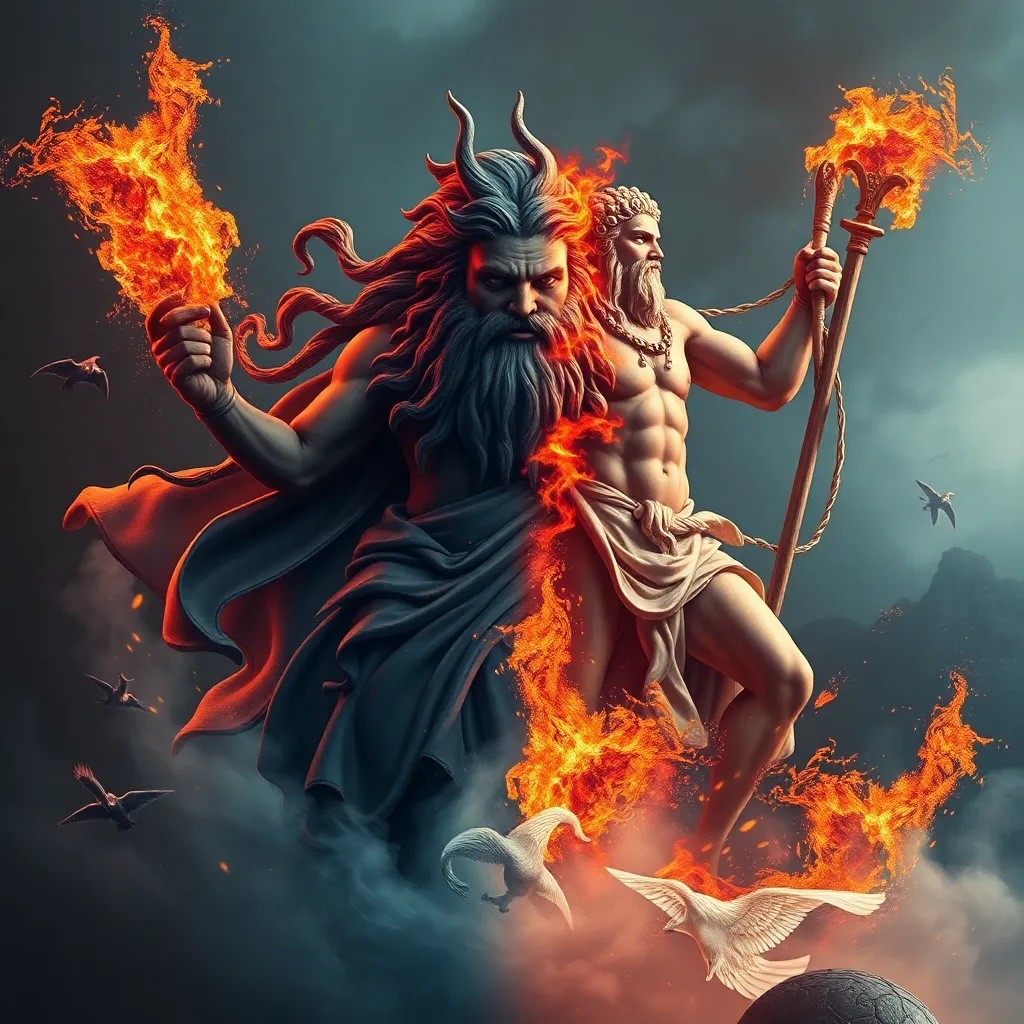
The Duality of Hephaestus: God of Creation and Destruction
I. Introduction
Hephaestus, the Greek god of fire, metalworking, and craftsmanship, occupies a unique position in Greek mythology. Known for his remarkable skills in creation, he is both a creator of magnificent artifacts and a harbinger of destruction through his fiery creations. This duality is essential to understanding his character and significance in the pantheon of Greek gods.
This article aims to explore the complexities of Hephaestus’s character, examining how his role as a god of creation intertwines with the destructive aspects of his craft. Through this exploration, we will uncover the lessons that can be drawn from his dual nature.
II. Hephaestus: The God of Creation
A. Origins and Birth of Hephaestus
Hephaestus was born to Hera, sometimes said to be without a father, while other accounts mention Zeus as his progenitor. According to legend, Hera was so displeased with his appearance—lame and deformed—that she cast him from Olympus. He fell for a day and a night before landing on the island of Lemnos, where he was raised by sea nymphs.
B. Mastery in Craftsmanship and Invention
Hephaestus is celebrated as the master craftsman among the gods. He created beautiful and functional artifacts for both gods and mortals, showcasing his incredible talent. His workshop, located beneath Mount Etna, was a place of endless creativity.
C. Key Creations: Weapons, Armor, and Artifacts
- The Shield of Achilles: A magnificent shield described in Homer’s “Iliad,” symbolizing the glory of Achilles.
- The Golden Fleece: A symbol of kingship and authority, crafted with intricate details.
- The Automata: Mechanical servants that served the gods, showcasing his ingenuity.
- The Palace of the Gods: A grand palace filled with wonders, built for the Olympian deities.
D. Symbolism of Creativity and Artistry in His Work
Hephaestus embodies the spirit of creativity and artistry. His creations are not just tools or weapons; they represent the beauty and complexity of craftsmanship. The delicate balance between form and function in his work symbolizes the artistic endeavor itself.
III. The Role of Hephaestus in the Pantheon
A. Relationship with Other Gods and Goddesses
Hephaestus had a unique position among the gods, often seen as an outcast due to his physical deformities. Nevertheless, he was married to Aphrodite, the goddess of love, which linked him to the more glamorous aspects of Olympus. His relationship with other gods was marked by mutual respect for his skills, despite his outsider status.
B. Hephaestus as a Bridge Between Mortals and Gods
Hephaestus served as a vital connection between mortals and the divine. He crafted weapons and tools for heroes, aiding them in their quests. His creations often symbolized the relationship between human ambition and divine inspiration.
C. His Role in the Trojan War and Its Implications
In the Trojan War, Hephaestus played a significant role by forging weapons for both sides. His involvement in the conflict highlights the duality of his character: while he created for the sake of glory, he also contributed to the chaos of war.
IV. The Destructive Aspects of Hephaestus
A. The Use of Fire and Volcanic Eruptions
Hephaestus’s mastery over fire is a double-edged sword. While fire is a tool for creation, it is also a source of destruction. His association with volcanoes, particularly Mount Etna, serves as a reminder of the volatile nature of his craft.
B. Consequences of His Creations: War and Chaos
Many of Hephaestus’s creations, while beautiful and powerful, were used in warfare. The weapons he forged often led to devastating consequences, reflecting the darker side of his artistry.
C. Myths Highlighting His Darker Side
- The Story of Pandora: Hephaestus created Pandora, the first woman, whose curiosity led to the release of evils into the world.
- His Revenge on Aphrodite: After being betrayed, he crafted a net to capture her and Ares, showcasing the destructive use of his skills.
V. The Tension Between Creation and Destruction
A. Analysis of Key Myths Illustrating This Duality
Myths like the story of Pandora and the Trojan War illustrate the tension between Hephaestus’s creative gifts and the chaos they can unleash. His creations, while intended to aid and beautify, often result in unforeseen consequences.
B. The Moral Implications of His Creations
The duality of Hephaestus raises important moral questions about the nature of creation. Are creators responsible for the use of their creations? This theme resonates not only in mythology but also in contemporary discussions about technology and ethics.
C. How This Duality Reflects Human Nature
The balance of creation and destruction mirrors the human experience. Every act of creativity carries the potential for unintended consequences, reflecting the complexities of our own lives and choices.
VI. Hephaestus in Modern Culture
A. Representation in Literature, Art, and Popular Media
Hephaestus continues to be a significant figure in modern culture. He appears in various forms of literature, art, and films, often symbolizing the struggle between creativity and chaos.
B. The Relevance of His Duality in Contemporary Discussions
In discussions about technology, ethics, and the environment, the duality of Hephaestus is more relevant than ever. As we create new technologies, we must consider their potential for both benefit and harm.
C. Comparisons with Other Mythological Figures
Hephaestus can be compared with other mythological figures, such as Prometheus, who also embodies the tension between creation and consequence. Both figures highlight the complexities of human ambition and the responsibilities that come with creation.
VII. Lessons from Hephaestus: Embracing Duality
A. The Importance of Balance in Creativity
Hephaestus teaches us the importance of balance in our creative endeavors. Recognizing the potential for both creation and destruction can lead to more responsible and ethical choices.
B. Understanding the Consequences of Our Creations
Every act of creation has consequences. Hephaestus reminds us to consider the impact of our work on the world around us, urging us to reflect on our intentions and outcomes.
C. How Hephaestus Serves as a Metaphor for Human Experience
Hephaestus embodies the complexities of the human experience, where creativity and destruction coexist. His story encourages us to embrace our duality and strive for harmony in our pursuits.
VIII. Conclusion
Hephaestus stands as a significant figure in Greek mythology, embodying the duality of creation and destruction. His story invites us to explore the complexities of artistry and the moral implications of our creations. As we reflect on the lessons learned from Hephaestus, we are encouraged to consider the balance necessary in our own creative endeavors and the impact they have on the world.
We invite readers to delve deeper into the rich tapestry of mythology, exploring the dualities that shape our understanding of gods and humanity alike.