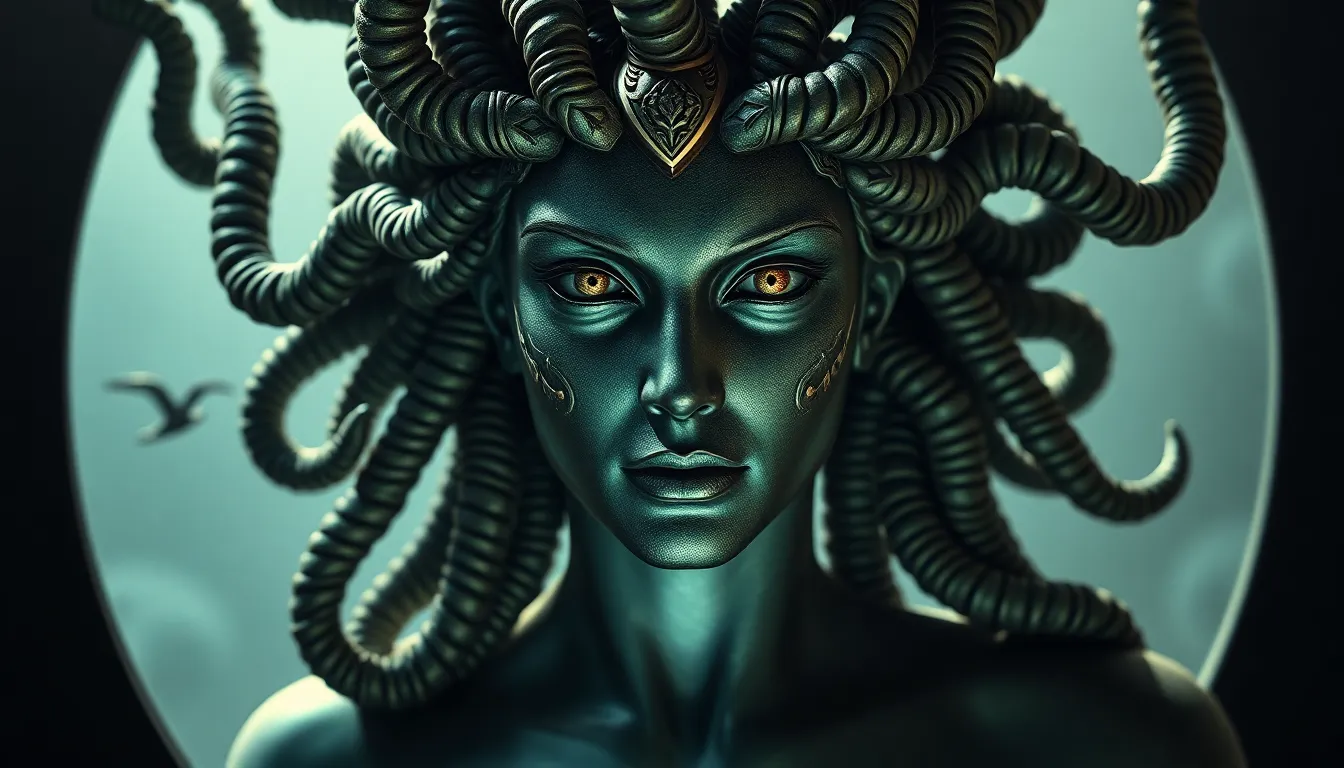
The Enigma of Medusa: A Cursed Beauty and the Quest for Eternal Life
I. Introduction: The Allure of Medusa
Medusa, one of the most fascinating figures in Greek mythology, embodies a complex interplay of beauty and horror. Known primarily for her hair of snakes and her deadly gaze, she represents the duality of attraction and repulsion. Her story is not merely one of monstrosity; it is also a profound exploration of human desires, particularly the quest for eternal life.
The allure of Medusa lies in her tragic transformation from a beautiful maiden to a feared creature. This metamorphosis raises significant questions about the nature of beauty, the consequences of envy, and the eternal human longing for immortality.
II. The Myth of Medusa: Origins and Transformation
Medusa’s origins are steeped in myth and intrigue. Initially, she was a mortal woman, famed for her extraordinary beauty, attracting the admiration of many, including Poseidon, the god of the sea. However, her fate changed dramatically when she was cursed by Athena, the goddess of wisdom and warfare.
A. Medusa’s origins as a mortal woman
In some versions of the myth, Medusa was a priestess in Athena’s temple, sworn to chastity. Her beauty was a source of pride, but it also incited jealousy. Poseidon’s desire for her led to her downfall, as he violated her in Athena’s sanctuary.
B. The curse by Athena: from beauty to beast
In retaliation for the desecration of her temple, Athena cursed Medusa, transforming her into a Gorgon. This curse turned her hair into venomous snakes and rendered her gaze lethal; anyone who looked directly into her eyes would be turned to stone. This transformation can be seen as a punishment for her beauty and a reflection of the themes of power and vulnerability.
C. The symbolism of transformation in mythology
Medusa’s transformation symbolizes the broader themes of change and the loss of identity. In mythology, such transformations often serve as a metaphor for the consequences of desire and the fragility of human existence.
III. Medusa’s Role in Greek Mythology
Medusa occupies a unique position in Greek mythology, not only as a Gorgon but also as a pivotal character in several myths.
A. Medusa as one of the Gorgons
Medusa is one of the three Gorgon sisters, along with Stheno and Euryale. Unlike her immortal sisters, Medusa was mortal, which added to her tragic allure. The Gorgons were often depicted as monstrous beings, representing the dangers of the unknown.
B. Her interactions with other mythological figures (e.g., Perseus)
Medusa’s most famous interaction is with Perseus, the hero tasked with beheading her. Armed with gifts from the gods, including a reflective shield from Athena, Perseus successfully navigated the challenge of confronting Medusa without meeting her gaze directly. This tale highlights themes of heroism, cunning, and the struggle between life and death.
C. The cultural impact of Medusa in ancient Greece
The figure of Medusa influenced not only literature and art but also cultural perceptions of femininity and power. She was often used as a symbol of protection, with her image adorning shields and amulets to ward off evil.
IV. The Quest for Eternal Life: Themes and Motifs
The desire for immortality is a recurring theme across various cultures, and Medusa’s curse embodies this pursuit in a unique way.
A. The desire for immortality in various cultures
Many myths explore the longing for eternal life, often as a source of conflict and tragedy. In Medusa’s case, her transformation serves as a stark reminder that the quest for immortality can lead to a loss of humanity.
B. Medusa’s curse as a metaphor for the eternal struggle
Medusa’s curse can be interpreted as a manifestation of the eternal struggle against time and mortality. Her inability to die, combined with her monstrous form, illustrates the complexities of living in a world where beauty and life are fleeting.
C. The relationship between beauty, power, and mortality
The interplay between beauty and power in Medusa’s story raises questions about societal values. In many ways, her curse reflects the destructive nature of envy and the transient quality of beauty.
V. Artistic Interpretations of Medusa
Throughout history, Medusa has been a subject of fascination in art and literature, serving as a muse for countless artists and writers.
A. Medusa in ancient art and literature
In ancient Greece, Medusa was often depicted in pottery and sculptures, symbolizing both protection and danger. She served as a warning against the perils of unchecked desire.
B. The evolution of her image through the Renaissance and modernity
During the Renaissance, Medusa’s image transformed; she became a symbol of female rage and empowerment. Artists like Caravaggio and Antonio Canova reimagined her, reflecting contemporary views on gender and power dynamics.
C. How art reflects society’s view of beauty and monstrosity
The portrayal of Medusa in art often mirrors societal attitudes towards women, beauty, and monstrosity. Her image has evolved from a terrifying monster to a complex figure representing the struggles of femininity.
VI. Psychological Perspectives on Medusa
Medusa’s story has also garnered attention from psychological perspectives, particularly in relation to gender studies and archetypes.
A. Freudian interpretations of Medusa’s symbolism
Freudian theory often interprets Medusa as a representation of female castration anxiety, embodying the fears and desires associated with femininity and power. Her monstrous form can be seen as a reflection of societal fears about female sexuality.
B. The archetype of the “Feminine Monster” in psychology
Medusa serves as an archetype for the “Feminine Monster,” highlighting the duality of women as both nurturing and destructive. This archetype raises important questions about the societal roles assigned to women and the consequences of their power.
C. The impact of Medusa on contemporary feminist discourse
In contemporary feminist discourse, Medusa has been reclaimed as a symbol of empowerment. She represents the struggle against patriarchal narratives and the reclaiming of female agency in a world that often seeks to demonize powerful women.
VII. Medusa in Popular Culture
Medusa’s legacy continues in modern culture, where her story is reinterpreted in various forms of media.
A. Modern adaptations in film, literature, and media
Films like “Clash of the Titans” and literature such as Rick Riordan’s “Percy Jackson” series have brought Medusa to new audiences, often reinterpreting her story to reflect contemporary themes of empowerment and identity.
B. The enduring legacy of Medusa as a cultural icon
Medusa remains a powerful cultural icon, representing the complexities of femininity and the struggle for autonomy. Her image is frequently used in fashion, art, and popular media, reflecting society’s ongoing fascination with her character.
C. Reinterpretations of her story in contemporary narratives
Modern narratives often seek to humanize Medusa, presenting her as a victim of circumstance rather than merely a monster. These reinterpretations challenge traditional myths and invite audiences to empathize with her plight.
VIII. Conclusion: Medusa’s Enduring Enigma
Medusa’s tale is a rich tapestry of themes surrounding beauty, power, and mortality. Her story reflects the complexities of human existence, illustrating the tensions between desire and consequence.
The ongoing relevance of Medusa in modern society serves as a reminder of the enduring nature of her enigma. As we continue to grapple with issues of identity, power, and gender, Medusa remains a poignant symbol of the human condition.