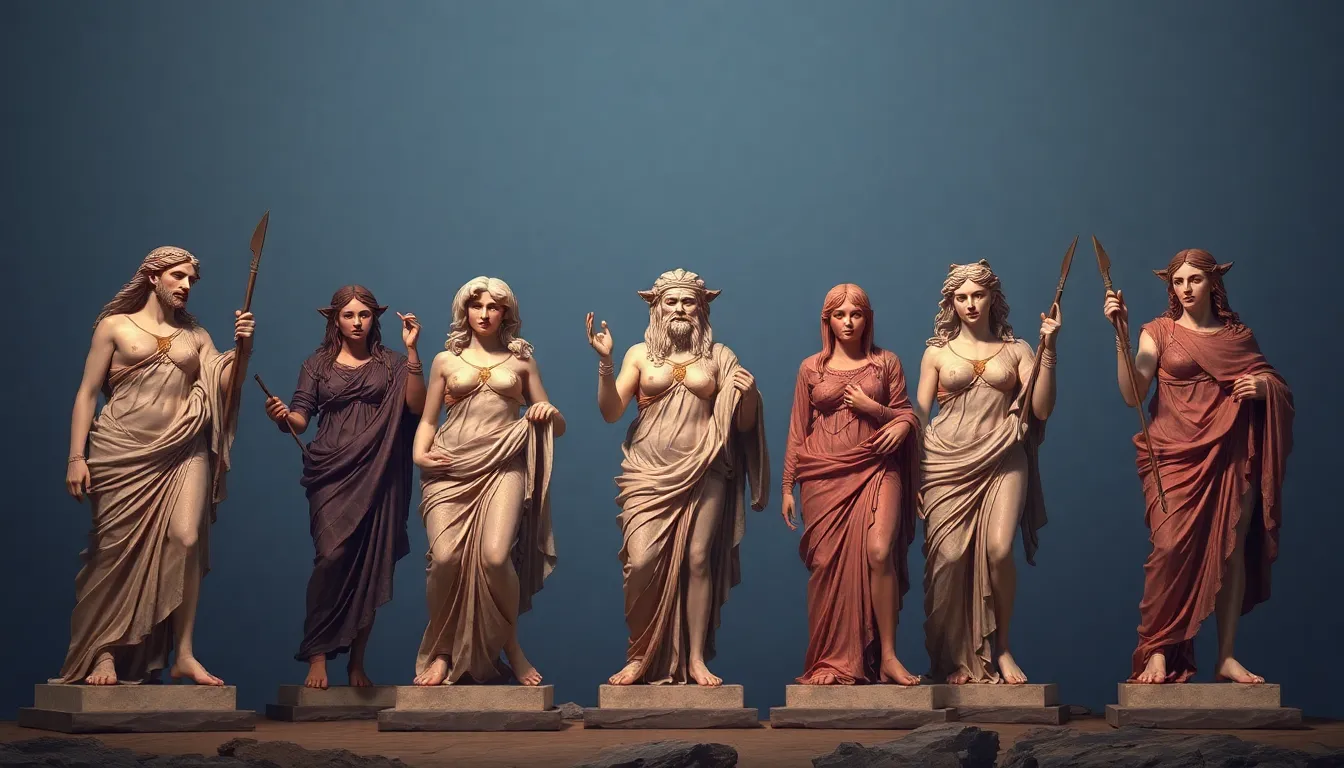
The Fates: A Study of Their Names and Their Meanings
I. Introduction
In Greek mythology, the Fates, known as the Moirai, are the three goddesses who control the destiny of both mortals and gods. Their presence signifies the inescapable nature of fate and the limits of free will. The significance of their names and roles in Greek mythology extends beyond mere storytelling; they embody fundamental truths about life, death, and the inevitability of fate. This article aims to explore the Fates, their names, and their meanings, providing insight into their importance in Greek mythology and their influence on modern culture.
II. Overview of the Fates
The Fates are traditionally depicted as three sisters: Clotho, Lachesis, and Atropos. Each sister has a distinct role in the cycle of life, representing different aspects of destiny:
- Clotho – the spinner, who spins the thread of life.
- Lachesis – the allotter, who measures the length of the thread.
- Atropos – the cutter, who decides when to cut the thread, ending life.
Historically, the Fates have their origins in ancient Greek religion and literature, where they are often portrayed as powerful figures who maintain the balance of life. Their role is not limited to mortals; even gods are subject to their decrees, highlighting the belief that fate is an unchangeable force.
III. The Names of the Fates
The names of the Fates reflect their individual roles in weaving the fabric of life:
A. Introduction to the three Fates: Clotho, Lachesis, and Atropos
Each sister plays a crucial role, and their names encapsulate their responsibilities:
B. Etymology of their names and meanings
- Clotho: Derived from the Greek word “klotho,” meaning “to spin.” She is the one who spins the thread of life.
- Lachesis: From the Greek word “lachesis,” meaning “to allot” or “to assign.” She determines the length of each person’s life.
- Atropos: Meaning “unturnable” or “inevitable” in Greek. She is the one who cuts the thread, signifying the end of life.
IV. Clotho: The Spinner of Life
Clotho is often depicted as a young woman spinning a thread on a spindle. Her role is foundational in the cycle of life, as she initiates each person’s existence by creating their life thread. The symbolism associated with Clotho’s actions represents the beginning of life, potential, and the choices that lie ahead.
In various artistic representations, Clotho is shown with bright colors and youthful features, symbolizing new beginnings. In literature, she is frequently portrayed as nurturing and hopeful, embodying the possibilities of life.
V. Lachesis: The Allotter of Destiny
Lachesis plays a critical role in determining the duration of life. She measures the thread that Clotho has spun, symbolically deciding how long an individual will live. The significance of her name reflects her function as the allotter of destinies, emphasizing the randomness and fairness of life’s distribution.
In mythological texts, Lachesis is often shown as a more mature figure compared to Clotho, representing wisdom and the weight of decisions. Her portrayals highlight her as a contemplative being, weighing the choices and destinies of those she oversees.
VI. Atropos: The Ender of Life
Atropos, the final sister, holds the most somber role as the bringer of death. Her act of cutting the thread signifies the end of life, a point from which there is no return. The connotations of her name, “unturnable,” underline the finality of death and the inevitability of fate.
Atropos is often depicted with scissors or a cutting instrument, symbolizing her role as the decisive force in mortality. Cultural narratives surrounding Atropos emphasize the respect and fear associated with death, portraying her as a necessary counterpart to life.
VII. The Interconnectedness of the Fates
The relationship between Clotho, Lachesis, and Atropos is one of collaboration and balance. Together, they weave the intricate tapestry of life, each sister playing a vital part in the cycle. This interconnectedness reflects the themes of destiny and the collective nature of human experience.
The thematic implications of their interactions highlight the inevitability of fate and the importance of accepting one’s destiny. The Fates influence later literary and artistic interpretations, serving as a metaphor for the human condition, where individuals often grapple with the balance of choice and fate.
VIII. Conclusion
The Fates, Clotho, Lachesis, and Atropos, embody the complex nature of destiny in Greek mythology. Their names and roles carry significant meanings that resonate through time, reminding us of the interconnectedness of life, death, and the choices we make. The enduring legacy of the Fates in modern culture is a testament to their profound influence on literature, art, and philosophy.
Understanding the Fates and their significance enriches our appreciation of mythology and its characters, offering timeless insights into the human experience. As we reflect on their roles, we are reminded of the delicate balance between fate and free will that shapes our lives.