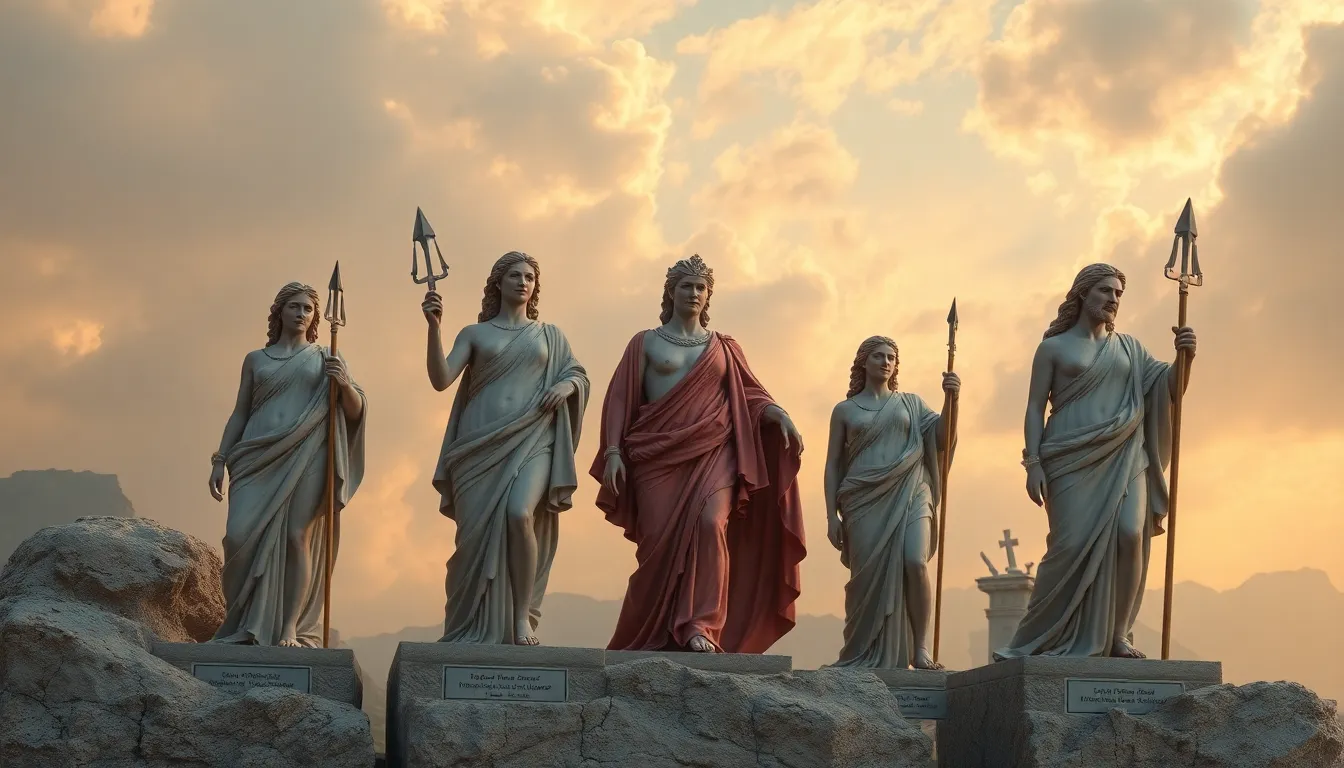
The Fates and Their Role in Shaping Greek Identity
I. Introduction
Greek mythology is a rich tapestry of stories, beliefs, and cultural values that have shaped the identity of the Greek people for centuries. It serves as a lens through which we can explore the ancient world and understand the principles that guided its civilization. Within this complex framework, the Fates, known as the Moirai, occupy a unique position as personifications of destiny and the inevitable nature of life.
The Fates are central figures in Greek mythology who weave the threads of human fate, guiding the destinies of both mortals and gods. This article will explore how the Fates not only personify destiny but also embody the cultural values that shape Greek identity, illustrating their profound impact on literature, art, and society.
II. The Fates: Who Are They?
The Fates consist of three sister deities: Clotho, Lachesis, and Atropos, each representing a different aspect of fate:
- Clotho: The spinner of the thread of life, Clotho is responsible for spinning the yarn that represents an individual’s destiny.
- Lachesis: The allotter, Lachesis measures the length of the thread, determining how long a person will live.
- Atropos: The unturnable, Atropos is the one who cuts the thread, signifying the end of an individual’s life.
These three figures symbolize the inevitability of fate, with each sister playing a critical role in the life cycle of all beings. Together, they encapsulate the belief that while individuals may have free will, their ultimate destinies are preordained.
III. The Concept of Fate in Ancient Greek Culture
The notion of fate in ancient Greece is a complex interplay between destiny and free will. Philosophers such as Plato and Aristotle grappled with the question of whether humans have control over their lives or if they are merely puppets of fate.
In Greek literature, particularly in tragedies, the tension between individual choices and predetermined destiny is a recurring theme. Characters often face dire consequences due to their choices, yet their fates seem sealed from the very beginning. This duality highlights the cultural significance of fate:
- It reflects the Greek acceptance of mortality and the transient nature of life.
- It underscores the importance of making honorable choices even in the face of unavoidable destiny.
IV. The Fates in Greek Mythology
The Fates feature prominently in various myths, often intervening in the lives of both gods and mortals. One notable myth involves the hero Heracles, who learns of his tragic fate and must navigate a series of challenges to fulfill his destiny.
Additionally, the Fates are depicted as having complex relationships with deities such as Zeus, who, despite being the king of the gods, cannot alter the destinies that the Fates have set. This dynamic illustrates their paramount authority in the cosmic order:
- The Fates act as arbiters of destiny, emphasizing their role as ultimate authorities.
- Myths demonstrate how human actions, while significant, ultimately align with a larger cosmic plan.
V. The Fates and Greek Identity
The concepts embodied by the Fates have significantly influenced Greek communal values and identity. The acceptance of fate fosters resilience among Greeks, encouraging them to confront challenges with dignity and honor. This acceptance is reflected in several ways:
- Resilience: The Fates symbolize the ability to endure hardships and accept life’s unpredictability.
- Honor and Duty: The understanding of fate reinforces the importance of living a life of virtue and fulfilling one’s obligations to family and society.
- Legacy: The Fates remind individuals that while life is fleeting, the impact of one’s actions and choices can resonate through generations.
VI. The Fates in Art and Literature
The representation of the Fates has evolved across various forms of ancient art and literature. In sculpture and pottery, they are often depicted as three women, sometimes with visual elements that represent their respective roles. For example:
- Clotho is frequently shown with a spindle.
- Lachesis is depicted with a measuring rod.
- Atropos is illustrated wielding scissors.
Literary portrayals of the Fates can be found in works by ancient poets such as Homer and Hesiod, where they serve as symbols of the inescapable nature of destiny. Their image has continued to evolve in modern adaptations, often appearing in films, literature, and art as symbols of fate’s unyielding nature.
VII. The Legacy of the Fates in Contemporary Greek Society
The legacy of the Fates endures in contemporary Greek culture, where discussions of fate and free will remain relevant. They symbolize continuity and hope, representing the cultural heritage that persists despite modern challenges. The Fates continue to inspire reflections on:
- The balance between destiny and personal agency.
- The importance of resilience in the face of adversity.
- The interconnectedness of past, present, and future in shaping identity.
VIII. Conclusion
In summary, the Fates hold a significant place in Greek identity, embodying the complexities of destiny, free will, and cultural values. Through their roles in mythology, art, and literature, they illustrate the enduring power of myth in shaping cultural narratives.
As we reflect on the Fates and their influence, we recognize their relevance in understanding the Greek experience today—a testament to the resilience, honor, and legacy that define Greek culture throughout history.