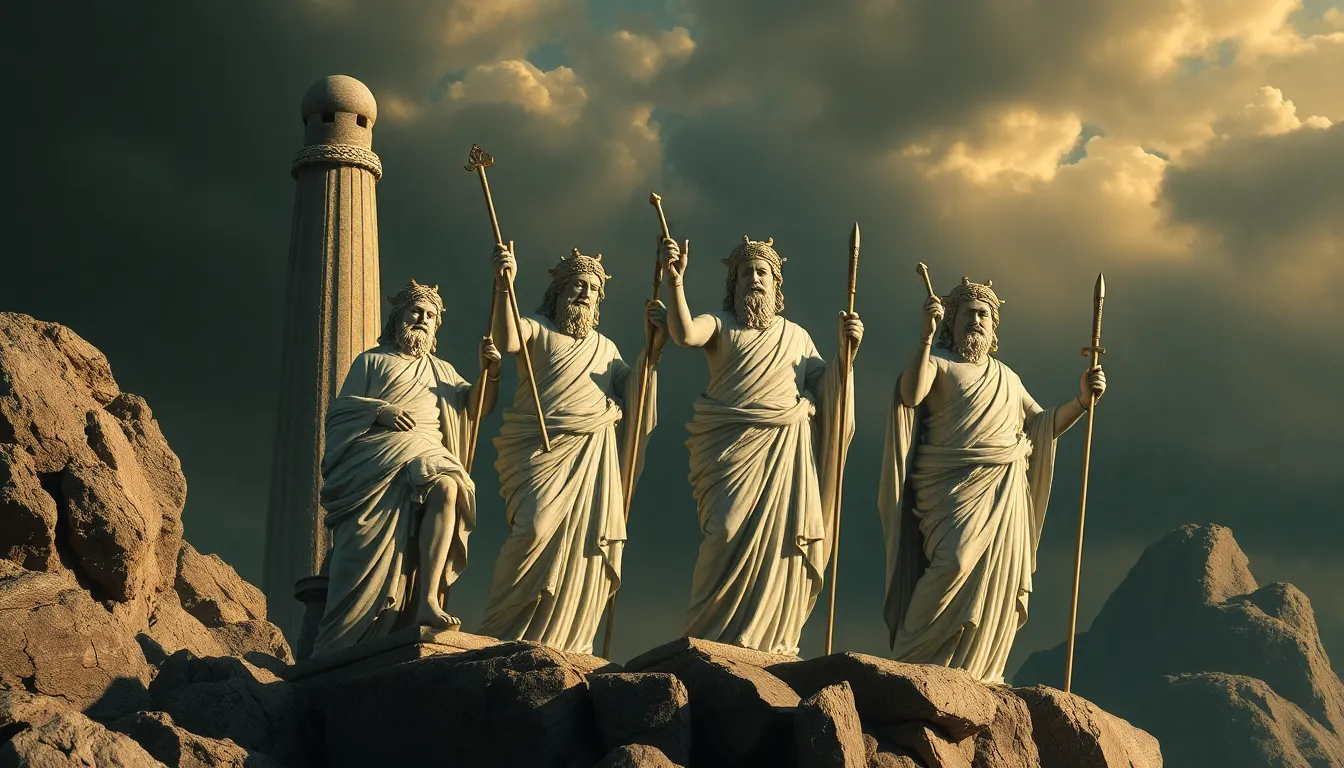
The Fates and Their Role in the Myths of Odysseus
I. Introduction
Greek mythology is a tapestry of rich narratives and characters that have shaped the cultural and literary landscape of Western civilization. Among its many tales, the saga of Odysseus stands out as a profound exploration of heroism, adventure, and the human condition.
Odysseus, the cunning king of Ithaca, embarks on a perilous journey home after the Trojan War, facing trials that test his wit, strength, and resolve. Throughout “The Odyssey,” the concept of fate looms large, particularly through the influence of the Fates, ancient deities who dictate the destinies of both mortals and gods alike.
This article delves into the Fates and their crucial role in the narrative of Odysseus, exploring how they intertwine with themes of destiny and free will.
II. Understanding the Fates
The Fates, known in Greek as the Moirai, are three formidable sisters who represent the inescapable destiny of all beings. Their origin can be traced to the primordial deities, suggesting they hold a fundamental power over the universe.
The three Fates are:
- Clotho: The Spinner, who spins the thread of life, representing the beginning of a person’s fate.
- Lachesis: The Allotter, who measures the length of the thread, determining the duration of life and experiences.
- Atropos: The Inflexible, who cuts the thread, symbolizing death and the inevitable end of life.
These sisters embody the progression of life from birth to death, illustrating the inevitability of fate and the limits of human agency.
III. The Fates in the Context of Odysseus’s Journey
The Fates significantly influence the narrative of “The Odyssey,” subtly guiding events and outcomes while leaving room for human action. Their presence is felt in several key moments:
- Odysseus’s prolonged journey is often attributed to the Fates’ design, as they have woven a complex tapestry of trials that he must navigate.
- The prophecy concerning Odysseus’s eventual return home and the trials he must face highlights the Fates’ role in shaping his destiny.
- Moments of divine intervention, where gods like Athena assist Odysseus, can be seen as both a challenge to and a reinforcement of the Fates’ decisions.
Thus, while the Fates dictate the overarching destiny, the choices of Odysseus and others add layers of complexity to the narrative.
IV. The Concept of Fate vs. Free Will
In the story of Odysseus, the tension between fate and free will emerges as a central theme. Philosophically, this interplay raises questions about the nature of human existence and agency.
Odysseus is faced with numerous decisions that reflect his free will:
- His choice to resist the Sirens and seek out knowledge reflects his agency in the face of temptation.
- His strategic planning during the encounter with the Cyclops showcases his ability to outsmart fate’s challenges.
- In various instances, Odysseus demonstrates resilience and adaptability, suggesting that while fate sets the stage, he has the power to influence the outcome.
This delicate balance between destiny and personal choice invites readers to ponder the extent to which individuals can shape their own lives within the confines of predetermined fate.
V. The Fates and Other Characters in “The Odyssey”
The influence of the Fates extends beyond Odysseus to other key characters in “The Odyssey.” Their destinies are similarly woven into the fabric of fate, highlighting the interconnectedness of all lives:
- Odysseus’s crew faces dire consequences, often seen as a reflection of their own choices versus the Fates’ design.
- Characters like Penelope and Telemachus also navigate their fates, showcasing the broader impact of the Fates on familial relationships.
- The gods, too, are influenced by the Fates, as they must operate within the boundaries set by these powerful sisters, leading to a complex interplay of divine and mortal actions.
This interrelation emphasizes that while individual paths may diverge, they are all subject to the same cosmic order dictated by the Fates.
VI. Symbolic Interpretations of the Fates in Odysseus’s Journey
The thematic significance of the Fates within “The Odyssey” offers a rich ground for literary analysis. The role of fate can be interpreted through various lenses:
- Fate represents the inevitable challenges that heroes must confront, reinforcing the hero’s journey archetype.
- Literary devices such as foreshadowing and allegory are employed to convey the Fates’ influence, often hinting at future events that shape the narrative.
- The recurring motif of threads and weaving symbolizes the interconnected nature of fate and choice, illustrating how lives are intricately linked.
Through these interpretations, the Fates emerge as not just entities of doom but as essential components of storytelling that evoke deeper reflections on existence.
VII. The Relevance of the Fates Today
In modern literature and culture, the concept of fate continues to resonate, drawing parallels to the enduring legacy of the Fates:
- Contemporary stories often grapple with themes of destiny and choice, reflecting the same struggles faced by characters like Odysseus.
- The Fates have become symbols of the complexities of life, representing the unpredictable nature of human experiences.
- Discussions around fate and free will persist in philosophy and psychology, demonstrating the timeless relevance of these themes in understanding human behavior.
This ongoing exploration underscores the lasting impact of Greek mythology on contemporary thought and storytelling.
VIII. Conclusion
The Fates hold a significant place in the myths surrounding Odysseus, serving as a constant reminder of the delicate interplay between fate and free will. Their influence shapes not only the hero’s journey but also the destinies of those around him, illuminating the complexities of existence.
As we reflect on the themes of destiny and personal agency, it becomes evident that the narratives crafted by the Fates are as relevant today as they were in ancient times. Greek mythology, through figures like the Fates, continues to inform our understanding of the human experience, inviting us to ponder our own paths within the tapestry of life.