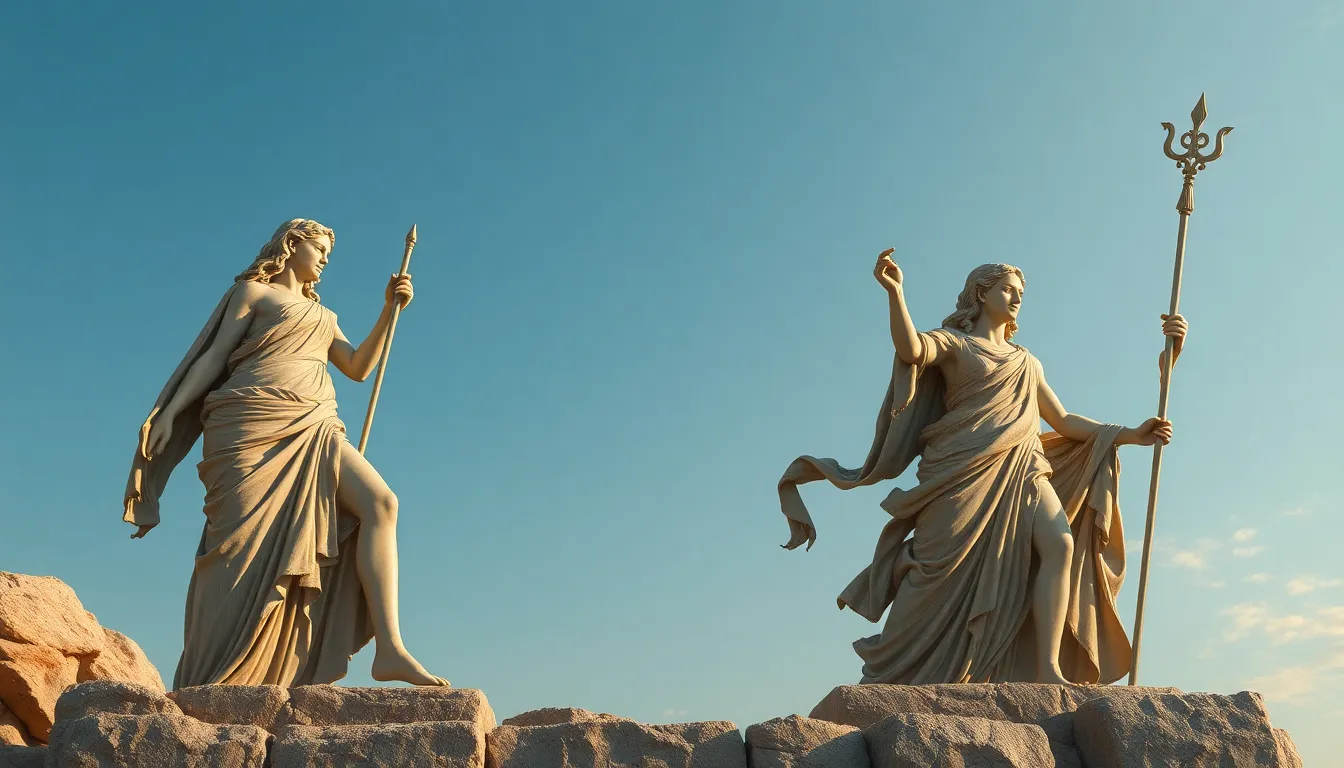
The Fates’ Role in Shaping the Narratives of Greek Epics
I. Introduction to Greek Epics and the Concept of Fate
Greek epics, primarily represented by Homer’s “The Iliad” and “The Odyssey,” are monumental works of ancient literature that explore themes of heroism, honor, and the human condition. These narratives are not only tales of adventure and strife but also profound reflections on fate, destiny, and the forces that shape human lives.
In Greek mythology, the Fates, known as the Moirai, play a crucial role in determining the destinies of both mortals and gods. These three sisters—Clotho, Lachesis, and Atropos—are often depicted as weavers, whose threads symbolize the life paths of individuals. Their influence is pervasive throughout Greek epics, serving as a pivotal force that shapes character destinies and thematic depth.
In this article, we will explore how the Fates manifest in Greek epics, guiding the narratives through their control over life and death, and how they intertwine with themes of free will and moral consequence.
II. Understanding the Fates: Clotho, Lachesis, and Atropos
The Fates consist of three distinct deities, each with a specific role in the weaving of life:
- Clotho: The youngest Fate, Clotho spins the thread of life, representing the beginning of existence.
- Lachesis: The middle sister, Lachesis measures the length of the thread, determining how long an individual’s life will be.
- Atropos: The eldest Fate, Atropos cuts the thread, signifying death and the inevitable end of life.
The symbolism of the Fates extends beyond mere life cycles; they embody the tension between free will and predestination. While characters in Greek epics often act out of personal desire and agency, the omnipresent influence of the Fates suggests that ultimate control lies beyond human hands.
III. The Fates in Homer’s “The Iliad”
In “The Iliad,” the Fates are woven into the fabric of the narrative as they influence the destinies of key characters. The theme of fate versus free will is particularly poignant in the context of heroic actions.
For example, Achilles, the greatest of Greek warriors, grapples with his fate throughout the epic. His choices, driven by pride and anger, lead him to confront the consequences of his actions. The Fates have already decreed his short but glorious life, a fact that constantly haunts him:
- Achilles’ wrath leads to the deaths of many, showcasing the tragic interplay of personal choice and predetermined fate.
- The death of Patroclus serves as a pivotal moment, emphasizing the inexorable pull of fate and the limitations of human agency.
The overarching themes of honor and mortality are also deeply intertwined with the Fates. The acknowledgment of their power compels characters to reflect on their actions and the legacy they will leave behind.
IV. The Fates in Homer’s “The Odyssey”
In “The Odyssey,” Odysseus’ journey home is fraught with trials that illustrate the role of fate in shaping his path. The Fates’ decrees are evident in the obstacles he faces, from the wrath of Poseidon to the temptations of Circe and the Sirens.
The interplay between divine intervention and the Fates’ decrees further complicates Odysseus’ quest:
- While the gods, such as Athena, provide assistance, the ultimate outcomes of his journey are still governed by fate.
- Odysseus’ cleverness and resilience are admirable, yet they do not exempt him from the Fates’ overarching plan.
Ultimately, Odysseus’ return to Ithaca signifies the resolution of his fate, reminding readers that while individuals may strive for control over their lives, destiny often prevails.
V. Fates and Tragedy in “The Theban Plays” by Sophocles
In Sophocles’ “The Theban Plays,” particularly “Oedipus Rex,” the theme of fate takes center stage. Oedipus is a tragic figure whose life is dictated by a prophecy that he cannot escape, no matter how hard he tries.
The implications of fate in “Oedipus Rex” are profound:
- The inevitability of fate leads to tragic consequences for Oedipus and those around him.
- The Fates, as embodiments of destiny, challenge the characters’ understanding of moral responsibility and free will.
Through these narratives, Sophocles explores deep moral and philosophical inquiries, urging audiences to contemplate the nature of human existence and the extent of individual agency in the face of predetermined fate.
VI. The Fates in Hesiod’s “Theogony” and “Works and Days”
In Hesiod’s “Theogony” and “Works and Days,” the Fates are depicted in the context of creation and the cosmic order. They symbolize the inevitability of fate and the structure of the universe:
- In “Theogony,” the Fates are part of the primordial forces that establish order among the chaos of creation.
- “Works and Days” addresses the relationship between human labor and fate, emphasizing that hard work can influence outcomes, yet fate remains a powerful force.
The Fates also serve as arbiters of justice, ensuring that moral order prevails, which reinforces the idea that while humans may exert effort, ultimate outcomes are determined by the Fates.
VII. Comparative Analysis: Fates Across Different Greek Epics
Across various Greek epics, the portrayal of the Fates exhibits both similarities and variations:
- Similarities: In all texts, the Fates represent an inescapable force that governs the lives of both mortals and gods, emphasizing the theme of inevitability.
- Variations: Different authors interpret the Fates’ influence in nuanced ways, highlighting aspects such as the struggle for free will or the moral implications of fate.
This comparative analysis underscores the richness of Greek mythology, revealing how the Fates serve as a foundational element in the narratives that define ancient literature.
VIII. Conclusion
The Fates hold a significant place in Greek mythology and literature, acting as the ultimate determinants of destiny. Their presence in Greek epics enhances the narratives, deepening the exploration of themes such as honor, mortality, and the struggle between free will and predetermined fate. Through the Fates, ancient authors invite readers to reflect on the complexity of human existence and the forces that shape our lives.