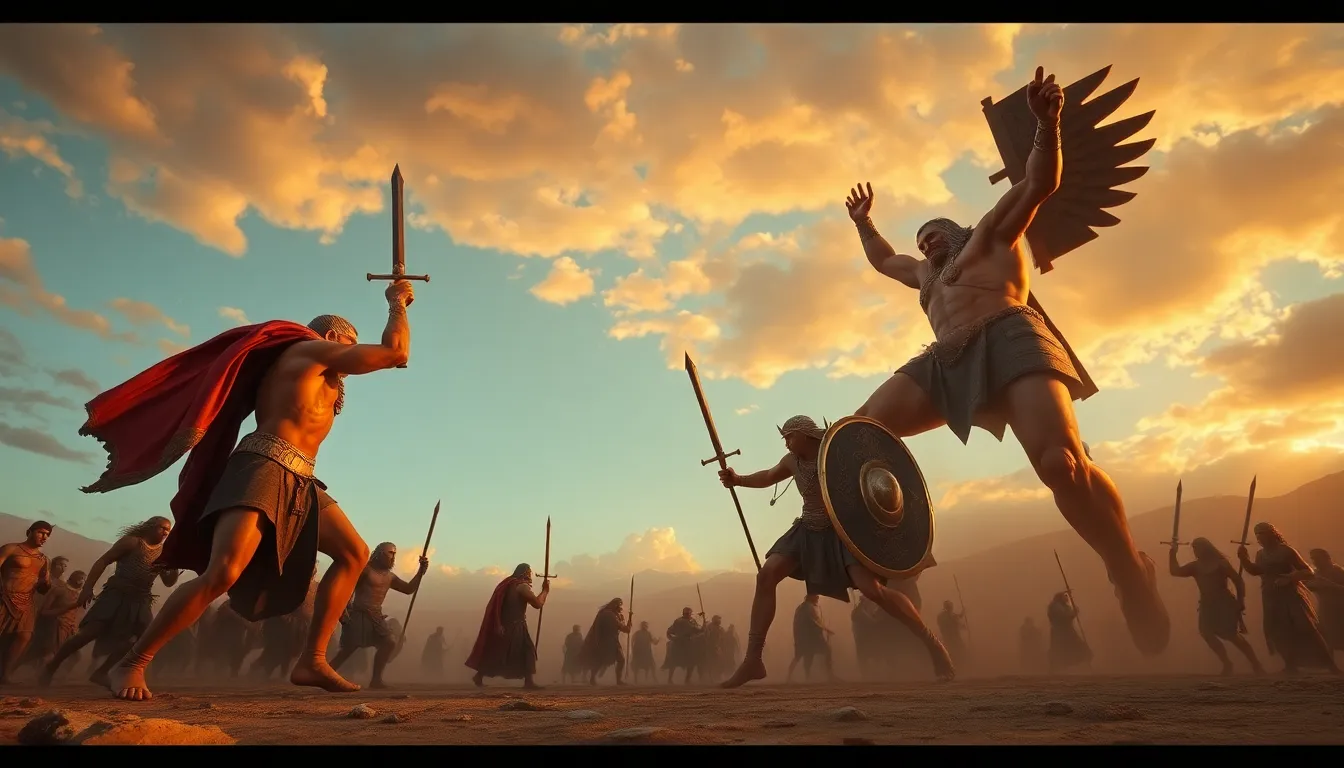
The Gigantomachy: A Study of Mythical Warfare and Strategy
I. Introduction to the Gigantomachy
The Gigantomachy, a significant episode in Greek mythology, represents the epic struggle between the Olympian gods and the Giants, who were often considered the offspring of Gaia, the Earth. This mythological battle embodies themes of chaos versus order, good versus evil, and the cyclical nature of conflict in the cosmos.
Key players in this mythological saga include the Titans, who are often associated with primal forces of nature, and the Olympian gods, led by Zeus, who symbolize civilization and order. This article aims to delve into the intricacies of the Gigantomachy, analyzing the themes of warfare and strategy inherent in this colossal conflict.
II. Historical Context of the Gigantomachy
The origins of the Gigantomachy can be traced back to ancient Greek religion, where it was believed to serve as an allegory for the struggle between the old order of Titans and the new order of Olympians. This myth not only played a crucial role in the religious beliefs of ancient Greeks but also found expression in various forms of art and literature.
In art, the Gigantomachy was frequently depicted in pottery and sculpture, serving as a narrative device that illustrated the triumph of the Olympians over chaos. The influence of this myth extends beyond its initial context, impacting later cultural narratives about conflict and morality.
III. The Titans: Forces of Chaos
The Titans, the progenitors of the Giants, are characterized by their immense power and chaotic nature. Some of the most notable Titans include:
- Cronus: The leader of the Titans, known for his role in overthrowing his father, Uranus.
- Oceanus: The Titan of the ocean, representing the vast and unpredictable waters.
- Hyperion: The Titan of light, often associated with heavenly bodies.
The leadership of the Titans during the Gigantomachy was marked by their strategic use of their elemental powers and their ability to harness the chaotic forces of nature. Their rebellion against the Olympians was motivated by a desire to reclaim their lost dominion and to resist the new order that Zeus and his siblings had established.
IV. The Olympian Gods: Champions of Order
The Olympian gods, led by Zeus, represent the forces of order and civilization. This pantheon includes:
- Zeus: The king of the gods, known for his thunderbolts and leadership.
- Hera: The queen of the gods, who plays a vital role in strategy and alliances.
- Athena: The goddess of wisdom, known for her tactical warfare strategies.
During the Gigantomachy, the Olympians employed various strategies to ensure their victory. They formed alliances with other deities and mythical creatures, such as the centaurs and Heracles, who played a crucial role in the battle. Divine intervention was a common theme, with the gods using their unique abilities to turn the tide of battle in their favor.
V. The Role of Fate and Prophecy
Fate and prophecy play a significant role in the Gigantomachy. The ancient Greeks believed that the outcomes of conflicts were often predetermined by the Fates, three sister deities who controlled destiny. Prophecies often influenced the strategies employed by both sides in the battle.
For instance, it was foretold that the Giants could only be defeated with the help of a mortal. This prophecy led the Olympians to seek out Heracles, a demigod whose strength and courage were pivotal in overcoming the Giants. The interplay of fate and free will raises questions about the nature of conflict and the extent to which individuals can shape their destinies.
VI. Symbolism and Themes in the Gigantomachy
The Gigantomachy can be interpreted as a metaphor for the eternal struggle between order and chaos. The Olympians, representing order, sought to establish a harmonious universe, while the Titans and Giants embodied the chaotic forces that threatened stability.
Key themes explored in this myth include:
- Heroism: The valor of Heracles and other heroes highlights the importance of courage in the face of overwhelming odds.
- Sacrifice: Many characters, both gods and mortals, make sacrifices for the greater good.
- Moral Dilemmas: The conflict raises questions about the nature of good and evil, and the ethical implications of warfare.
Through these themes, the Gigantomachy influences the understanding of morality within the context of mythological warfare.
VII. Artistic Representations of the Gigantomachy
The Gigantomachy has been a popular subject in ancient art, providing a rich tapestry of visual representations that capture the essence of this mythological battle. Notable artistic forms include:
- Pottery: Many ancient Greek vases depict scenes from the Gigantomachy, often showcasing the dynamic struggle between the gods and Giants.
- Sculpture: The friezes of temples, such as the Pergamon Altar, feature elaborate reliefs illustrating the battle, emphasizing the tension and drama of the conflict.
- Frescoes: Wall paintings in ancient buildings often captured key moments of the Gigantomachy, highlighting the narrative’s importance in Greek culture.
These artistic representations not only reflect the strategies and narratives of the battle but also demonstrate the cultural significance of the Gigantomachy in the collective memory of ancient Greece. Furthermore, the Gigantomachy influenced subsequent artistic movements, serving as an enduring source of inspiration for artists throughout history.
VIII. Conclusion: Lessons from the Gigantomachy
The legacy of the Gigantomachy continues to resonate in modern culture, offering insights into the nature of conflict and strategic thinking. The myth serves as a reminder of the precarious balance between order and chaos, and the importance of understanding the moral implications of warfare.
In contemporary discussions about conflict, the themes explored in the Gigantomachy remain relevant. The struggle for power, the role of fate, and the ethical dilemmas faced by individuals in the midst of war are timeless issues that persist in modern society.
Ultimately, the Gigantomachy is not just a tale of gods and giants but a profound exploration of the complexities of human nature and the eternal dance between good and evil.