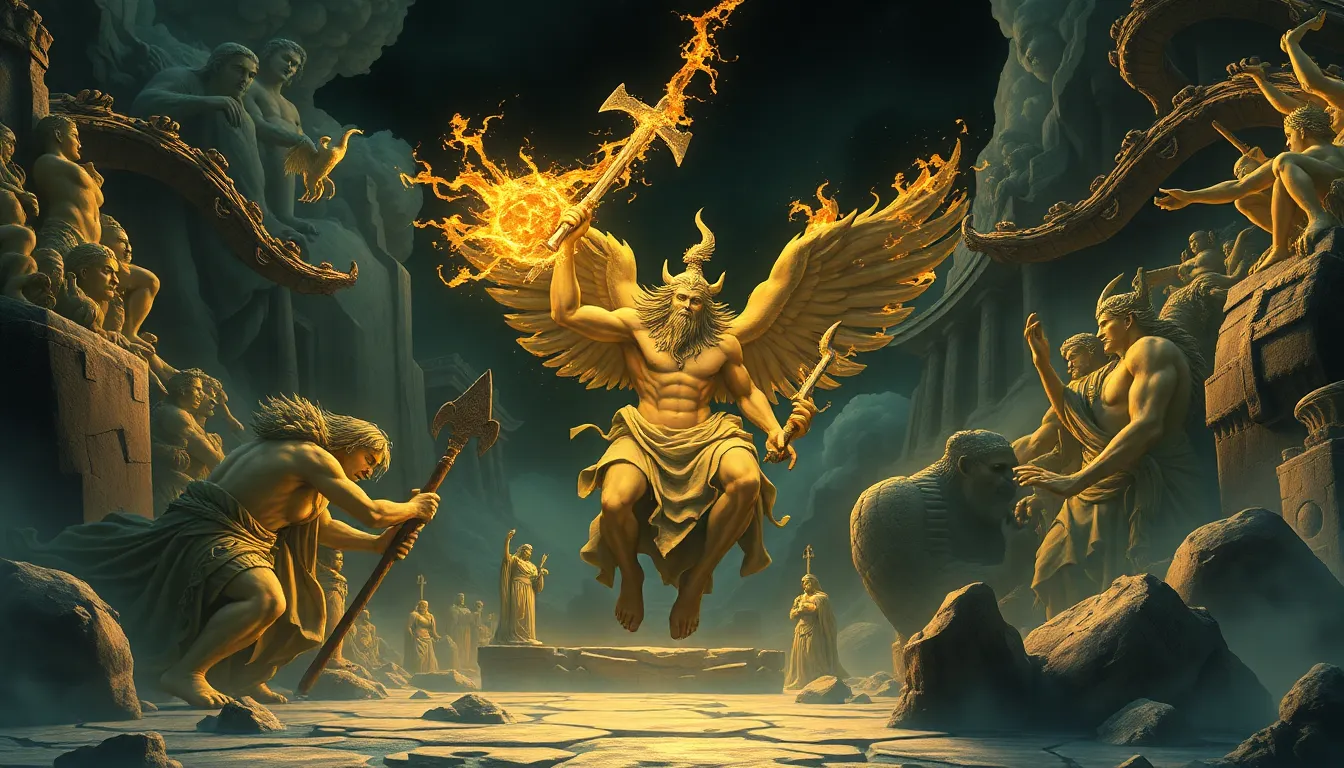
The Gods’ Playbook: Strategies Behind Their Most Notorious Punishments
I. Introduction
Divine punishment has always been a captivating aspect of mythology, serving as a means for deities to enforce their will and maintain order in the cosmos. From the wrath of Zeus to the balance presided over by Ma’at, the gods’ methods of punishment reveal much about their characters, the societies that worshipped them, and the moral codes they upheld. Understanding the strategies behind these divine actions allows us to appreciate not only the narratives themselves but also the deeper philosophical questions they pose.
This article delves into the strategies employed by various gods across mythologies, including Greek, Norse, Egyptian, and Hindu traditions, highlighting their notorious punishments and the lessons they impart.
II. The Concept of Divine Justice
Divine justice is a fundamental concept in many cultures, often defined as the moral order enforced by the gods. It signifies the belief that divine beings will intervene in human affairs, dispensing rewards or punishments based on moral conduct. Unlike human justice systems, which can be flawed and biased, divine justice is often perceived as absolute and fair.
In comparing human justice systems with divine retribution, we see several key differences:
- Absolute Authority: Gods are seen as the ultimate authority, with no higher power to appeal to.
- Infallibility: Divine decisions are viewed as flawless and just, grounded in the cosmic order.
- Timeliness: While human justice can be delayed, divine punishment is often immediate or inevitable.
The moral lessons behind divine punishments are manifold, often serving to reinforce societal norms and values. They act as cautionary tales, warning mortals of the consequences of hubris, betrayal, or immorality.
III. Greek Mythology: Zeus and His Thunderbolts
Zeus, the king of the Greek gods, is perhaps one of the most notorious figures in mythology when it comes to punishment. His authority is symbolized by the thunderbolt, a weapon he wields to enforce divine law and punish transgressors.
Notable punishments meted out by Zeus include:
- Prometheus: For stealing fire from the gods and giving it to humanity, Zeus condemned Prometheus to eternal torment, where an eagle would feast on his liver daily.
- Lycaon: After challenging Zeus’ divinity, Lycaon was transformed into a wolf as punishment, illustrating the consequences of disrespecting the gods.
Zeus’ strategic use of power and fear not only served to punish offenders but also to instill a sense of dread among mortals, ensuring that his authority remained unchallenged. His punishments often reinforced the idea that the gods were watching and that actions had immediate consequences.
IV. Norse Mythology: Odin’s Trials and Tribulations
In Norse mythology, Odin stands as a complex figure embodying wisdom, war, and the pursuit of knowledge. His methods of punishment often reflected his multifaceted nature and the harsh realities of life in the Norse world.
One of the most infamous cases of divine punishment involves Loki, the trickster god. After causing the death of Odin’s son, Baldur, Loki was captured and subjected to a torturous punishment:
- He was bound with the entrails of his son and forced to endure the venom dripping from a serpent above him, a punishment that reflected both his cunning and the consequences of his actions.
The psychological implications of Odin’s strategies are profound. They often serve as a reminder of the consequences of betrayal and the fragility of trust. Odin’s punishments also reflect societal values, where the harshness of life necessitated a firm hand in governance.
V. Egyptian Mythology: Ma’at and the Weighing of the Heart
In Egyptian mythology, the concept of Ma’at embodies truth, balance, and cosmic order. Central to this is the judgment process known as the Weighing of the Heart, where souls are judged after death.
During this judgment, the heart of the deceased is weighed against the feather of Ma’at. The significance of this process lies in its emphasis on moral integrity and the consequences of one’s actions:
- If the heart is heavier than the feather, symbolizing a life of wrongdoing, the soul is devoured by the monster Ammit.
- If it balances, the soul is granted access to the afterlife, highlighting the rewards of a virtuous life.
This system of divine punishment aligns seamlessly with the principles of Ma’at, reinforcing the importance of living in accordance with truth and justice. It serves as a moral guide for the living, emphasizing that one’s actions have lasting consequences beyond death.
VI. Hindu Mythology: Karma and Divine Retribution
Karma, a fundamental concept in Hindu philosophy, refers to the idea that every action has consequences, shaping the future of the individual. This principle serves as a guiding force in understanding divine punishment within Hindu mythology.
Examples of divine retribution include:
- Ravana: The demon king of Lanka, who kidnapped Sita, faced divine punishment through his defeat by Lord Rama, illustrating the consequences of adharma (unrighteousness).
- Duryodhana: The antagonist of the Mahabharata, who faced destruction due to his pride and refusal to adhere to dharma, reinforcing the idea that karma leads to inevitable consequences.
The concept of karmic consequences reflects a long-term strategy of divine justice, where individuals are held accountable for their actions across lifetimes. This encourages ethical behavior and reinforces the belief in a moral universe governed by justice.
VII. The Role of Mortality and Free Will in Divine Punishments
The interplay between divine intervention and human agency is a central theme in many mythological narratives. While the gods wield significant power, mortals are often depicted as having the capacity for free will, leading to a complex relationship between fate and choice.
Case studies illustrating this relationship include:
- Zeus and the Trojan War: While Zeus intervened in the war, mortal choices ultimately shaped the outcome, highlighting the balance between divine will and human agency.
- Odin’s sacrifices: Odin sacrificed an eye for wisdom, showcasing how even gods must navigate choices and their consequences.
This balance between fate and free will emphasizes the importance of personal responsibility in mythological tales, reminding us that while divine forces may influence events, human choices play a crucial role in shaping one’s destiny.
VIII. Conclusion
The strategies employed by various gods in enacting punishment reveal much about their personalities, the values of the cultures that worshipped them, and the moral lessons intended for humanity. From Zeus’ thunderbolts to the cosmic balance of Ma’at, these stories remind us of the complexities of justice and the consequences of our actions.
As we reflect on these mythological tales, we can draw parallels to contemporary society, where questions of justice, morality, and human agency remain ever relevant. The enduring lessons of these narratives continue to resonate, offering insights into the human condition and the divine forces that shape our world.