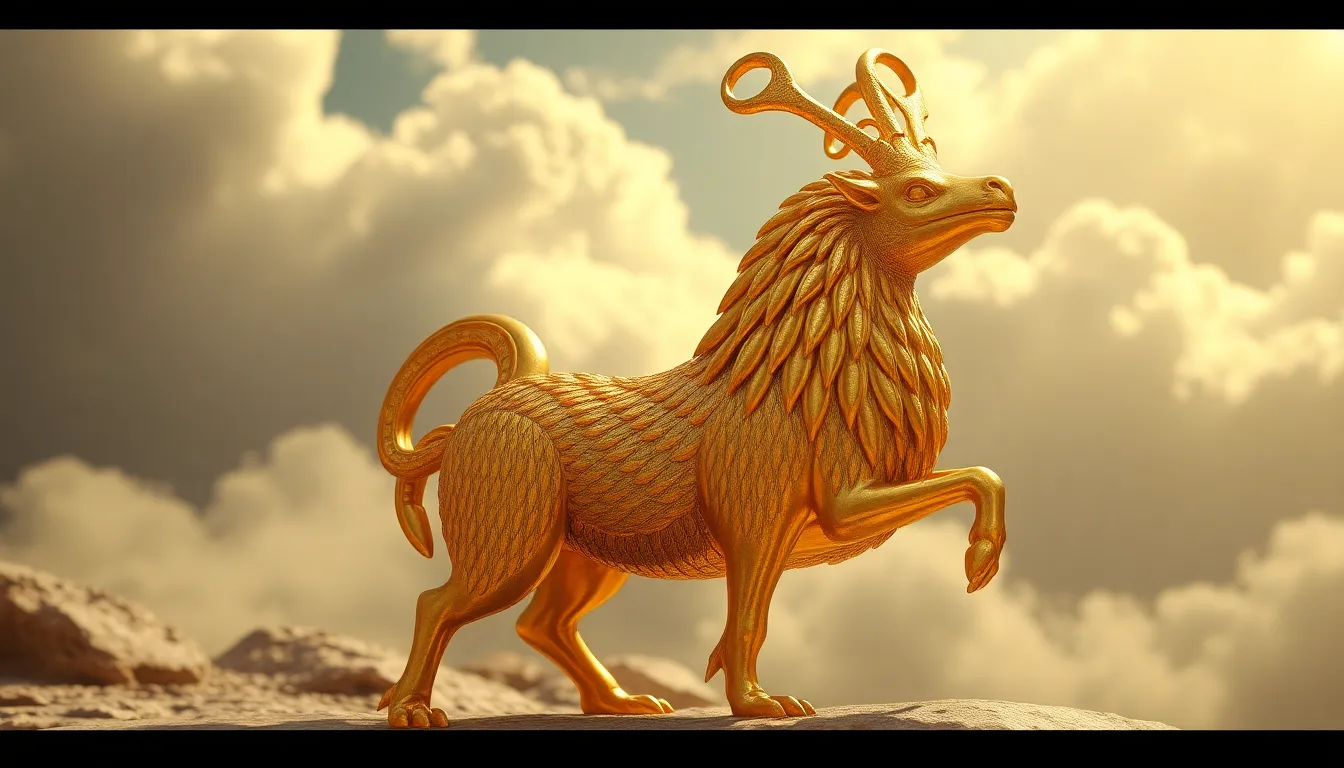
The Golden Fleece: The Mythical Object That Captivated Generations
I. Introduction to the Golden Fleece
The Golden Fleece is one of the most famous objects in Greek mythology, symbolizing authority and kingship while also being a testament to the power of bravery and adventure. It is often associated with tales of heroism, sacrifice, and the pursuit of glory. The myth of the Golden Fleece has captivated generations, inspiring countless works of art, literature, and modern storytelling.
Throughout history, the Golden Fleece has not only served as a central plot device in the tale of Jason and the Argonauts, but it has also influenced various aspects of culture, from ancient art to contemporary literature and film. Its significance extends beyond mere myth, representing timeless themes that resonate with audiences across ages.
II. The Origins of the Golden Fleece
A. The story of Phrixus and Helle
The origins of the Golden Fleece can be traced back to the tragic tale of Phrixus and Helle. Phrixus, the son of King Athamas of Boeotia and the cloud-nymph Nephele, faced a dire fate when his stepmother, Ino, conspired against him. Ino sought to eliminate Phrixus and his sister, Helle, to secure her own children’s inheritance.
To escape their mother’s wrath, Nephele sent a magical ram, born from the god Hermes, to rescue them. This ram, known for its golden fleece, carried Phrixus and Helle away to safety. Unfortunately, during their journey, Helle fell from the ram and drowned in the sea, which was later named Hellespont in her honor. Phrixus, however, made it to Colchis, where he sacrificed the ram to Zeus and hung its golden fleece in a sacred grove, guarded by a dragon.
B. The role of the ram in Greek mythology
The ram is a significant figure in Greek mythology, often symbolizing sacrifice and the divine connection between gods and mortals. The Golden Fleece itself represents not just a physical object, but a powerful emblem of protection and wealth. Its origins as a reward for bravery and the bond between Phrixus and the ram add depth to its mythical significance.
III. The Quest for the Golden Fleece
A. Introduction to Jason and the Argonauts
The quest for the Golden Fleece is most famously associated with Jason, the rightful heir to the throne of Iolcus. His journey to retrieve the fleece was not merely a quest for power, but also a way to reclaim his birthright, which had been usurped by his uncle, Pelias. Jason assembled a group of heroes known as the Argonauts, including notable figures such as Hercules, Orpheus, and Atalanta, to assist him on his perilous adventure.
B. Key events in the quest for the fleece
The quest of Jason and the Argonauts was fraught with challenges and adventures, including:
- Crossing the treacherous seas, encountering mythical creatures and divine beings.
- Facing the harpies, who tormented the blind prophet Phineas.
- Navigating the Clashing Rocks (Symplegades) that threatened to crush any ship that attempted to pass.
- Meeting Medea, the daughter of King Aeëtes of Colchis, who fell in love with Jason and aided him in his quest.
- Overcoming the dragon guarding the fleece, aided by Medea’s magic.
After enduring numerous trials, Jason successfully retrieved the Golden Fleece, which symbolized not only victory but also the fulfillment of his destiny.
IV. Symbolism of the Golden Fleece
A. Themes of power and kingship
The Golden Fleece serves as a powerful symbol of authority and legitimacy. In the context of Jason’s quest, it represents the right to rule and the struggle for kingship. The acquisition of the fleece signifies Jason’s reclaiming of his birthright and the restoration of justice in Iolcus.
B. Representations of sacrifice and redemption
Additionally, the Golden Fleece embodies themes of sacrifice and redemption. Phrixus’s sacrifice of the ram signifies the need for offering in exchange for safety and prosperity. Jason’s journey, fraught with danger and moral dilemmas, mirrors the sacrifices one must make to achieve greatness and the redemption that comes from overcoming adversity.
V. The Golden Fleece in Ancient Art and Literature
A. Depictions in classical literature
The story of the Golden Fleece has been immortalized in various classical texts, including the works of Apollonius of Rhodes in “Argonautica,” which details the adventures of Jason and his companions. The themes of heroism, betrayal, and love are woven throughout the narrative, marking it as a significant piece of ancient literature.
B. Artistic representations in sculpture and pottery
The Golden Fleece has also been a popular subject in ancient art, depicted in pottery, frescoes, and sculptures. Artists often illustrated key moments from the myth, showcasing the bravery of Jason, the beauty of Medea, and the awe-inspiring golden ram. These artistic representations have provided valuable insights into ancient Greek culture and its values.
VI. The Legacy of the Golden Fleece in Modern Culture
A. References in contemporary literature and film
The allure of the Golden Fleece continues to resonate in modern culture. It has been referenced in various literary works, films, and television series. The themes of adventure, heroism, and the pursuit of glory are echoed in stories that draw inspiration from this ancient myth.
B. The fleece as a symbol in modern storytelling
In contemporary narratives, the Golden Fleece often symbolizes the quest for identity, power, and the trials one must undergo to achieve their goals. Its imagery and themes have been adapted in diverse genres, from fantasy novels to modern cinematic adaptations.
VII. Interpretations and Adaptations Over Time
A. Variations in retellings across cultures
The myth of the Golden Fleece has seen various interpretations and adaptations across cultures and time periods. Different cultures have reimagined the story, infusing it with local beliefs and values while retaining its core themes of adventure and the human condition.
B. The fleece in different mythological contexts
In addition to Greek mythology, elements reminiscent of the Golden Fleece can be found in other mythological traditions. The concept of a coveted object that brings power and prestige is a common motif in various cultures, showcasing the universal nature of such narratives.
VIII. Conclusion: The Timeless Allure of the Golden Fleece
A. Recap of its enduring significance
The Golden Fleece remains a timeless symbol in mythology, representing the eternal human quest for power, identity, and redemption. Its story has transcended its origins, influencing art, literature, and modern storytelling.
B. Reflection on why the myth continues to resonate today
The enduring appeal of the Golden Fleece lies in its rich tapestry of themes that resonate with the human experience. The quests for bravery, sacrifice, and the pursuit of dreams are as relevant today as they were in ancient times. As long as stories are told, the Golden Fleece will continue to captivate the imagination of generations to come.