The Gorgon in the Context of Ancient Greek Science
I. Introduction
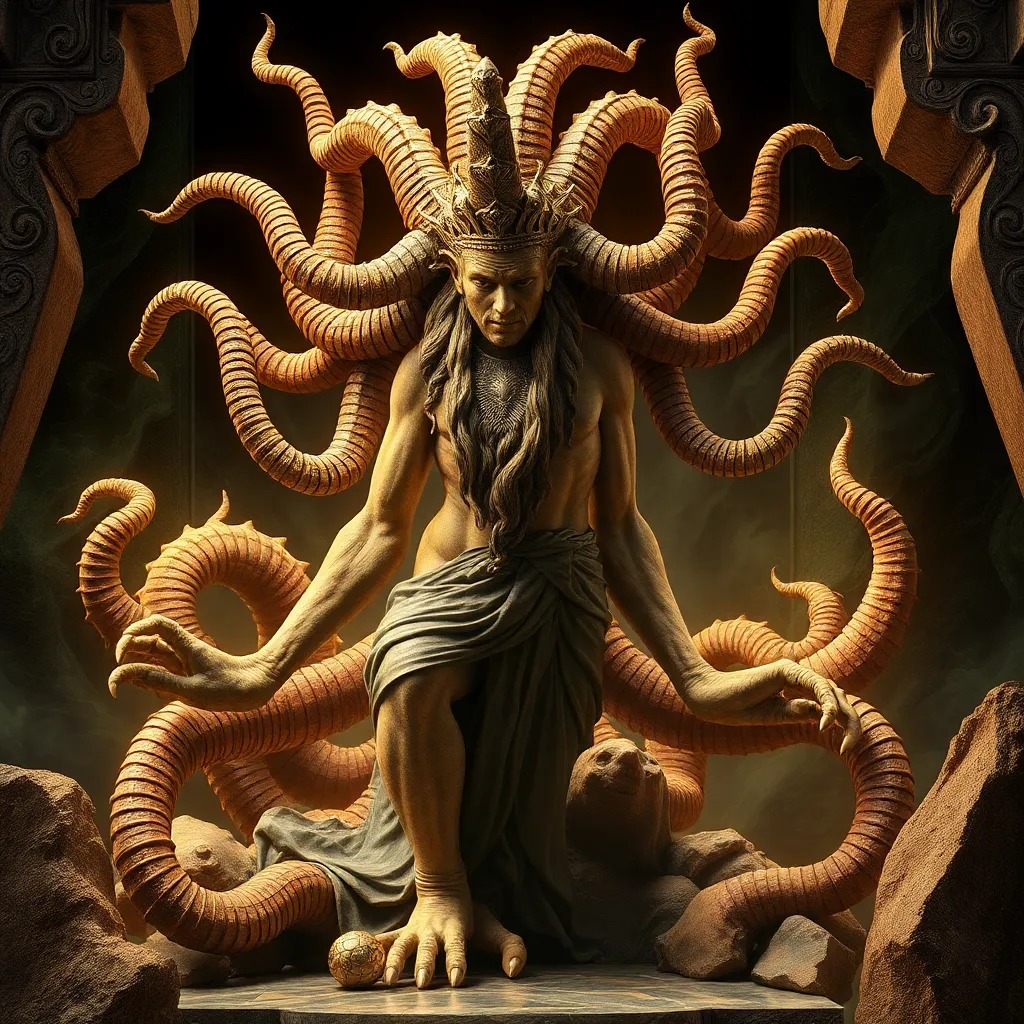
The Gorgon is one of the most iconic figures in ancient Greek mythology, particularly known for its terrifying features and potent symbolism. Among the most famous Gorgons is Medusa, who has captivated the imagination of countless generations. The significance of the Gorgon in ancient Greek culture extends beyond mere myth; it intertwines with various facets of ancient Greek science and understanding of the natural world.
This article aims to explore the intersection of Gorgon lore and ancient Greek scientific thought. By delving into the origins, evolution, and interpretations of the Gorgon myth, we can uncover the ways in which this mythological creature reflects and informs ancient Greek perspectives on nature, medicine, and the monstrous.
II. The Gorgon Mythos
The term ‘Gorgon’ refers to three sisters: Medusa, Stheno, and Euryale. While Stheno and Euryale are often depicted as immortal, Medusa is unique among them as the only mortal Gorgon. Each sister possesses distinct characteristics and attributes:
- Medusa: Known for her stunning beauty before being transformed into a monster, Medusa’s hair became a mass of snakes, and her gaze could turn onlookers to stone.
- Stheno: The strongest of the sisters, she is often portrayed as fierce and powerful, embodying the protective aspects of the Gorgon myth.
- Euryale: Known for her terrifying appearance and wailing voice, Euryale represents the primal fear associated with the Gorgon.
The origins of the Gorgon myth can be traced back to ancient Near Eastern cultures, where similar monstrous figures existed. Over time, the Greek interpretation evolved, ultimately incorporating themes of beauty, fear, and the power of the feminine.
Symbolically, the Gorgon represents various concepts, including:
- Transformation: The metamorphosis of Medusa from a beautiful maiden to a monstrous figure reflects themes of change and the duality of human experience.
- Protection: Gorgon imagery was often used as apotropaic symbols to ward off evil, signifying their role as protectors in Greek culture.
- Fear of the Unknown: The Gorgon’s monstrous nature symbolizes humanity’s fear of the uncontrollable forces of nature.
III. The Intersection of Myth and Science
Myths played a crucial role in shaping ancient Greek understanding of the world around them. They served as narratives that helped explain natural phenomena, human behavior, and societal norms. The Gorgon myth, in particular, reflects several aspects of ancient Greek scientific thought:
- Interpretation of Natural Phenomena: The Gorgon was often seen as a manifestation of natural forces that were incomprehensible or dangerous, such as storms or earthquakes.
- Symbolic Representation: The Gorgon can be viewed as a metaphor for elements of nature that could be both beautiful and deadly, embodying the duality of existence.
- Scientific Classification: The monstrous attributes of the Gorgon challenged ancient Greeks to categorize the world around them, leading to discussions about the nature of humanity and the divine.
IV. The Gorgon in Ancient Greek Art and Literature
The Gorgon has been a prevalent subject in ancient Greek art and literature, serving not only as a decorative motif but also as a source of inspiration for deeper philosophical inquiries.
A. Representation of Gorgons in Visual Arts
Visual depictions of Gorgons can be found in various artifacts, including pottery, sculptures, and reliefs. They often feature:
- Medusa’s head displayed prominently, symbolizing protection.
- Scenes from the myth of Perseus, highlighting the conflict between hero and monster.
- Gorgon masks used in theatrical performances, representing the emotional extremes of fear and horror.
B. Literary Depictions and Their Influence on Scientific Ideas
In literature, the Gorgon appears in works by authors such as Hesiod and Ovid, where her story serves as a cautionary tale. These narratives often explored themes of morality and the consequences of hubris, leading to reflections on human nature and the cosmos.
C. The Gorgon as an Allegory for Fear and Danger in Nature
The Gorgon embodies humanity’s fear of the unpredictable aspects of nature, serving as a reminder of the dangers that lurk beyond the known world.
V. Medical and Biological Interpretations
In ancient medical texts, Gorgon imagery often intersected with discussions of health, disease, and anatomy. Physicians utilized the Gorgon as a metaphor for various ailments, suggesting a deep-seated connection between mythology and early medical practices.
A. Gorgon Imagery in Ancient Medical Texts
Gorgon motifs were sometimes employed to illustrate conditions perceived as monstrous or abnormal, linking the monstrous to the pathological.
B. Connections Between Gorgons and Concepts of Disease and Death
The Gorgon myth also reflects ancient Greek anxieties surrounding disease and mortality, as Medusa’s ability to petrify could symbolize the paralysis caused by illness.
C. The Influence of Gorgon Lore on Ancient Greek Anatomy and Biology
Scholars have noted that the Gorgon’s monstrous traits may have influenced early understandings of anatomy, pushing boundaries between the known and the unknown.
VI. The Gorgon and the Concept of the Monstrous
The concept of monstrosity in ancient Greek thought is complex and multifaceted. The Gorgon embodies a blend of human and divine attributes, challenging the boundaries of classification.
A. Understanding Monstrosity in Ancient Greek Thought
Monstrosity was often associated with moral and social deviations, leading to discussions on the nature of humanity and the divine.
B. The Gorgon as a Blend of Human and Divine Attributes
Medusa’s transformation from a mortal woman into a monster exemplifies the potential for both beauty and horror within the human experience.
C. Implications of Monstrosity for Ancient Scientific Classifications
This blending of attributes prompted ancient Greeks to rethink the categories of life, leading to a deeper understanding of the complexities of existence.
VII. Modern Interpretations of the Gorgon
In contemporary times, the Gorgon continues to resonate within various fields, including science and psychology. Modern interpretations often seek to reassess the Gorgon myth through a scientific lens.
A. The Gorgon in Contemporary Science and Psychology
Psychologists have explored the Gorgon as a symbol of repressed fears and anxieties, examining its implications for understanding human behavior.
B. Re-evaluating the Gorgon Myth Through a Scientific Lens
Recent scholarship has encouraged a re-evaluation of the Gorgon myth, considering its relevance in discussions about gender, power, and societal norms.
C. The Enduring Legacy of the Gorgon in Modern Discourse
The Gorgon’s legacy endures, serving as a powerful symbol in literature, art, and popular culture, and prompting ongoing discussions about the nature of monstrosity and fear.
VIII. Conclusion
In summary, the Gorgon myth serves as a rich tapestry of meaning, intertwining ancient scientific thought with cultural narratives. The exploration of Gorgon lore reveals significant insights into the ancient Greek worldview, encompassing themes of transformation, fear, and the natural order.
The lasting impact of Gorgon mythology continues to influence both science and culture, reminding us of the importance of ancient myths in shaping human knowledge and understanding the complexities of the natural world.
By examining the Gorgon through various lenses, we gain a deeper appreciation for the ways in which mythology and science coexist, enriching our understanding of both the past and present.