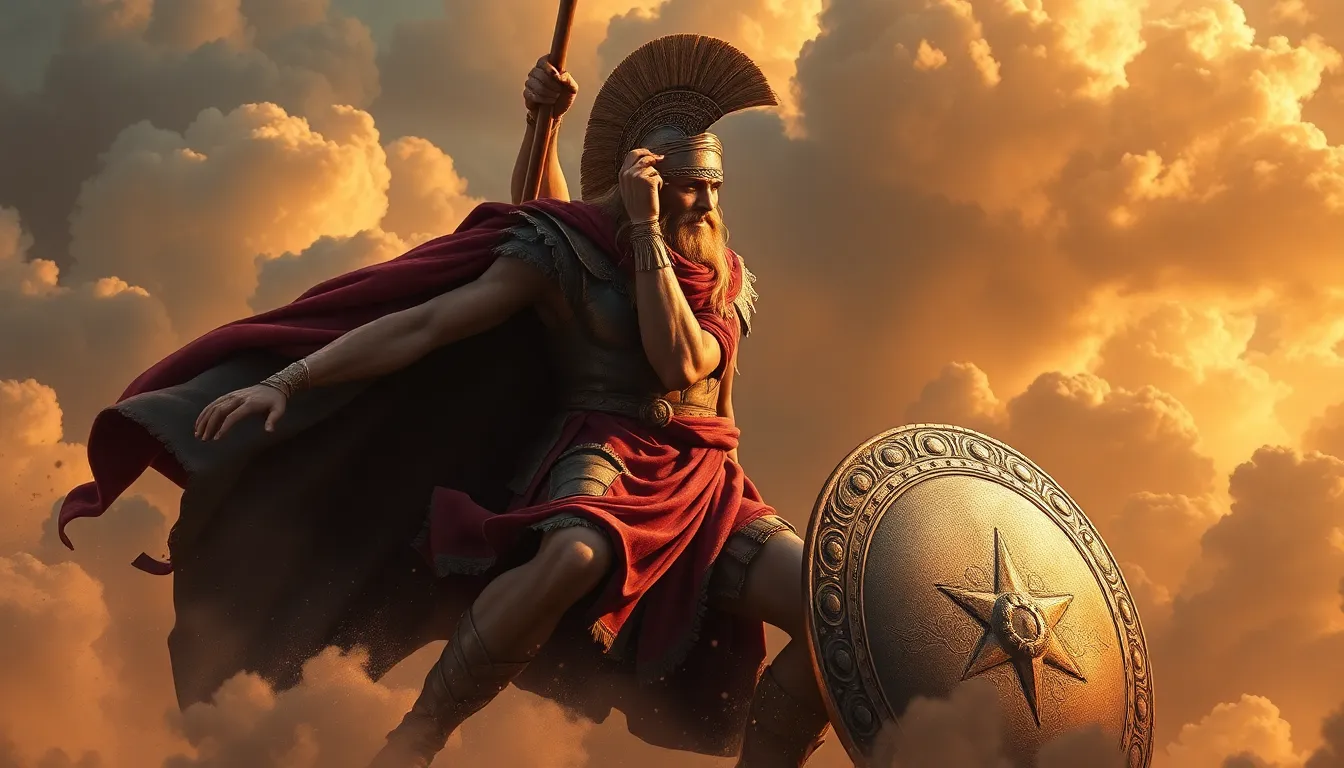
The Heroic Feats of Achilles: Glory and Tragedy
I. Introduction
In the rich tapestry of Greek mythology, few figures stand as prominently as Achilles, the legendary warrior of the Trojan War. Renowned for his unparalleled strength and martial skills, Achilles embodies the duality of glory and tragedy that characterizes many heroes of ancient lore. His story is not just one of heroic feats on the battlefield but also one marked by profound personal loss and existential struggles.
This article aims to delve into the life of Achilles, exploring both his heroic accomplishments and the tragic elements that ultimately define his legacy. We will examine his origins, his pivotal role in the Trojan War, the consequences of his wrath, and the fateful events that lead to his tragic end.
II. The Origins of Achilles
Achilles was born to Peleus, the king of the Myrmidons, and Thetis, a sea nymph of great beauty and power. His lineage is significant, as he is often portrayed as a demi-god, a hybrid of mortal and divine. This unique heritage bestows upon him incredible abilities, but it also sets the stage for the tragic destiny foretold by prophecy.
From his birth, it was prophesied that Achilles would either lead a long, uneventful life or die young but achieve eternal glory. Thetis, determined to protect her son, attempted to make him invulnerable by dipping him in the River Styx. However, she held him by his heel, leaving it vulnerable—a detail that would later play a crucial role in his demise.
Achilles was raised in a nurturing yet rigorous environment, trained by the centaur Chiron, who imparted not only combat skills but also knowledge of medicine, music, and philosophy. This comprehensive upbringing shaped Achilles into a well-rounded hero, destined for greatness.
III. Achilles in the Trojan War
The Trojan War, a monumental conflict that pitted the Greeks against the city of Troy, brought Achilles to the forefront of Greek mythology. His involvement was spurred by a call to arms, as Helen of Sparta, the wife of Menelaus, was abducted by Paris of Troy, prompting the Greeks to seek her return.
Achilles, driven by a sense of honor and duty, joined the Greek forces, bringing with him an elite contingent of warriors known as the Myrmidons. Throughout the siege of Troy, he distinguished himself through various key battles and heroic deeds, including:
- The slaying of numerous Trojan warriors
- His unparalleled combat against Hector, the Trojan prince
- Leading successful raids against Trojan outposts
Divine intervention played a significant role in his accomplishments, with gods and goddesses favoring him in various encounters. Athena, in particular, often aided him during battles, reinforcing his status as a favored hero among the pantheon.
IV. The Wrath of Achilles
The most defining aspect of Achilles’ character is his wrath, particularly the conflict with Agamemnon, the leader of the Greek forces. This strife stemmed from a dispute over war prizes, as Agamemnon took Briseis, a captive woman awarded to Achilles, to compensate for losing his own prize. Achilles felt deeply insulted, as this act not only stripped him of his honor but also undermined his contributions to the war effort.
In response, Achilles withdrew from battle, a decision that had dire consequences for the Greek forces. His absence allowed the Trojans to gain the upper hand, showcasing the themes of honor and pride that permeate his character. Achilles’ rage became a catalyst for further conflict, affecting not only his fate but also the course of the war itself.
V. The Death of Patroclus
The bond between Achilles and his close companion Patroclus is one of the most poignant aspects of Achilles’ story. Their friendship, characterized by loyalty and camaraderie, is tested when Patroclus dons Achilles’ armor to lead the Myrmidons into battle, hoping to inspire them and turn the tide against the Trojans.
Tragically, Patroclus is killed by Hector during this fateful encounter, a loss that devastates Achilles. This event marks a turning point in Achilles’ character, igniting a transformation fueled by grief and rage. He is consumed by the desire for vengeance, which propels him back into battle with a singular focus: to avenge his fallen friend.
VI. The Quest for Revenge
Achilles’ return to battle is marked by a fierce determination. Fueled by the death of Patroclus, he seeks vengeance against Hector, whom he holds responsible for the tragedy. This quest for revenge showcases Achilles’ complexity as a hero, illuminating the darker aspects of his character.
The slaying of Hector stands as a pivotal moment in the Trojan War. Achieving this act of revenge, Achilles desecrates Hector’s body, dragging it behind his chariot around the walls of Troy, a display of both triumph and brutality. While this act solidifies his status as a formidable warrior, it also deepens his internal conflict, raising questions about the morality of vengeance.
Achilles’ psyche becomes increasingly tormented as he grapples with the consequences of his actions, leading to a profound sense of emptiness despite his victories. This illustrates the tragic nature of his heroism, as he becomes ensnared in a cycle of revenge and grief.
VII. The Tragic Fate of Achilles
Ultimately, Achilles is bound by the prophecy surrounding his life, which foretells both great glory and a premature death. Despite his extraordinary prowess, he is unable to escape his fate. The inevitability of his death underscores the tension between fate and free will, as he grapples with the choices he makes and the outcomes they produce.
Achilles meets his end at the hands of Paris, who, guided by the god Apollo, strikes him in his only vulnerable spot—the heel. This moment not only fulfills the prophecy but also symbolizes the tragic irony of Achilles’ life; his greatest strength is ultimately linked to his greatest vulnerability. As a result, the term “Achilles’ heel” has transcended mythology, becoming synonymous with a critical weakness.
Achilles’ legacy, therefore, is a complex interplay of heroism and tragedy. He is remembered as one of the greatest warriors in Greek mythology, but his story serves as a cautionary tale about the consequences of pride, rage, and the relentless march of fate.
VIII. Conclusion
The enduring impact of Achilles’ story resonates through literature and culture, exemplifying the timeless themes of glory and tragedy. His life illustrates the dual nature of heroism, where the pursuit of honor and glory is often accompanied by profound personal sacrifice and loss.
From the epic tales of the Iliad to modern interpretations in various media, Achilles remains a symbol of the complexities of human experience. His struggles with honor, vengeance, and fate offer valuable lessons about the nature of heroism and the price that comes with it.
In reflecting on the significance of Achilles, we are reminded that true heroism is not solely defined by strength and victories but also by the capacity for love, loss, and the acceptance of one’s fate.