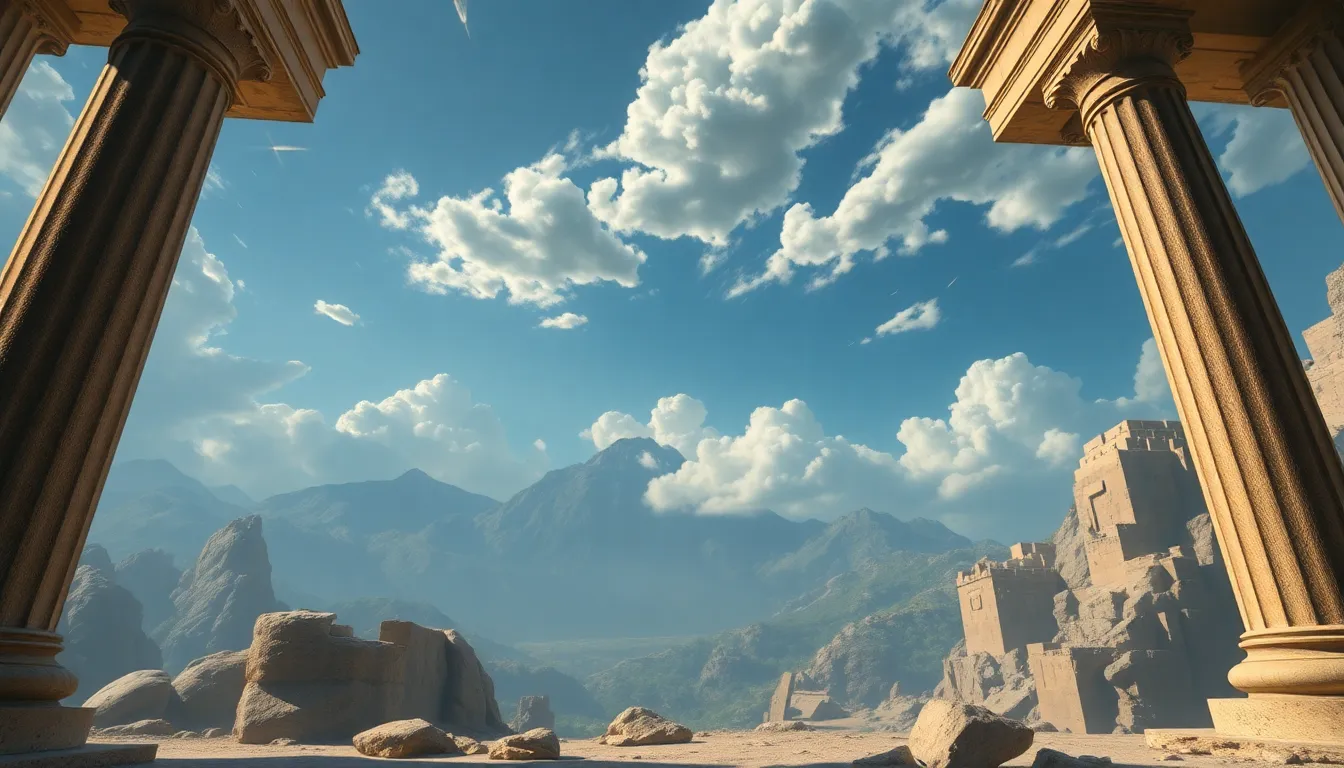
The Heroic Legacy of Theseus: A Prince’s Journey
I. Introduction to Theseus: The Prince of Athens
Theseus is one of the most celebrated heroes in Greek mythology, often hailed as the legendary prince of Athens. His stories intertwine with themes of bravery, wisdom, and the quest for identity, making him a significant figure in the annals of ancient tales. Theseus embodies the qualities of a hero, facing formidable challenges and emerging victorious while also grappling with the complexities of human nature.
The cultural and historical context of Theseus’ tales reflects the societal values of ancient Greece, where heroism was revered and the ideals of bravery, intelligence, and justice were essential to the Athenian identity. His adventures not only entertained but also served as moral lessons, shaping the views of subsequent generations.
II. Birth and Early Life: The Origins of a Hero
Theseus was born to Aegeus, the king of Athens, and Aethra, a princess of Troezen. His lineage is significant as it connects him to the divine, giving him a unique standing among mortals. According to the myth, Aegeus visited the Oracle of Delphi to seek guidance about his future. The oracle’s cryptic words led him to leave a sword and sandals under a rock, instructing Aethra that their son would retrieve them when he was strong enough.
As he grew, Theseus displayed remarkable strength and intelligence. When he reached maturity, he lifted the heavy stone and took the items, setting off on a journey to Athens. This journey was marked by a prophecy that foretold his destiny and the challenges he would face as he sought to claim his birthright.
III. The Labors of Theseus: Trials and Triumphs
The journey to Athens was fraught with peril, as Theseus encountered various bandits and monsters who threatened innocent travelers. His courage and resourcefulness allowed him to overcome these challenges, earning him a reputation as a formidable hero. Some of the notable trials he faced included:
- Periphetes: The Club-Man, whom Theseus defeated using his own weapon.
- Sinis: The Pine-Bender, who met his end at the hands of Theseus.
- Sciron: The Rock-Sitter, who was thrown off a cliff by Theseus.
- The Crommyonian Sow: A monstrous pig that Theseus vanquished.
- Procrustes: The Stretcher, who was defeated by Theseus using his own cruel methods against him.
Each of these encounters showcased Theseus’ strength and cunning, establishing him as a hero of the people and a protector of the weak. His triumphs on the road to Athens not only solidified his reputation but also prepared him for the greater challenges that lay ahead.
https://www.youtube.com/watch?v=cBzmMkJ63FM
IV. The Minotaur and the Labyrinth: A Defining Quest
Among the most famous tales of Theseus is his confrontation with the Minotaur, a creature that was half-man and half-bull, residing in the Labyrinth designed by Daedalus. The Minotaur was a product of the cursed union between Queen Pasiphaë of Crete and a magnificent bull, leading King Minos to demand tributes from Athens in the form of young boys and girls to be sacrificed to the beast.
Theseus volunteered to be one of the tributes, determined to end the Minotaur’s reign of terror. Upon arriving in Crete, he encountered Ariadne, the daughter of King Minos, who fell in love with him. Ariadne provided Theseus with a ball of thread, enabling him to navigate the Labyrinth and ultimately confront the Minotaur.
Through a combination of strength and intelligence, Theseus defeated the beast and escaped the Labyrinth, guiding the other tributes with the thread. This victory not only marked a pivotal moment in his life but also symbolized the triumph of reason and bravery over chaos and brutality.
V. The Return to Athens: The Weight of Choices
After defeating the Minotaur, Theseus’ return to Athens was laden with both triumph and tragedy. He had promised to change the black sails of his ship to white as a sign of his victory upon his return. However, in a moment of distraction, he forgot to change the sails, leading his father, Aegeus, to believe that his son had perished in Crete.
In his grief, Aegeus threw himself into the sea, which thereafter was named the Aegean Sea. This tragic incident serves as a powerful reminder of the weight of responsibility that comes with heroic choices and the consequences that can arise from oversight and failure.
VI. The Reign of Theseus: A Leader’s Challenges
After returning to Athens and ascending to the throne, Theseus became a symbol of unity and democracy. As king, he played a crucial role in establishing the foundations of Athenian democracy, promoting civic engagement and the idea of equality among citizens. His leadership was characterized by several key initiatives:
- Establishing the Panathenaic Festival: A celebration that honored Athena, the patron goddess of Athens.
- Unification of Attica: Theseus worked to consolidate the various tribes and communities of Attica, fostering a sense of shared identity among the citizens.
- Legal Reforms: He implemented laws that aimed to protect the rights of the poor and ensure justice for all.
Despite his accomplishments, Theseus faced challenges, including conflicts with neighboring regions and the complexities of leadership. His reign was marked by both triumphs and tribulations, reflecting the dual nature of heroism—strength in battle coupled with the struggles of governance.
VII. The Later Adventures and Legacy of Theseus
The adventures of Theseus did not end with his kingship in Athens. He became involved in numerous other legendary quests, including joining Jason and the Argonauts on their expedition for the Golden Fleece. His prowess as a warrior and leader shone throughout these adventures.
Additionally, Theseus played a role in the events of the Trojan War, showcasing his enduring legacy as one of the great heroes of Greek mythology. His deeds and character left a lasting impact on Greek culture, influencing literature, art, and philosophy in profound ways.
His story has been interpreted through various lenses, from the embodiment of the hero archetype to a symbol of the struggle for justice and order in society. Theseus remains a figure of fascination and inspiration, shaping the narratives of heroism in both ancient and modern contexts.
VIII. Conclusion: The Enduring Myth and Its Relevance Today
The journey of Theseus is filled with timeless lessons about courage, responsibility, and the complexities of human nature. His adventures reflect the ideals of heroism that resonate even today, encouraging individuals to confront their own challenges with bravery and wisdom.
Moreover, the influence of Theseus extends beyond ancient myths; he serves as a model for modern interpretations of heroism. His legacy reminds us that true strength lies not only in physical prowess but also in the choices we make and the responsibilities we bear.
As we continue to explore the myths of Theseus and their meanings, we find that his story remains relevant, inspiring new generations to embody the heroic traits of courage, intelligence, and the pursuit of justice.