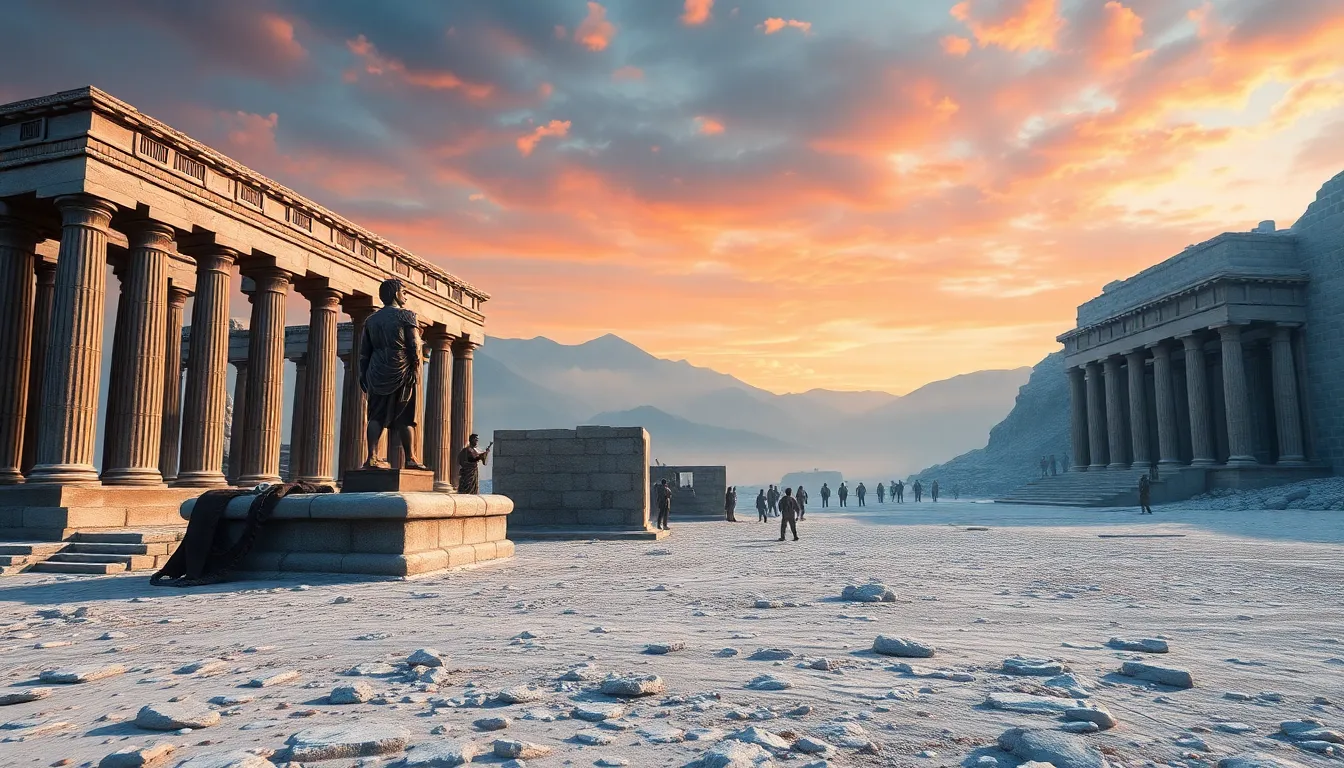
The Heroic Stand of Leonidas: The Battle of Thermopylae
I. Introduction
The Battle of Thermopylae, fought in 480 BC, stands as a monumental event in ancient Greek history, symbolizing the courage and sacrifice of its defenders against overwhelming odds. At the heart of this legendary confrontation was Leonidas, the King of Sparta, whose leadership and valor showcased the indomitable spirit of the Spartan warriors. This article aims to delve into the historical significance of Leonidas’ stand at Thermopylae, exploring its impact on Greek culture and the legacy it has left for generations to come.
II. Historical Context
A. Background on Greece during the Persian Wars
The Persian Wars were a series of conflicts fought between the Greek city-states and the expansive Persian Empire from 499 to 479 BC. These wars were sparked by the Persian attempts to subjugate the Greek cities, leading to a fierce struggle for autonomy and freedom among the Greeks.
B. Overview of the Persian Empire under Xerxes
By the time of the Battle of Thermopylae, the Persian Empire was under the rule of King Xerxes I, who sought to avenge his father Darius’s defeat at the Battle of Marathon in 490 BC. Xerxes assembled a massive army, reportedly numbering in the hundreds of thousands, to invade Greece and establish Persian dominance.
C. The strategic significance of the Thermopylae pass
The Thermopylae pass, a narrow coastal route, was crucial for controlling access to southern Greece. This strategic location offered the smaller Greek forces a tactical advantage, allowing them to defend against the larger Persian army effectively.
III. The Gathering of Forces
A. The Spartan military ethos and training
Sparta was renowned for its military culture, where rigorous training and discipline were paramount. Spartan boys entered the agoge, a state-sponsored education and training program, at a young age, instilling in them the virtues of bravery, endurance, and loyalty.
B. Leonidas’ role in uniting Greek city-states
As a leader, Leonidas played a crucial role in rallying Greek city-states to confront the Persian threat. Despite the rivalries among the city-states, Leonidas’ call to arms resonated, leading to a coalition of forces determined to resist Xerxes’ invasion.
C. Overview of the forces that joined Leonidas at Thermopylae
Leonidas commanded a small but formidable force, which included:
- 300 Spartan warriors
- Thespians, numbering around 700
- Thebans, contributing approximately 400 soldiers
Together, these forces exemplified the unity of the Greek city-states against a common enemy.
IV. The Initial Stages of the Battle
A. Description of the terrain and its advantages
The rugged terrain of Thermopylae provided a natural defensive position for the Greek forces. The narrow pass limited the number of Persian troops that could engage at once, allowing Leonidas and his men to effectively utilize their training and combat skills.
B. The first encounters between Persian and Greek forces
As the Persian army advanced, they encountered fierce resistance from the Greeks. The initial skirmishes revealed the effectiveness of the Greek phalanx formation, where soldiers fought closely together, shielding one another with their shields and striking with their spears.
C. Leonidas’ tactical decisions and leadership style
Leonidas demonstrated remarkable leadership throughout the battle, making strategic decisions that capitalized on the terrain and the strengths of his men. His ability to inspire his troops and maintain morale was crucial in the face of overwhelming odds.
V. The Legendary Last Stand
A. The final day of battle and the overwhelming Persian forces
On the third and final day of battle, the Persian forces, having grown impatient, launched a massive assault on the Greek positions. Despite their valor, the Greek defenders faced insurmountable numbers, as Persian reinforcements continued to arrive.
B. The decision to fight to the death
Leonidas and his men made the fateful decision to fight to the last man rather than retreat. This choice exemplified the Spartan ideal of honor and duty, as they understood that their sacrifice would serve to inspire their fellow Greeks and delay the Persian advance.
C. Acts of heroism and valor displayed by Leonidas and his men
Throughout the final stand, acts of extraordinary heroism were displayed by Leonidas and his warriors. Many fought valiantly, taking down a significant number of Persian soldiers, even as their own numbers dwindled. Leonidas himself is said to have fought fiercely, embodying the spirit of Sparta until the very end.
VI. Aftermath and Legacy
A. Immediate consequences of the battle for Greece and Persia
The Battle of Thermopylae ultimately ended in the defeat of the Greek forces; however, it served to galvanize the Greek city-states. News of Leonidas’ heroism spread, rallying the Greeks to unite against the Persians, culminating in the eventual Greek victory at the Battle of Salamis.
B. The symbolism of Leonidas and the Spartan legacy
Leonidas emerged as a symbol of courage and sacrifice, representing the ideals of Spartan society. His stand at Thermopylae became a powerful emblem of resistance against tyranny, inspiring future generations to valor and patriotism.
C. How Thermopylae became a rallying cry for future generations
The phrase “Molon Labe,” meaning “Come and take them,” attributed to Leonidas, became a rallying cry for those standing against oppression. This legacy continued to resonate throughout history, influencing countless movements for freedom and justice.
VII. Cultural Representations
A. The portrayal of Leonidas in literature and film
Leonidas has been depicted in various forms of literature and film, most notably in the graphic novel and subsequent film “300.” These portrayals, while dramatized, have helped to immortalize his figure and the events at Thermopylae in popular culture.
B. The impact of popular culture on the perception of the battle
Modern representations have both romanticized and simplified the events of Thermopylae, yet they have undeniably brought attention to the historical significance of the battle and the heroism of Leonidas and his men.
C. The enduring mythos of the 300 Spartans
The story of the “300 Spartans” has become a mythic tale of bravery and sacrifice. It serves as a reminder of how a small group can stand against overwhelming odds and the impact that such actions can have on the course of history.
VIII. Conclusion
Leonidas’ heroism at the Battle of Thermopylae remains a powerful symbol of courage and sacrifice in the face of insurmountable odds. His stand not only delayed the Persian advance but also inspired a united Greek response that ultimately led to victory. The lessons learned from this battle continue to resonate today, reminding us of the importance of resilience and the enduring power of the human spirit.
In the annals of history, Leonidas and his 300 Spartans remind us that true bravery often involves standing firm for one’s beliefs, even when the odds are against us. Their legacy lives on, encouraging us to reflect on our own values of courage and sacrifice in contemporary discussions.