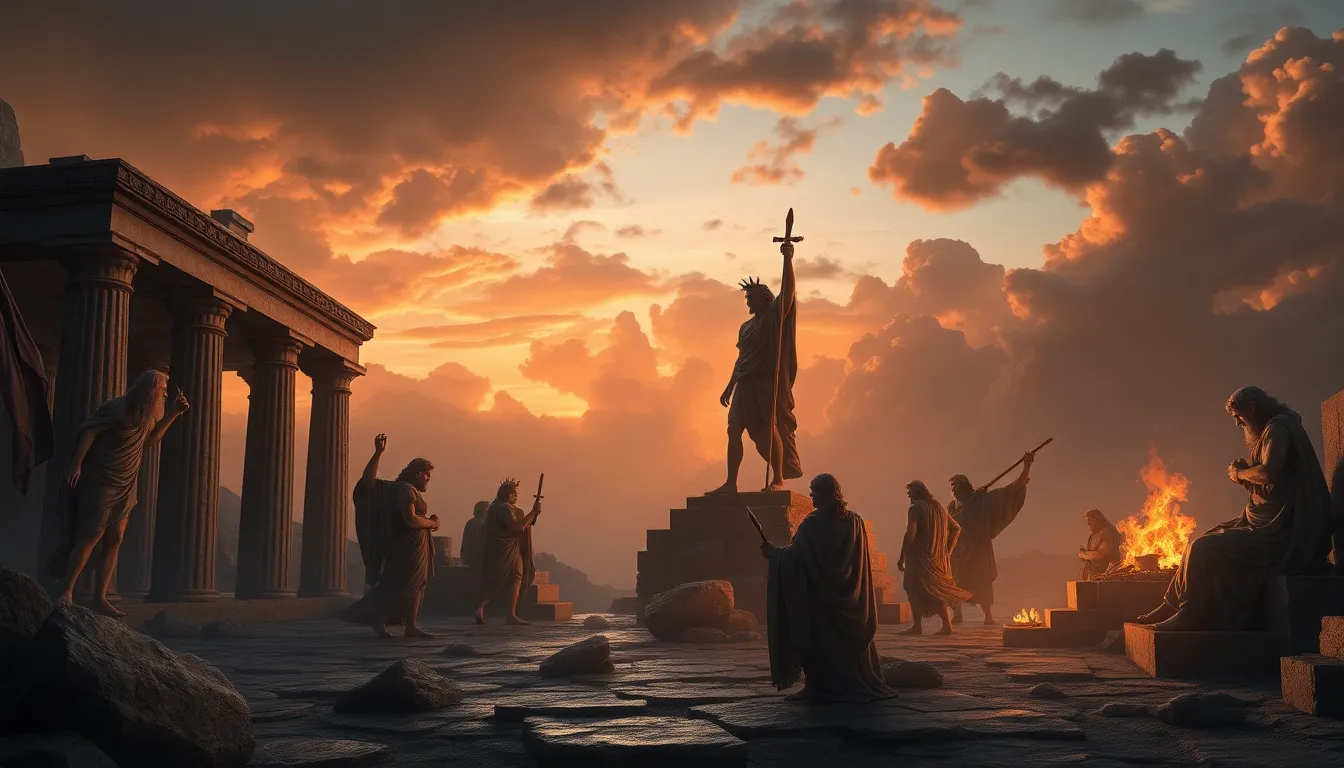
The Impact of Sacrifice on Greek Mythological Narratives
I. Introduction
In the context of Greek mythology, sacrifice refers to the act of offering something of value to the gods, often as a means of seeking favor, atonement, or divine intervention. This practice was deeply woven into the fabric of ancient Greek society and was essential for understanding the motivations and actions of its mythological characters.
The importance of sacrifice extends beyond mere ritual; it serves as a pivotal theme that reveals the complexities of human emotions, relationships, and moral dilemmas. By examining the narratives of Greek mythology through the lens of sacrifice, we can gain insights into the underlying themes of heroism, divine interaction, and moral struggles.
This article will explore the multifaceted role of sacrifice in Greek mythology, covering its cultural significance, its effects on heroism, divine interventions, moral dilemmas, literary symbolism, and modern interpretations. Each section aims to illustrate how sacrifice shapes the narratives and characters within these ancient stories.
II. The Concept of Sacrifice in Ancient Greece
The concept of sacrifice in ancient Greece was not merely a religious obligation but a profound cultural activity that served various social functions. It was a means of communication between humans and the divine, fostering a sense of community and belonging among the people.
A. Cultural significance of sacrifice in Greek society
In Greek society, sacrifices were central to religious practices and communal life. They were conducted during festivals, funerals, and various ceremonies, reinforcing social ties and collective identity. Sacrifice was seen as a way to honor the gods, seek their protection, and ensure the prosperity of the community.
B. Types of sacrifices: offerings to gods, personal sacrifices, and heroic deeds
- Offerings to gods: These included livestock, grains, and libations, which were presented during public rituals.
- Personal sacrifices: Individuals often made personal sacrifices, such as dedicating their time or resources to a cause or for the sake of loved ones.
- Heroic deeds: Acts of bravery or selflessness by heroes were often viewed as sacrifices that elevated their status and defined their legacy.
C. The role of sacrifice in religious rituals and community bonding
Ritual sacrifices were communal events that brought people together, fostering unity and shared beliefs. They provided a structured way for the community to express gratitude, seek forgiveness, or request assistance from the gods. The shared experience of sacrifice reinforced social cohesion and collective identity among the Greeks.
III. Sacrifice as a Catalyst for Heroism
In Greek mythology, sacrifice often serves as a catalyst for the development and recognition of heroism. The act of sacrificing something valuable can lead to personal transformation, heroic deeds, and the establishment of a character’s legacy.
A. Case study: The story of Achilles and Patroclus
The relationship between Achilles and Patroclus illustrates the profound impact of sacrifice on heroism. When Patroclus dies in battle while wearing Achilles’ armor, Achilles is propelled into a fierce rage, leading him to confront his own sense of honor and mortality. His subsequent actions are fueled by grief and a desire for vengeance, showcasing how sacrifice can ignite heroic quests.
B. How sacrifice defines heroic identity and valor in Greek myths
Heroic identity in Greek mythology is often defined by the willingness to sacrifice for others. Heroes such as Theseus, Heracles, and Odysseus undertake daunting challenges and make personal sacrifices for the greater good, reinforcing their reputations as paragons of valor.
C. The transformation of characters through acts of sacrifice
Characters in Greek myths frequently undergo transformations due to acts of sacrifice. These transformations often highlight themes of redemption, honor, and the human condition. For example, the act of sacrificing personal desires for the sake of others can lead to greater wisdom and understanding, forging a more profound connection between the hero and the divine.
IV. The Role of Sacrifice in Divine Interventions
Divine intervention is a recurring theme in Greek mythology, often triggered by sacrifices made by mortals. The relationship between gods and humans is complex, with sacrifices playing a crucial role in determining the outcomes of mythological events.
A. Examination of gods and goddesses demanding sacrifices
Many Greek myths illustrate how gods demand sacrifices to maintain their favor or prevent their wrath. The act of sacrifice is portrayed as a necessary exchange, where mortals seek blessings from the divine in return for offerings.
B. Examples from myths: Agamemnon and Iphigenia, and Prometheus
- Agamemnon’s sacrifice of his daughter Iphigenia demonstrates the tragic consequences of divine demands. To appease Artemis and secure favorable winds for his fleet, Agamemnon faces an impossible moral choice, leading to devastating consequences for his family.
- Prometheus’ sacrifice of his own well-being to bring fire to humanity illustrates the theme of self-sacrifice for the benefit of others. His defiance against Zeus results in eternal punishment, yet it solidifies his status as a champion of humanity.
C. The consequences of divine displeasure or favor following sacrifices
The outcomes of sacrifices often dictate the relationship between mortals and the gods. Favorable sacrifices lead to blessings, victories, or prosperity, while failures can result in divine wrath, misfortunes, or tragic fates. This dynamic underscores the precarious balance between human agency and divine will.
V. Sacrifice and Moral Dilemmas in Mythological Narratives
Moral dilemmas involving sacrifice are prevalent in Greek mythology, often placing characters in situations where they must choose between personal desires and societal expectations.
A. Analysis of characters faced with difficult choices
Many mythological figures grapple with difficult decisions regarding sacrifice. These choices often reveal their inner conflicts and moral values, highlighting the complexities of human nature.
B. The tension between personal desires and societal expectations
Characters like Antigone and Oedipus are emblematic of the struggle between individual desires and societal obligations. Antigone sacrifices her safety and life for her brother’s burial rites, while Oedipus sacrifices his position for the truth, illustrating how personal sacrifice can lead to greater societal implications.
C. How moral dilemmas involving sacrifice reflect broader human experiences
The moral dilemmas faced by characters in Greek mythology resonate with contemporary human experiences. They reflect the timeless questions of duty, love, loyalty, and the consequences of our choices, inviting readers to explore their own moral compasses in the face of sacrifice.
VI. The Symbolism of Sacrifice in Greek Literature
Greek literature is rich with symbolic representations of sacrifice, encapsulating themes of love, loss, fate, and the human condition. The use of sacrifice in literary narratives serves to deepen the emotional resonance of the stories.
A. Exploration of key literary works (e.g., Homeric epics, tragedies)
In works such as Homer’s “Iliad” and “Odyssey,” sacrifices are pivotal to the narrative structure. The epics illustrate how sacrifices shape the destinies of both heroes and gods, intertwining their fates in a complex tapestry of human experience.
B. The metaphorical implications of sacrifice for themes such as love, loss, and fate
Sacrifice often symbolizes the depth of love and the inevitability of loss. The choices characters make in the name of love—whether through personal sacrifice or the acceptance of loss—underscore the fragility of human relationships and the inexorable march of fate.
C. Influence of sacrifice on narrative structure and character development
The act of sacrifice often serves as a turning point in narratives, propelling character development and driving plot progression. Characters that undergo significant sacrifices often emerge transformed, with their journeys reflecting the complexities of human existence.
VII. Modern Interpretations of Sacrifice in Greek Mythology
In contemporary literature and art, themes of sacrifice continue to resonate, often reinterpreted through modern lenses that reflect current societal issues.
A. How contemporary literature and art reinterpret sacrificial themes
Modern authors and artists draw upon the rich symbolism of sacrifice in Greek mythology to explore themes of identity, justice, and morality. These reinterpretations often highlight contemporary struggles, such as the quest for social justice or the search for personal meaning.
B. The relevance of ancient sacrifices in modern storytelling and cultural discourse
Ancient sacrifices have found relevance in modern storytelling, serving as metaphors for personal and collective struggles. The exploration of sacrifice in contemporary narratives often evokes discussions on ethical dilemmas and the human condition