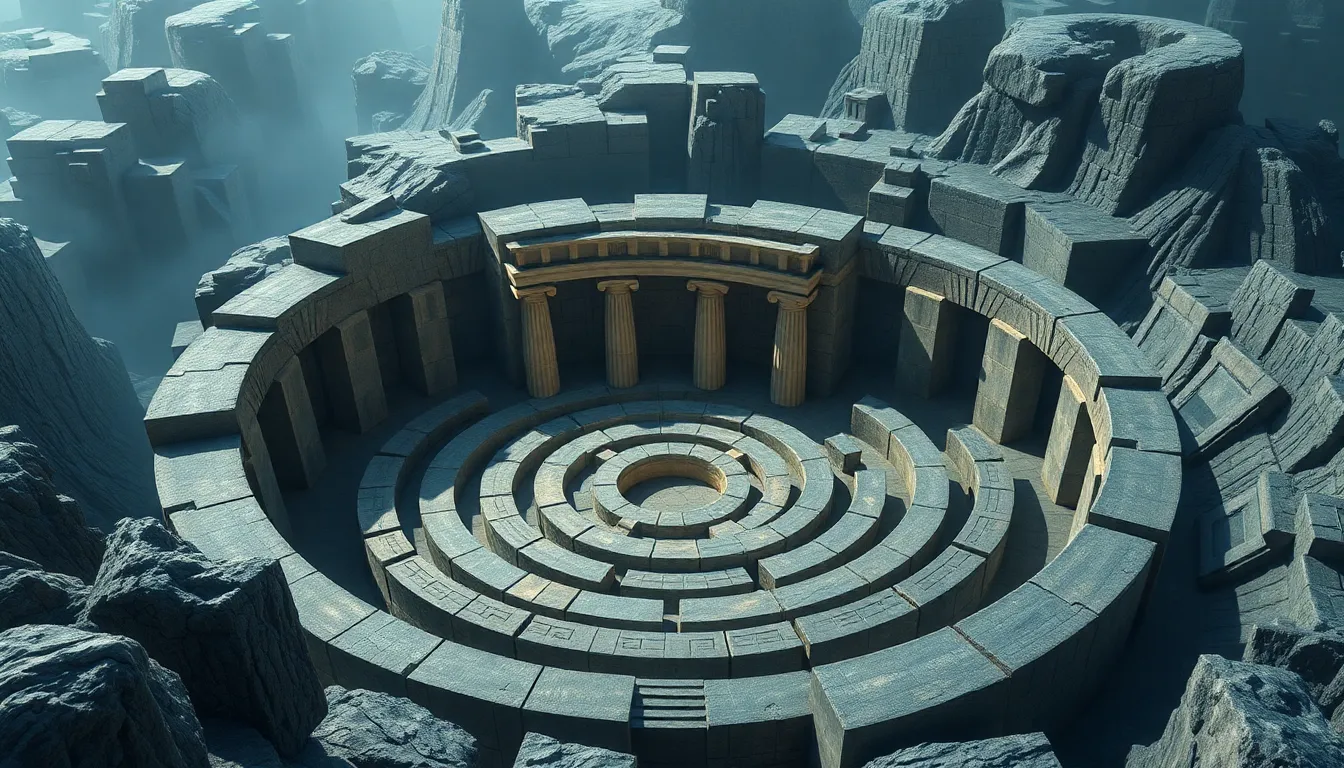
The Labyrinth: A Symbol of Complexity in Greek Legends
I. Introduction
The Labyrinth is one of the most enduring symbols in Greek mythology, often characterized by its intricate design and the challenges it presents to those who enter. In mythology, a labyrinth is a complex structure with numerous paths and dead ends, designed to confound and trap those who dare to navigate its maze-like corridors.
The significance of the Labyrinth extends beyond its physical structure; it embodies themes of struggle, discovery, and the human experience. This article aims to explore the historical context of the Labyrinth, its role in the myth of Theseus and the Minotaur, its symbolic meanings, and its influence on literature, art, psychology, and culture.
II. Historical Context of the Labyrinth
The origins of the Labyrinth can be traced back to the Minoan civilization on the island of Crete, where archaeological findings reveal complex palace structures that may have inspired the mythical concept. The most notable of these is the Palace of Knossos, associated with King Minos, who was said to have commissioned the construction of the Labyrinth to contain the Minotaur, a creature that was part man and part bull.
Over time, the Labyrinth evolved in Greek mythology, transitioning from a physical structure to a metaphorical representation of life’s complexities. It became a powerful symbol of the challenges individuals face in their quests for knowledge, self-discovery, and personal growth.
III. The Myth of Theseus and the Minotaur
One of the most famous myths surrounding the Labyrinth is that of Theseus and the Minotaur. In this tale, King Minos of Crete demands tribute from Athens in the form of seven young men and seven young women, who are sent into the Labyrinth to be devoured by the Minotaur.
Theseus, a brave hero and son of the Athenian king, volunteers to face the Minotaur. With the help of Ariadne, Minos’s daughter, he receives a ball of thread to unravel as he navigates the Labyrinth, allowing him to find his way back after slaying the beast.
- Characters:
- Theseus: The hero who defeats the Minotaur.
- Ariadne: The princess who aids Theseus.
- The Minotaur: The monstrous creature trapped within the Labyrinth.
- King Minos: The ruler who orders the sacrifices to the Minotaur.
The Labyrinth serves as a crucial element in this story, representing the physical and psychological challenges that Theseus must confront. Themes of bravery, intelligence, and sacrifice resonate throughout the myth, reflecting the human experience of facing fears and overcoming obstacles.

IV. Symbolic Meanings of the Labyrinth
The Labyrinth is rich in symbolic meanings, serving as a powerful metaphor for various aspects of life:
- Complexity and confusion: The structure of the Labyrinth symbolizes the intricate and often convoluted nature of life’s challenges, where individuals may feel lost or overwhelmed.
- Journey of self-discovery: Navigating the Labyrinth can represent the journey towards self-awareness and personal growth, as one confronts inner demons and seeks clarity.
- Duality of light and darkness: The maze embodies the struggle between good and evil, knowledge and ignorance, as individuals traverse the paths of their own making.
V. The Labyrinth as a Literary and Artistic Motif
The Labyrinth has inspired countless works of art and literature throughout history. In ancient times, it was depicted in pottery, frescoes, and sculptures, often illustrating scenes from the myth of Theseus and the Minotaur.
In literature, the Labyrinth has appeared as a motif in various narratives, symbolizing the hero’s journey and the complexities of the human experience. Notable examples include:
- Ovid’s “Metamorphoses” – where the Labyrinth is described in detail.
- Dante Alighieri’s “Divine Comedy” – the intricate structure of Hell can be seen as a labyrinthine journey.
- Jorge Luis Borges’ “The Garden of Forking Paths” – a modern interpretation of labyrinths in literature.
In contemporary culture, the Labyrinth continues to resonate, appearing in films, video games, and art installations. It serves as a powerful symbol of the complexities of modern life, drawing parallels between ancient myths and contemporary struggles.
VI. Psychological Interpretations of the Labyrinth
The Labyrinth also holds significant psychological interpretations, often representing the unconscious mind and the complexities of human emotions. Psychologists have explored the labyrinthine nature of thoughts and feelings, suggesting that:
- Symbol of the unconscious: The Labyrinth can represent the depths of the psyche, where hidden fears and desires reside.
- Exploration of human conflicts: Navigating the Labyrinth can symbolize the internal struggles individuals face when dealing with emotional turmoil.
- Therapeutic uses: Modern psychology has incorporated labyrinths into therapeutic practices, using them as tools for meditation and self-reflection, guiding individuals on their journeys of healing.
VII. Comparison with Other Cultural Labyrinths
Labyrinths appear in various cultures and mythologies around the world, each carrying unique meanings and interpretations. Some similarities and differences include:
- Similarities:
- Labyrinths often symbolize the journey of life and the challenges one must face.
- They frequently represent the struggle between order and chaos.
- Differences:
- In Celtic mythology, labyrinths are often associated with rituals and spiritual journeys.
- In Hinduism, the concept of a labyrinth can be likened to the cycle of life, death, and rebirth (samsara).
The universal appeal of labyrinths speaks to the shared human experience of navigating life’s complexities, providing insights that transcend cultural boundaries.
VIII. Conclusion
The Labyrinth stands as a significant symbol in Greek legends, representing the intricate nature of existence and the challenges individuals face on their journeys. Its historical roots in Minoan civilization, the powerful myth of Theseus and the Minotaur, and its enduring presence in literature, art, and psychology illustrate its multifaceted meanings.
As a symbol of complexity, the Labyrinth continues to resonate in contemporary society, reminding us of the importance of self-discovery, the courage to confront our fears, and the profound journey each individual undertakes in search of meaning and clarity.