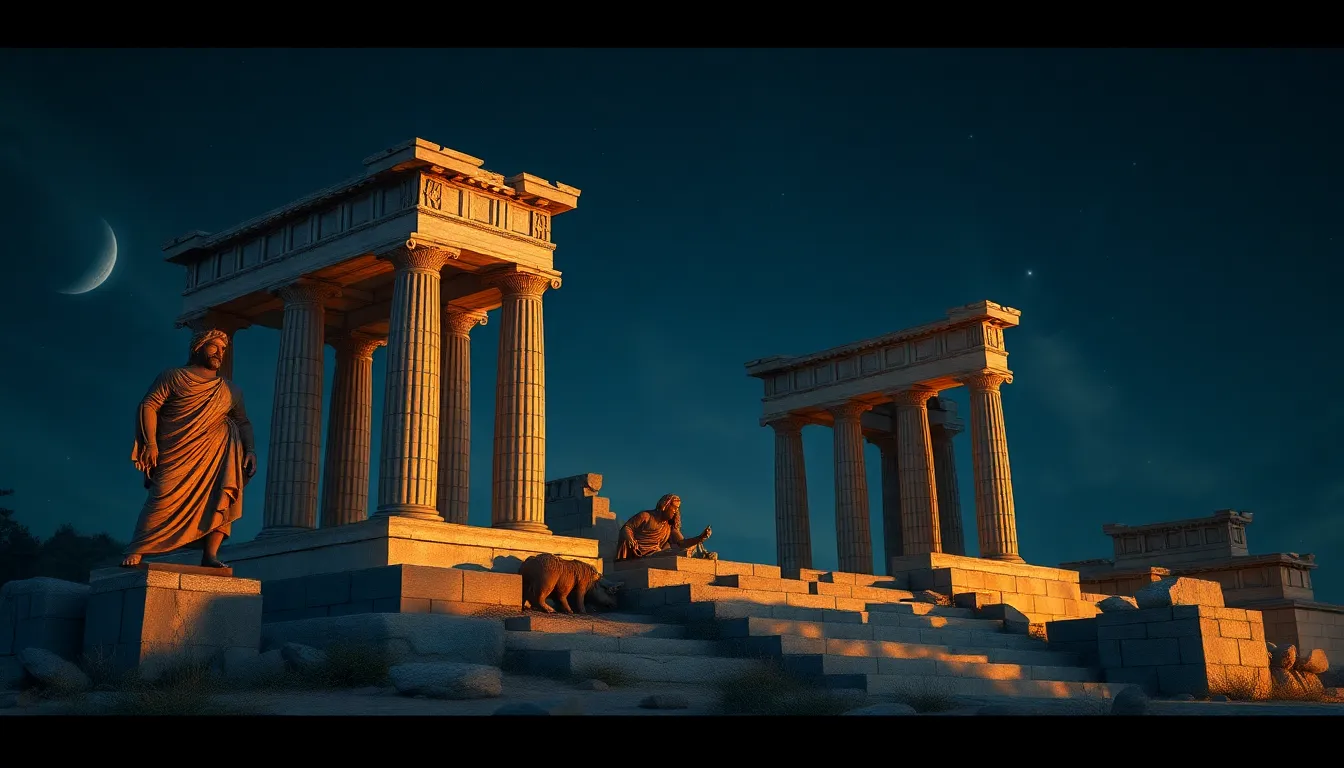
The Legacy of Greek Myths in Today’s Cultural Identity
I. Introduction
Greek myths are a collection of traditional stories that originated in ancient Greece, encompassing tales of gods, goddesses, heroes, and the creation of the world. These myths have shaped the cultural and historical landscape of Greece and have had a profound influence on Western civilization.
The importance of these myths lies not only in their entertainment value but also in their ability to convey moral lessons, explain natural phenomena, and reflect the values and beliefs of the society that created them. This article will explore the multifaceted legacy of Greek myths, examining their historical background, their presence in modern literature and art, their psychological implications, and their role in shaping cultural identities.
II. Historical Background of Greek Myths
A. Origins of Greek mythology
Greek mythology originates from a blend of ancient folklore, religious practices, and oral traditions. The myths were initially passed down orally for generations before being documented in written form by poets such as Homer and Hesiod in the 8th century BCE. These stories were deeply intertwined with the religious practices of the time and were used to explain the world around the ancient Greeks.

B. Key figures and stories in Greek myths
Greek mythology is rich with key figures and narratives that have become iconic over time. Some of the most prominent include:
- Zeus: The king of the gods, associated with the sky and thunder.
- Hera: The queen of the gods and goddess of marriage and family.
- Poseidon: The god of the sea, earthquakes, and horses.
- Athena: The goddess of wisdom, warfare, and crafts.
- Hades: The god of the underworld.
- Heracles (Hercules): A demigod known for his strength and heroic feats.
Some of the most well-known myths include the tales of the Trojan War, the Labors of Heracles, and the adventures of Odysseus.
C. The role of myths in ancient Greek society
In ancient Greece, mythology served several key functions:
- Religious significance: Myths were central to the worship of gods and goddesses, with rituals and festivals dedicated to them.
- Social cohesion: Shared myths helped to unify various city-states and communities.
- Educational tools: Myths conveyed moral lessons and cultural values to younger generations.
III. Greek Myths in Modern Literature
A. Influence on contemporary literature and storytelling
Greek myths continue to inspire writers and storytellers across various genres. The archetypes and themes found in these ancient stories resonate with modern audiences, making them relevant even today.
B. Examples of modern works inspired by Greek myths
Numerous contemporary works draw on Greek mythology, including:
- The Song of Achilles by Madeline Miller: A retelling of the Iliad focusing on the relationship between Achilles and Patroclus.
- Circe by Madeline Miller: A retelling of the life of the sorceress Circe from Homer’s Odyssey.
- The Lightning Thief by Rick Riordan: The first book in the Percy Jackson series, which introduces young readers to Greek mythology through a modern lens.
C. The adaptation of mythological themes in different genres
Greek myths have been adapted into various genres, including:
- Fantasy: Many fantasy authors incorporate mythological elements into their worlds.
- Science fiction: Themes of hubris and the consequences of playing god can be found in sci-fi narratives.
- Drama and poetry: The emotional depth and moral complexities of myths provide rich material for playwrights and poets.
IV. Greek Myths in Art and Popular Culture
A. Representation of Greek myths in visual arts
The influence of Greek mythology is evident in visual arts, from classical sculptures to contemporary paintings. Artists have long drawn inspiration from mythological subjects, leading to a vast array of works that depict gods, heroes, and mythical creatures.
B. Impact on film and television
Greek myths have been adapted into numerous films and television shows, bringing these ancient tales to modern audiences. Notable adaptations include:
- Troy (2004): A film adaptation of Homer’s Iliad, focusing on the Trojan War.
- Clash of the Titans (1981 and 2010): Both versions depict the myth of Perseus and his quest against the Kraken.
- Hercules (1997): Disney’s animated film reinterprets the life of Heracles for a family audience.
C. Role of myths in gaming and digital media
In the realm of gaming and digital media, Greek mythology has been a popular source of inspiration. Video games such as:
- God of War: A series that explores the story of Kratos, a character deeply intertwined with Greek mythology.
- Assassin’s Creed Odyssey: A game set in ancient Greece that incorporates mythological elements.
These games allow players to engage with mythological narratives in interactive ways, creating a unique blend of storytelling and gameplay.
V. Psychological and Philosophical Implications
A. Archetypes and their relevance in modern psychology
Greek myths contain archetypes that resonate with human experiences, making them relevant in modern psychology. Figures such as the Hero, the Mentor, and the Trickster reflect universal human traits and struggles.
B. Moral and ethical lessons derived from myths
Myths often convey moral and ethical lessons that remain pertinent today. For example:
- The story of Prometheus teaches the consequences of defiance and the pursuit of knowledge.
- The tale of Icarus illustrates the dangers of hubris and ignoring wise counsel.
C. Mythology as a tool for understanding human nature
Mythology provides insights into human nature, exploring themes of love, jealousy, ambition, and fate. These stories allow us to reflect on our own lives and the complexities of human emotions.
VI. Greek Myths and National Identity
A. Influence on national narratives and cultural pride
Greek myths play a significant role in shaping national identity, particularly in Greece. The stories of ancient heroes and gods foster a sense of cultural pride and continuity, connecting modern Greeks with their historical past.
B. Myths as symbols of historical continuity
Mythological narratives serve as symbols of historical continuity, linking contemporary society with its ancient roots. This connection is often celebrated in national events, art, and education.
C. Case studies: Greece and other cultures adopting Greek myths
Other cultures have also adopted Greek myths, integrating them into their own narratives. For example:
- The Renaissance period saw a revival of interest in Greek mythology, influencing art and literature across Europe.
- In modern times, various cultures reinterpret Greek myths in ways that reflect their own values and beliefs.
VII. Education and Greek Myths
A. Incorporation of myths in educational curricula
Greek myths are often included in educational curricula, providing students with a rich source of cultural knowledge and literary analysis. They offer unique opportunities to explore themes of morality, identity, and human experience.
B. Benefits of studying Greek mythology in modern education
Studying Greek mythology has several benefits:
- Critical thinking skills: Analyzing myths encourages students to engage with complex narratives and moral dilemmas.
- Cultural literacy: Understanding these myths enhances students’ cultural awareness and appreciation.
- Interdisciplinary connections: Myths connect literature, history, psychology, and the arts, fostering a holistic educational approach.
C. Challenges and criticisms of mythological teachings
Despite their benefits, the teaching of Greek mythology faces challenges, including:
- Potential biases in interpretations of myths.