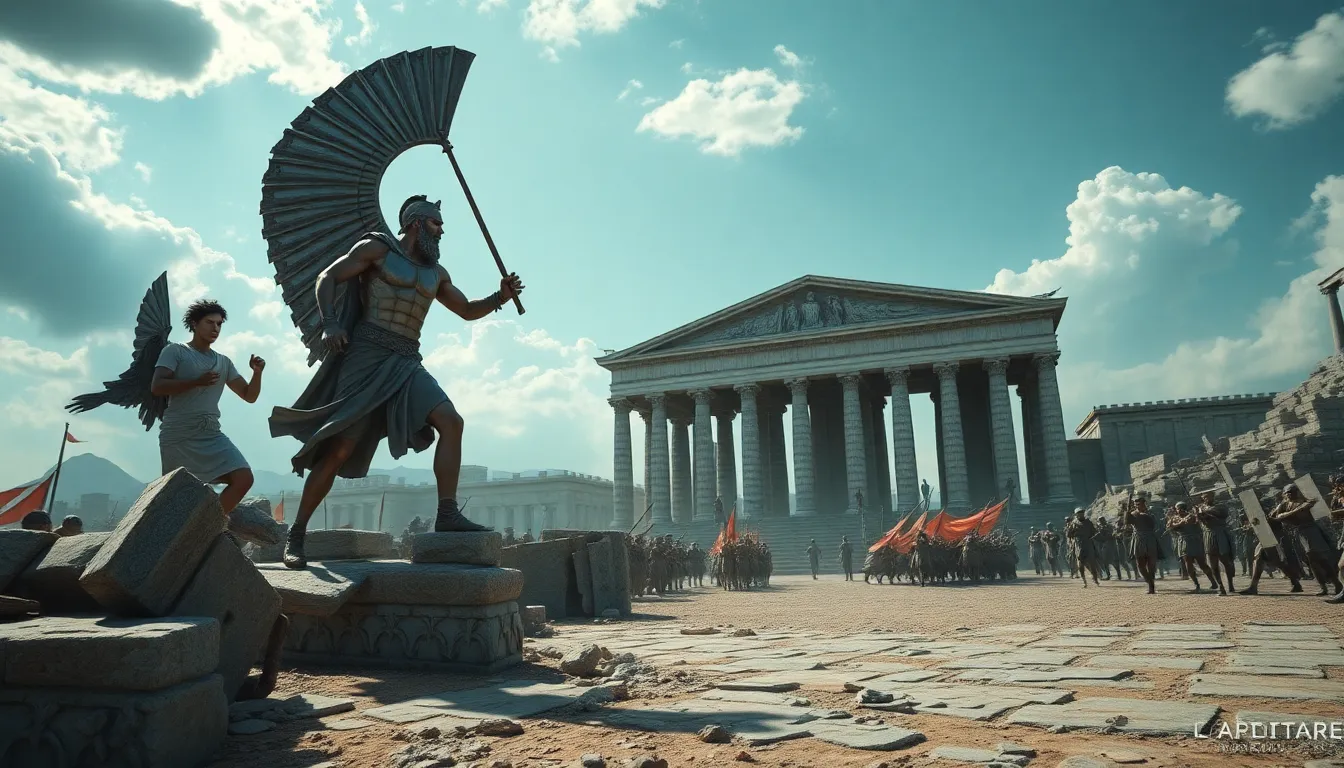
The Legacy of the Trojan War in Today’s Political Landscape
I. Introduction
The Trojan War is one of the most celebrated tales in Greek mythology, a story that has captivated audiences for centuries. Yet, it raises an intriguing question: how much of the Trojan War is myth, and how much is rooted in historical reality? Regardless of its origins, the importance of the Trojan War extends far beyond ancient Greece; it has influenced literature, history, and even modern politics.
This article aims to explore the relevance of the Trojan War in today’s political landscape, examining its lessons, parallels with contemporary conflicts, and the ways in which its legacy continues to shape political narratives around the globe.
II. Historical Context of the Trojan War
The Trojan War, as chronicled in works such as Homer’s “Iliad,” is said to have taken place in the late Bronze Age, around the 12th century BCE. According to myth, the war was sparked by a dispute among the goddesses Hera, Athena, and Aphrodite over who was the fairest, leading to the abduction of Helen, wife of Menelaus of Sparta, by Paris of Troy.
Key figures in this epic conflict include:
- Agamemnon: The king of Mycenae and leader of the Greek forces.
- Achilles: The mightiest Greek warrior, known for his rage and eventual downfall.
- Hector: The noble Trojan prince and defender of Troy.
- Helen: The catalyst for the war, her beauty sparking the conflict.
The war concluded with the cunning strategy of the Trojan Horse, a deceptive ploy that allowed the Greeks to infiltrate Troy and ultimately led to the city’s downfall.
III. Lessons from the Trojan War
The Trojan War offers a multitude of lessons that are still relevant today:
- Themes of betrayal and loyalty: The war exemplifies the complexities of loyalty, as characters frequently navigate shifting allegiances.
- The consequences of pride and hubris: Figures like Achilles demonstrate how excessive pride can lead to tragic outcomes.
- The impact of strategic deception in warfare: The Trojan Horse symbolizes how cunning and strategy can triumph over brute strength.

IV. The Trojan War in Modern Political Rhetoric
References to the Trojan War frequently appear in modern political discourse, where leaders draw on its themes to illustrate their points. Notable instances include:
- Speeches that invoke the Trojan Horse as a metaphor for hidden agendas in politics.
- Literary works that use the war’s narrative to comment on contemporary issues.
Case studies of political leaders, such as Winston Churchill and Barack Obama, demonstrate how the Trojan War has been employed to rally support and frame arguments, showcasing its cultural significance in shaping political narratives.
V. Parallels Between the Trojan War and Contemporary Conflicts
When we examine modern conflicts, it becomes evident that many share parallels with the Trojan War. For instance:
- Comparing ancient strategies to modern military tactics: The use of deception, espionage, and strategic alliances are still prevalent in today’s warfare.
- Case studies of modern conflicts: The U.S. invasion of Iraq in 2003 has drawn comparisons to the Trojan War, particularly regarding the use of misinformation.
- The relevance of alliances and betrayals: Just as in the Trojan War, modern geopolitics often involves shifting alliances and betrayals that can alter the course of conflicts.
VI. The Role of Propaganda and Misinformation
Propaganda played a significant role during the Trojan War, notably through the manipulation of narratives and public perception. Modern politics similarly relies on propaganda techniques, including:
- Historical examples: The Greeks used stories of heroism and sacrifice to bolster their resolve, while the Trojans faced narratives that undermined their defense.
- Modern parallels: Political campaigns today often involve misinformation and strategic narrative crafting to sway public opinion.
The importance of critical thinking in discerning truth from manipulation is crucial, as can be seen from the lessons of the Trojan War.
VII. The Trojan War’s Influence on National Identity and Mythology
The Trojan War has left a lasting impact on national narratives and pride, influencing various cultures in how they interpret their history and identity. Key points include:
- The lasting impact on national narratives: Many nations draw from the stories of the Trojan War to instill pride and a sense of shared history.
- Different cultural interpretations: Various cultures reinterpret the Trojan War to reflect their struggles and aspirations, often using it as a metaphor for resilience.
In essence, the Trojan War serves as a rich tapestry through which contemporary struggles can be viewed, echoing the complexities of human experience.
VIII. Conclusion
Reflecting on the enduring legacy of the Trojan War, it is clear that its themes and narratives resonate deeply within today’s political landscape. The implications for future political affairs are profound, as the lessons of betrayal, loyalty, and the impact of strategic deception remain ever-relevant.
As we navigate the complexities of modern geopolitics, it is crucial for readers to explore these historical influences and recognize how ancient narratives continue to shape our understanding of contemporary conflicts. The Trojan War, both as a myth and a historical event, encourages us to reflect on our past while informing our future.