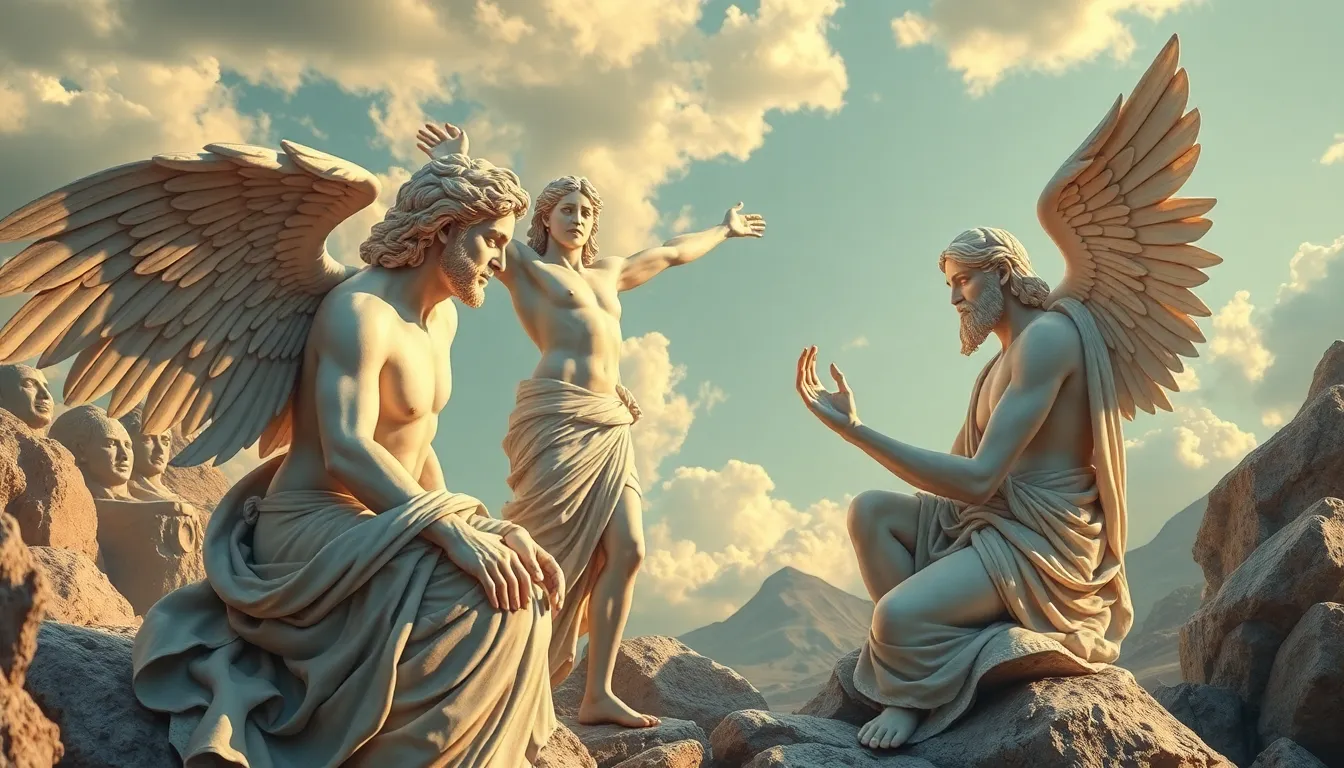
The Love Between Gods and Mortals: A Complex Relationship
I. Introduction
The love between gods and mortals is a recurring theme in various mythologies around the world. This complex relationship often transcends mere affection, intertwining divine intentions with the fragile emotions of human beings. Divine love can be seen as both a blessing and a curse, illuminating the duality of relationships between the celestial and the terrestrial.
In mythology and literature, these relationships serve as powerful allegories for human emotions, aspirations, and the often tumultuous nature of love itself. This article aims to explore the complexities of god-mortal relationships, shedding light on their historical context, nature, consequences, and their lasting impact on modern interpretations.
II. Historical Context
Throughout history, various ancient mythologies have portrayed the relationships between gods and mortals in multifaceted ways. These narratives not only reflect cultural beliefs but also reveal the human condition through the lens of divine interaction.
- Greek Mythology: The gods of Olympus frequently engaged in romantic and tumultuous affairs with mortals, leading to legendary tales of love, betrayal, and tragedy.
- Roman Mythology: Similar to the Greeks, Roman gods like Jupiter and Venus interacted with mortals, often resulting in significant mythological events.
- Hindu Mythology: Deities such as Krishna and Rama are known to have earthly relationships, illustrating the divine’s connection to human love and emotion.
Over time, these narratives have evolved, adapting to changing societal norms and values while maintaining their core themes of love and desire. They serve as reflections of human experiences, providing insight into how ancient cultures understood the divine and their own place within the cosmos.
III. The Nature of Divine Love
Divine love is characterized by its immense power and complexity. It often embodies both transcendent joy and profound sorrow, showcasing the dual nature of affection from a divine perspective.
- Characteristics of Divine Love:
- Unconditional and eternal
- Transcendent, often leading to a transformation of the mortal
- Capable of both creation and destruction
- Power Dynamics:
- Gods often hold immense power over mortals, leading to imbalances in relationships.
- Mortals may be left vulnerable to the whims of divine beings.
Examples of divine love can be found in both blessings and curses. For instance, the love of Zeus for various mortals often resulted in the birth of great heroes, yet it also led to jealousy and wrath from his wife Hera, showcasing the volatile nature of such relationships.
IV. The Mortal Experience of Divine Love
For mortals, the experience of divine love can be both exhilarating and harrowing. The emotional and psychological impacts are profound, as mortals grapple with their aspirations and desires in relation to the gods.
- Emotional Impact:
- Feelings of insignificance and longing
- Moments of ecstasy and despair
- Mortal Aspirations:
- Desire for divine favor and blessings
- Aspirations for immortality through legacy or divine connection
Iconic mortal characters such as Orpheus, who ventured into the Underworld for the love of Eurydice, exemplify the lengths to which mortals will go for love, as well as the tragic consequences that such pursuits can entail.
V. Consequences of God-Mortal Relationships
The outcomes of god-mortal relationships can be multifaceted, leading to both positive and negative consequences.
- Positive Outcomes:
- Empowerment through divine gifts (e.g., Hercules receiving strength)
- Transformation of the mortal (e.g., Psyche becoming a goddess)
- Negative Outcomes:
- Tragedy, as seen in the story of Pygmalion and Galatea
- Heartbreak and loss, exemplified by the tale of Achilles and Patroclus
- The threat of divine wrath, as in the case of Arachne, punished for her hubris against Athena.
This duality reflects the inherent complexities of love, where blessings can simultaneously carry burdens, illuminating the intricate dance between divine and mortal affections.
VI. Symbolism and Themes
The themes of love between gods and mortals serve as powerful vehicles for understanding human nature. These relationships often symbolize key aspects of the human experience.
- Common Themes:
- Sacrifice: Many stories involve mortals sacrificing for love or being tested by the gods.
- Longing: The desire for divine connection often leads to quests or trials.
- Transcendence: Love is portrayed as a force that can elevate mortals to divine status.
- Fate and Destiny: The role of fate is significant in these narratives, often dictating the outcomes of love and relationships. Mortals may find themselves at the mercy of the gods’ designs.
These themes resonate with audiences, reflecting timeless truths about love, loss, and the pursuit of connection.
VII. Modern Interpretations and Representations
In contemporary literature, film, and art, the theme of god-mortal love continues to captivate audiences. Modern adaptations often reinterpret these ancient stories, drawing parallels to contemporary human experiences.
- Literature: Novels often explore the complexities of love through characters who interact with divine beings, such as Rick Riordan’s “Percy Jackson” series.
- Film: Movies like “Clash of the Titans” and “Immortals” illustrate the enduring appeal of these narratives.
- Art: Artists continue to depict these themes, often exploring the emotional depths of love and longing in their work.
The relevance of god-mortal love in modern society is significant, as it mirrors current human experiences of love, desire, and the search for meaning. These stories resonate with audiences, reminding us of the profound connections we seek in our own lives.
VIII. Conclusion
In conclusion, the complexities of god-mortal relationships reveal much about the nature of love itself. From the blessings and curses that accompany divine affection to the emotional struggles faced by mortals, these narratives provide deep insights into the human experience.
The enduring significance of these stories in understanding love continues to shape our perceptions and relationships today. As we reflect on the lessons learned from mythology, we can appreciate the timeless nature of love’s complexities, embracing the beauty and challenges that come with it.