The Many Legends of Cerberus: Variations Across Cultures
I. Introduction
Cerberus, the fearsome three-headed dog, is one of the most iconic figures in Greek mythology. Known as the guardian of the Underworld, Cerberus has captured the imagination of many through centuries of storytelling. His fearsome appearance and essential role in the mythological narratives highlight not only his significance in Greek mythology but also the broader themes of protection and fear that resonate across various cultures.
This article aims to explore the variations of the Cerberus legend across different cultures, examining its adaptations and interpretations in Roman mythology, as well as its reflections in other ancient belief systems.
II. Cerberus in Greek Mythology
A. Description and Characteristics of Cerberus
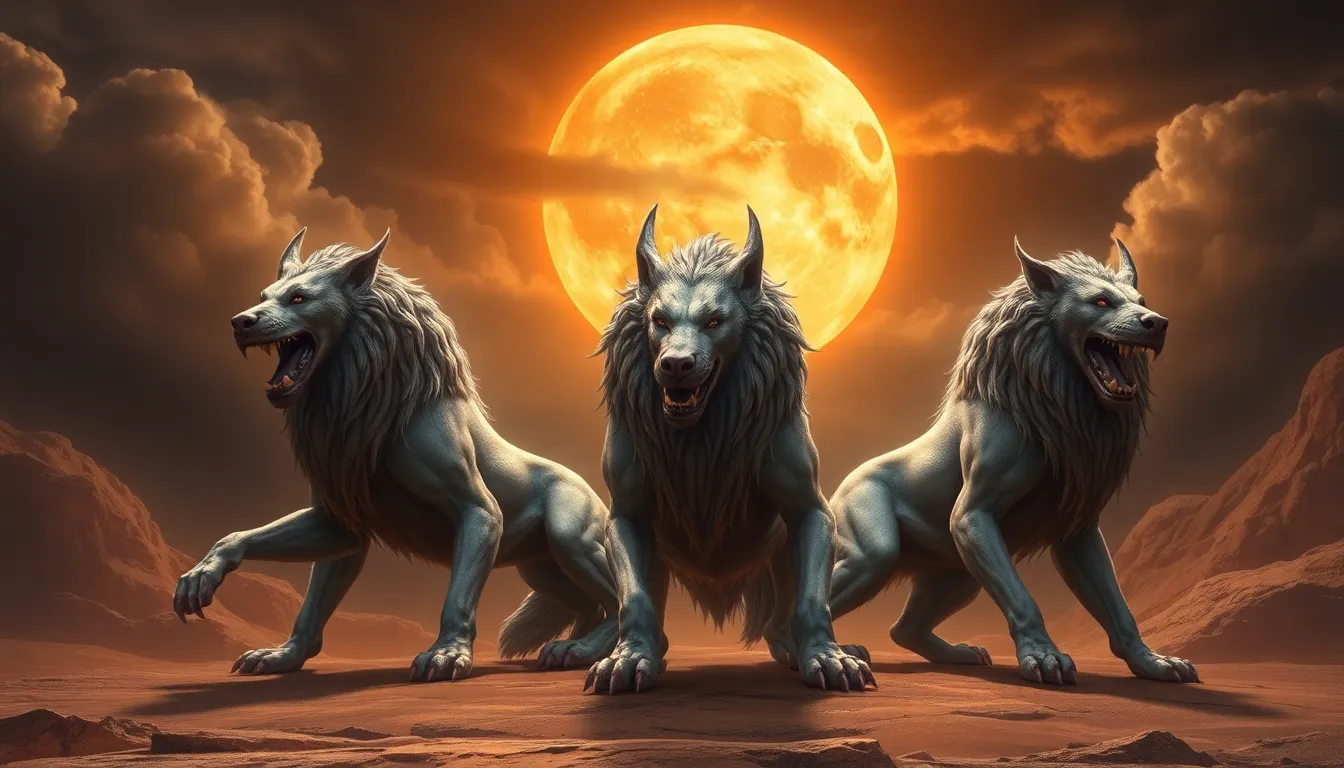
Cerberus is commonly depicted as a monstrous dog with three heads, each representing a different aspect of his nature. His serpent-like tail, which often ends with a snake’s head, and the mane of snakes that adorns his body add to his terrifying presence. He is described as having a fierce demeanor, with the ability to bark loudly and frighten any who dare to approach the gates of the Underworld.
B. Role in the Underworld and as Hades’ Guardian
In Greek mythology, Cerberus serves as the loyal guardian of Hades, the god of the Underworld. His primary responsibility is to prevent the souls of the dead from escaping and to keep the living from entering without permission. This role emphasizes the boundary between life and death, a common theme in many mythologies.
C. Notable Myths Involving Cerberus
One of the most famous myths involving Cerberus is the Twelfth Labor of Heracles (Hercules). Tasked with capturing Cerberus, Heracles descends into the Underworld, where he demonstrates his strength and cunning. After a fierce struggle, he manages to bring Cerberus to the surface, showcasing both the hero’s bravery and the terrifying nature of the guardian.
III. Cerberus in Roman Mythology
A. Adaptation of Cerberus in Roman Culture
The Romans adopted many aspects of Greek mythology, including the figure of Cerberus, who was known as “Cerberus” in Roman culture as well. However, there were subtle differences in how he was perceived and depicted.
B. Differences in Depiction and Narrative
In Roman mythology, Cerberus is often portrayed with a slightly less menacing demeanor, sometimes depicted as a more loyal and protective creature. The emphasis on his role as a guardian is highlighted in various texts, yet the fearsome aspect remains intact.
C. Influence on Roman Literature and Art
Cerberus appears in several works of Roman literature, such as Virgil’s “Aeneid,” where he is described as a monstrous figure encountered by the protagonist. Cerberus’ image also influenced Roman art, where he is depicted in frescoes and sculptures, often surrounded by the souls of the deceased.
IV. Cerberus in Other Ancient Cultures
A. Similar Mythological Creatures in Mesopotamian Mythology
In Mesopotamian mythology, creatures akin to Cerberus can be found, such as the Lamassu—mythical beings with the body of a lion or bull and the head of a human. These creatures served as guardians of cities and temples, similar to Cerberus’ role in guarding the Underworld.
B. The Role of Guardians in Egyptian Mythology
Egyptian mythology also features guardian figures, notably Ammit, a creature that devours the souls of the unworthy. Ammit, often depicted as a combination of a lion, hippopotamus, and crocodile, serves to protect the realm of the afterlife, drawing parallels to the protective function of Cerberus.
C. Comparative Analysis of Themes and Functions
Across these cultures, the themes of guardianship, protection, and the fear of the unknown persist. Cerberus, Lamassu, and Ammit illustrate the universal human concern with the afterlife and the need for protection against malevolent forces.
V. Cerberus in Modern Literature and Media
A. Interpretations of Cerberus in Contemporary Storytelling
In modern literature, Cerberus continues to be a compelling character. Authors often reinterpret him as a symbol of loyalty and protection, while others emphasize his terrifying aspect as a representation of fear and the unknown.
B. Influence on Popular Culture
- Video Games: Cerberus appears in numerous video games, such as “God of War” and “Hades,” often as a formidable boss character.
- Movies: Films like “Harry Potter and the Sorcerer’s Stone” feature three-headed dog creatures inspired by Cerberus, further embedding him in contemporary culture.
C. Symbolism of Cerberus in Modern Narratives
Today, Cerberus symbolizes the duality of protection and fear. His presence in stories often reflects the struggle between life and death, the known and the unknown, making him a versatile figure in modern narratives.
VI. Cerberus as a Symbol of Protection and Fear
A. Psychological Interpretations of Cerberus as a Guardian
Psychologically, Cerberus can be viewed as a representation of our inner fears and the instinctual need for protection. He embodies the idea that safety and danger can coexist, highlighting our complex relationship with fear.
B. Cultural Significance of Fear and Protection in Mythology
Many mythologies explore the balance of fear and protection, often portraying guardians as both protectors and threats. Cerberus exemplifies this duality, as he safeguards the Underworld while simultaneously evoking terror in those who encounter him.
C. The Duality of Cerberus as Both Protector and Threat
This dual nature of Cerberus serves as a reminder of the precarious balance between safety and peril, demonstrating how mythological figures can embody complex human emotions and societal values.
VII. Artistic Representations of Cerberus
A. Overview of Visual Depictions Throughout History
Cerberus has been depicted in various artistic forms throughout history, from ancient pottery to modern sculptures. Each representation reflects the cultural context of its time and the evolving perception of this mythological creature.
B. Notable Artworks and Their Cultural Contexts
- Classical Sculpture: Many ancient Greek sculptures depict Cerberus in battle with heroes, emphasizing his role as a formidable guardian.
- Renaissance Art: Artists like Sandro Botticelli included Cerberus in their works, often symbolizing the transition between life and the afterlife.
C. Evolution of Cerberus’ Image in Art and Sculpture
Over time, Cerberus’ image has evolved from a terrifying beast to a more nuanced symbol, representing both the fear of death and the comfort of guardianship. This evolution reflects changing societal attitudes towards death and the afterlife.
VIII. Conclusion
Cerberus stands as a significant figure in mythology, transcending cultural boundaries and evolving through various interpretations. His role as a guardian of the Underworld resonates with themes of protection and fear, making him a compelling subject of study across cultures.
As we reflect on the enduring legacy of Cerberus, it is clear that his complexity continues to inspire and provoke thought in modern storytelling and artistic representations. Future areas of study may delve deeper into his symbolism and the psychological implications of his dual nature, further enriching our understanding of this mythological guardian.