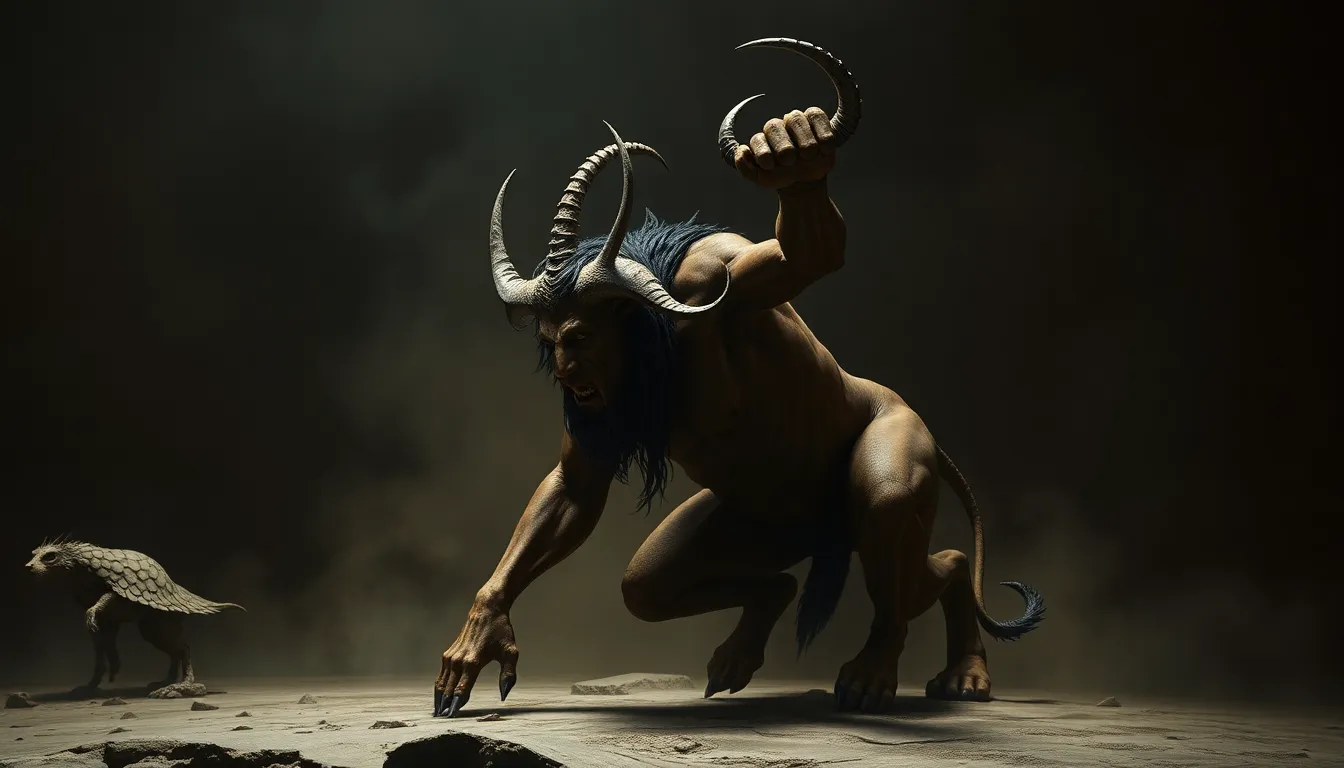
The Minotaur: An Examination of Fear in Ancient Greek Myths
I. Introduction
The Minotaur, a creature with the body of a man and the head of a bull, is one of the most intriguing figures in Greek mythology. This myth not only captivates the imagination but also serves as a profound exploration of fear, a fundamental theme that permeates many ancient narratives. In this article, we will delve into the representation of fear through the Minotaur myth, examining its origins, symbolism, and the implications of fear in human experience.
II. The Origins of the Minotaur
The story of the Minotaur begins with King Minos of Crete, whose desire for power and divine favor led to the birth of this monstrous being. According to the myth, Minos prayed to the sea god Poseidon for a magnificent bull to sacrifice, but when the god obliged, Minos kept the bull for himself instead of honoring his vow. In retaliation, Poseidon cursed Minos’s wife, Pasiphaë, to fall in love with the bull, resulting in the birth of the Minotaur.
This creature symbolizes fear in several ways:
- Physical Fear: The Minotaur represents raw, primal fear—a creature that is both human and beast, embodying the terror of the unknown.
- Fear of the Uncontrollable: The circumstances of the Minotaur’s birth highlight the consequences of human actions leading to uncontrollable monstrosities.
- Existential Fear: The labyrinth, designed by Daedalus to contain the Minotaur, serves as a physical representation of psychological and existential fears.
III. Fear of the Unknown
The labyrinth itself is a powerful metaphor for the fear of the unfamiliar. Just as one can easily become lost in a maze, so too can one become lost in their own fears and uncertainties. The Minotaur, lurking within, personifies the terror of the unknown, a fear that was ever-present in the lives of the ancient Greeks.
Historically, the Greeks viewed fear of the unexplained as a significant aspect of their existence:
- Natural disasters were often seen as divine punishment.
- Mysteries of life and death were sources of anxiety, leading to various rituals aimed at appeasing the gods.
- Myths served as a way to explain and confront these fears, helping to make sense of the unpredictable world.
IV. The Role of Sacrifice and Suffering
The theme of human sacrifice is central to the Minotaur legend. Every nine years, Athens was required to send seven young men and seven young women to Crete as tribute to the Minotaur, who would devour them in the labyrinth. This gruesome practice illustrates how fear can drive societies to accept suffering and sacrifice as a means of appeasement.
Fear serves as a powerful motivator in this context:
- Communities often resort to sacrifices to ward off greater evils or calamities.
- Such rituals reflect a collective anxiety about the unknown and the need for control over fate.
- Psychologically, fear in the face of sacrifice raises questions about the value of human life and the moral implications of such actions.
V. Heroism and Confrontation of Fear
Theseus, the hero of this myth, embodies the confrontation of fear. Armed with courage and a ball of thread given by Ariadne, Theseus enters the labyrinth to face the Minotaur. His journey represents the archetypal hero’s journey—one of facing fears head-on and emerging transformed.
The dynamics of fear in the hero’s journey include:
- Acceptance of Fear: Theseus acknowledges his fear of the Minotaur but chooses to confront it rather than flee.
- Transformation through Adversity: The encounter with the Minotaur allows Theseus to grow, symbolizing personal growth through facing fears.
- Lessons of Courage: The myth teaches that facing one’s fears can lead to liberation and triumph over darkness.
VI. The Minotaur in Art and Literature
The Minotaur has been a subject of fascination in both ancient and modern art. From ancient pottery to contemporary literature, this figure has been explored in various forms, each interpretation shedding light on the theme of fear.
Examples of representations include:
- Art: The Minotaur is depicted in classical sculptures, paintings, and mosaics, often emphasizing its monstrous nature.
- Literature: Numerous adaptations, including works by Borges and Giraud, explore the psychological aspects of the myth.
- Film: Modern adaptations in films often reinterpret the Minotaur as a symbol of inner turmoil and existential dread.
The cultural impact of the Minotaur myth continues to resonate, prompting discussions about fear, identity, and the human experience.
VII. Psychological Interpretations of the Minotaur
The Minotaur can also be viewed through psychological lenses, representing inner fears and conflicts. Freudian and Jungian interpretations provide rich insights into the myth:
- Freudian Perspective: The Minotaur embodies the id, representing primal instincts and desires that society must contain.
- Jungian Perspective: The labyrinth symbolizes the unconscious mind, with the Minotaur as a shadow figure representing repressed fears and desires.
- Contemporary Relevance: The Minotaur remains relevant in psychology, serving as a metaphor for personal struggles and the journey towards self-acceptance.
VIII. Conclusion
In summary, the Minotaur myth serves as a profound exploration of fear in various forms—physical, existential, and psychological. It highlights the complexities of the human experience, illustrating how fear can drive individuals and societies to confront their deepest anxieties. The legacy of the Minotaur continues to endure, offering timeless lessons on the significance of fear in mythology and its relevance in understanding the human condition.
Ultimately, the Minotaur stands as a reminder of the fears that dwell within us all and the importance of facing them to find clarity and strength in our lives.