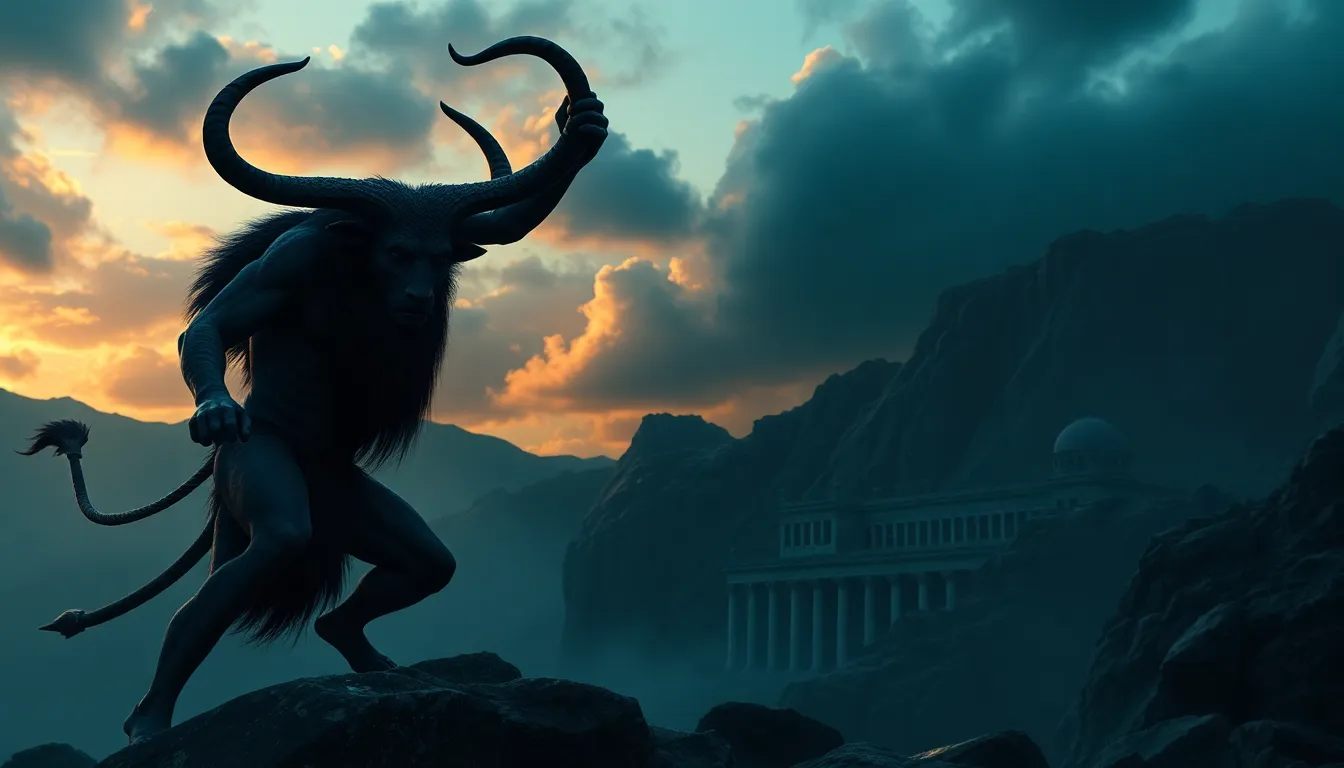
The Minotaur and the Theme of Redemption in Greek Legends
I. Introduction
The myth of the Minotaur is one of the most captivating tales in Greek mythology, encapsulating themes of heroism, sacrifice, and redemption. The story revolves around a creature that is half-man and half-bull, born from a cursed union and trapped within a labyrinth. This myth not only tells the tale of the Minotaur but also delves into the broader significance of redemption within the ancient Greek narrative landscape.
Redemption plays a crucial role in many Greek myths, serving as a pathway for characters to confront their past sins and seek a new beginning. In this article, we will explore the origins of the Minotaur, the hero Theseus’s journey, and the overarching theme of redemption that permeates this legendary tale.
II. The Origin of the Minotaur
A. The birth of the Minotaur: A curse and its consequences
The Minotaur’s origin is rooted in a tragic curse placed upon Queen Pasiphaë of Crete. As punishment for King Minos’s failure to sacrifice a magnificent bull to Poseidon, the god cursed Pasiphaë to fall in love with the beast. From this unnatural union, the Minotaur was born, a creature symbolizing a twisted fate and the consequences of hubris.
B. The role of King Minos and the Labyrinth
To contain the Minotaur, King Minos commissioned the architect Daedalus to build an elaborate labyrinth. This maze was designed so intricately that no one could find their way out once they entered. The labyrinth represents not only physical entrapment but also the psychological struggles faced by those who confront their inner demons.
C. The symbolism of the Minotaur as a representation of inner demons
In many interpretations, the Minotaur symbolizes the darker aspects of human nature—our fears, desires, and the chaos that lurks within. This creature serves as a powerful metaphor for the inner struggles that individuals face, making the myth a profound exploration of redemption and self-confrontation.
III. Theseus: The Hero’s Journey
A. Introduction to Theseus and his motivations
Theseus, a prince of Athens, emerges as the hero destined to confront the Minotaur. His motivations are fueled by a desire to free Athens from the tribute of young men and women sent to the labyrinth as sacrifices to the beast. Theseus embodies the archetype of the hero, willing to face peril for the sake of others.
B. The significance of the Labyrinth and the Minotaur
The Labyrinth itself serves as a manifestation of the challenges and fears that Theseus must overcome. Entering the maze symbolizes the confrontation with one’s inner turmoil, a journey that requires courage and determination.
C. The role of Ariadne and her thread as a tool for redemption
Ariadne, the daughter of King Minos, plays a pivotal role in Theseus’s quest. She provides him with a ball of thread, enabling him to navigate the labyrinth and ultimately defeat the Minotaur. This thread symbolizes hope, guidance, and the path to redemption, highlighting the importance of support from others in overcoming personal struggles.
IV. The Concept of Redemption in Greek Mythology
A. Definition and exploration of redemption in myths
Redemption in Greek mythology often involves characters facing their past, confronting their flaws, and seeking forgiveness or a way to atone for their sins. It signifies a transformation, moving from darkness to light, chaos to order.
B. Examples of other figures seeking redemption in Greek legends
- Heracles: Known for his Twelve Labors, Heracles sought redemption for the madness sent by Hera, which led him to kill his family.
- Orestes: After avenging his father’s murder, Orestes sought redemption from the Furies, who tormented him for his actions.
- Persephone: Her journey between the Underworld and the Earth symbolizes rebirth and the cyclical nature of life, portraying a form of redemption through renewal.
C. The moral implications of redemption in these stories
These myths illustrate that redemption is not merely about forgiveness but also about personal growth and the acceptance of one’s flaws. They highlight the importance of confronting one’s demons to achieve a sense of wholeness and understanding.
V. The Battle Between Light and Darkness
A. The Minotaur as a manifestation of chaos and darkness
The Minotaur embodies the chaos and darkness that can reside within each person. It represents the fears, desires, and destructive tendencies that must be faced and overcome.
B. Theseus as a symbol of light and order
In contrast, Theseus symbolizes light, order, and the heroic qualities of courage and intelligence. His journey through the labyrinth represents the struggle to bring order to chaos, both in the external world and within oneself.
C. The transformative power of overcoming inner struggles
By defeating the Minotaur, Theseus not only frees Athens but also achieves personal redemption. This act of bravery transforms him from a mere prince into a legendary hero, showcasing the transformative power of confronting and overcoming one’s inner struggles.
VI. The Aftermath of the Minotaur’s Defeat
A. The consequences of Theseus’s victory
Theseus’s victory over the Minotaur leads to the end of the tributes to Crete, restoring hope and freedom to the people of Athens. His heroism is celebrated, marking a significant shift in the balance of power.
B. The impact on Crete and the legacy of the Minotaur
While the Minotaur’s defeat signifies a victory for Athens, it also leaves a lasting impact on Crete. The myth serves as a cautionary tale about the dangers of unchecked desires and the consequences of hubris.
C. The narrative shift towards healing and redemption for the characters involved
The aftermath of the Minotaur’s defeat leads to a narrative of healing for both Theseus and Ariadne, who navigate their paths toward redemption and fulfillment beyond the labyrinth’s shadows.
VII. Modern Interpretations of the Minotaur Myth
A. The Minotaur in contemporary literature and media
The Minotaur continues to resonate in modern storytelling, appearing in various forms across literature, film, and art. From novels to graphic novels, the creature symbolizes the struggle against one’s darker nature, appealing to contemporary audiences.
B. The ongoing relevance of redemption themes in modern storytelling
Redemption remains a vital theme in modern narratives, reflecting the ongoing human quest for meaning, forgiveness, and transformation. The Minotaur’s tale serves as a reminder of the importance of facing our fears and seeking redemption.
C. Psychological interpretations of the Minotaur as a metaphor for human struggles
Psychologists and scholars often interpret the Minotaur as a metaphor for the human psyche, representing the internal conflicts and struggles individuals face in their lives. This psychological lens adds depth to the myth, making it relevant to discussions of mental health and personal growth.
VIII. Conclusion
In conclusion, the myth of the Minotaur is a rich tapestry woven with themes of redemption, inner struggle, and the hero’s journey. Theseus’s confrontation with the Minotaur serves as a powerful narrative exploring the complexities of human nature and the transformative power of facing one’s demons.
The enduring legacy of Greek mythology lies in its ability to convey complex themes that resonate throughout history and into modern times. The importance of redemption, as illustrated in the Minotaur myth, remains a fundamental aspect of the human experience, reminding us that through struggle and confrontation, we can achieve growth and transformation.