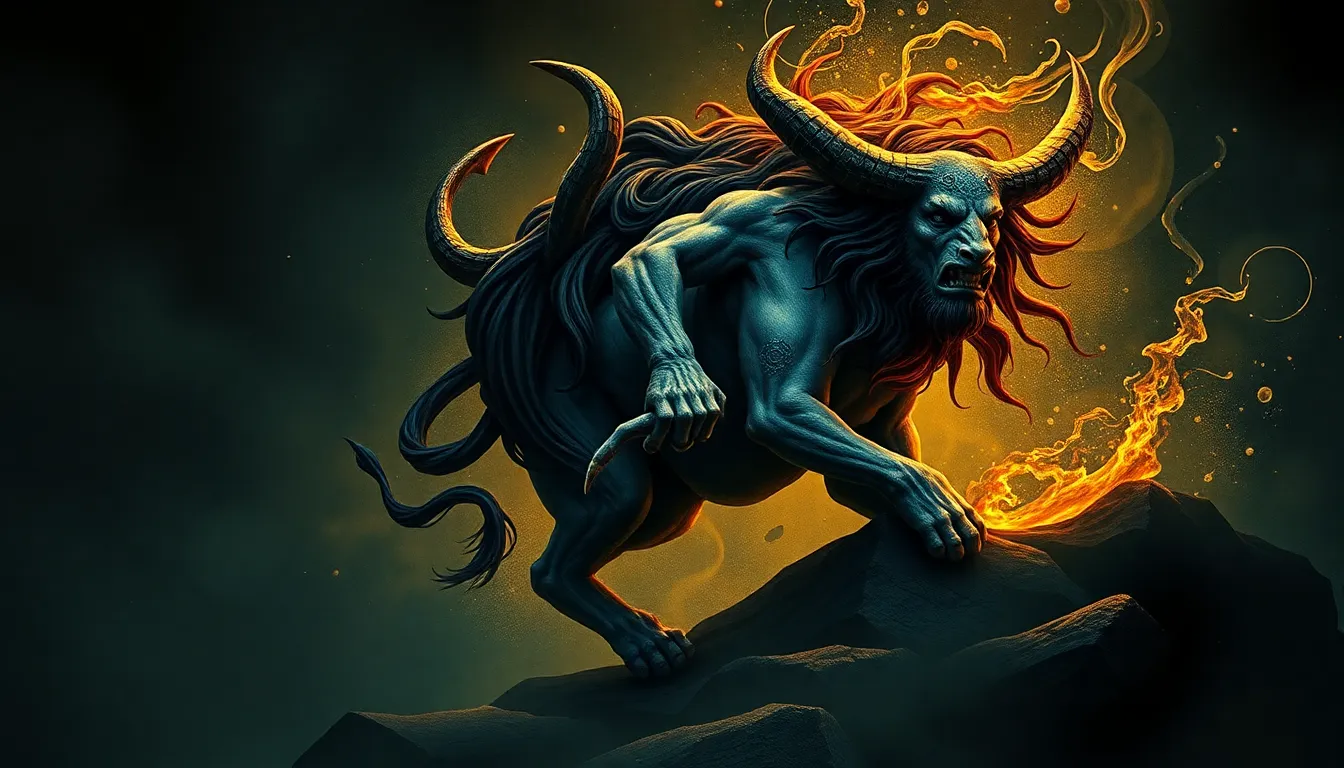
The Minotaur in Music: How Composers Have Interpreted the Legend
I. Introduction
The Minotaur, a creature with the body of a man and the head of a bull, is one of the most intriguing figures in Greek mythology. This legendary beast, born from a union between Queen Pasiphaë and a majestic bull, symbolizes the duality of human nature, embodying both civilization and savagery.
The importance of the Minotaur in cultural history cannot be overstated. It represents themes of power, sacrifice, and the struggle between humanity and monstrosity. As a result, the Minotaur has inspired countless artistic expressions throughout history, particularly in music.
This article aims to explore the various musical interpretations of the Minotaur, examining how composers across different eras have engaged with this rich mythological narrative.
II. Historical Context of the Minotaur Legend
The Minotaur myth can be traced back to ancient Greek mythology, particularly in the tales surrounding King Minos of Crete. According to legend, the Minotaur resided in the labyrinth designed by Daedalus, where it was fed with human sacrifices. This myth encapsulates the essence of fear and the unknown, reflecting the complexities of human emotions and societal constructs.
The symbolism associated with the Minotaur is profound. It represents:
- Duality: The blending of human intellect and animalistic instincts.
- Isolation: The labyrinth as a metaphor for the human condition and the search for meaning.
- Sacrifice: The offering of youth to appease the beast, raising questions about morality and governance.
Over time, the legend has evolved, transforming from a cautionary tale into a rich source of artistic inspiration, capturing the imagination of generations.
III. Early Musical Representations
In ancient and medieval periods, the Minotaur inspired various musical works, although the explicit references to this myth were less common than in later centuries. Early compositions often incorporated themes of heroism and tragedy, reflecting the narrative of Theseus’s journey to slay the Minotaur.
Notable early musical representations include:
- Choral hymns and songs that recounted the story of Theseus and the Minotaur.
- Liturgical music that drew parallels between the Minotaur’s sacrifice and Christian themes of redemption.
The influence of the Minotaur on the development of musical storytelling is evident in the way composers began to explore narrative elements, setting the stage for more explicit adaptations in later eras.
IV. 19th Century Interpretations
The 19th century was marked by Romanticism, a movement that embraced mythological themes and emotional expression in music. The Minotaur emerged as a symbol of the struggle between civilization and primal instincts, resonating deeply with Romantic composers.
Key composers who featured the Minotaur include:
- Richard Wagner: His operas often explored themes of myth and legend, with the Minotaur emblematic of the conflict between gods and mortals.
- Paul Dukas: His symphonic work, “The Sorcerer’s Apprentice,” while not directly about the Minotaur, reflects similar themes of chaos and control.
The portrayal of the Minotaur during this era often emphasized its tragic aspects, highlighting the creature’s isolation and the moral complexities surrounding its existence.
V. The Minotaur in Contemporary Classical Music
Modern composers continue to draw inspiration from the Minotaur legend, incorporating contemporary themes that resonate with today’s audiences. Works such as “The Minotaur” by Harrison Birtwistle have brought new interpretations to the fore, blending avant-garde techniques with traditional narratives.
Notable contemporary works include:
- Birtwistle’s “The Minotaur”: A dramatic opera that explores the creature’s psychology and the implications of being both a monster and a victim.
- Mark-Anthony Turnage’s “Greek”: This opera reimagines the Minotaur myth in a modern context, focusing on themes of identity and societal expectations.
These compositions reflect contemporary concerns, such as alienation and the search for self, while still honoring the myth’s rich historical legacy.
VI. The Minotaur in Opera and Ballet
The operatic and ballet adaptations of the Minotaur story offer unique artistic approaches, each employing different narrative techniques to convey the myth’s depth.
In opera, adaptations such as Birtwistle’s “The Minotaur” present a multifaceted view of the creature, often focusing on its emotional turmoil and the tragic consequences of its existence. Ballet interpretations, like those by choreographer Martha Graham, emphasize movement and physicality to explore the themes of entrapment and liberation.
Comparing these forms reveals:
- Operatic adaptations tend to focus on vocal expression and dramatic storytelling.
- Ballet interpretations rely on choreography and visual symbolism to convey the narrative.
Both forms, however, highlight the enduring allure of the Minotaur myth and its capacity to evoke deep emotional responses from audiences.
VII. The Minotaur in Popular Music
The Minotaur’s influence extends beyond classical music into popular genres, where it has inspired rock, pop, and even electronic music. The myth’s themes of isolation, struggle, and duality resonate with contemporary artists.
Examples of songs and albums that reference the Minotaur include:
- “The Minotaur” by the band “The Decembrists,” which reflects on the themes of sacrifice and heroism.
- Labyrinth by the electronic artist “Moby,” which metaphorically explores the journey through personal challenges.
In modern lyrics, the Minotaur often serves as a metaphor for inner demons and the complexities of human nature, showcasing the myth’s continued relevance in contemporary culture.
VIII. Conclusion
The Minotaur has had a profound impact on music across genres and eras, inspiring composers to explore its rich narrative and thematic depth. From ancient choral hymns to contemporary operas and popular songs, the Minotaur myth remains a powerful symbol of the human condition.
This enduring nature of the Minotaur myth reflects our ongoing fascination with the complexities of identity, morality, and the struggle between civilization and savagery. Musical interpretations of the Minotaur not only enrich our understanding of this legendary figure but also provide insight into the cultural narratives that shape our world.
Ultimately, the Minotaur serves as a reminder of the power of myth to transcend time and resonate with the human experience, making its musical interpretations an essential aspect of our cultural heritage.