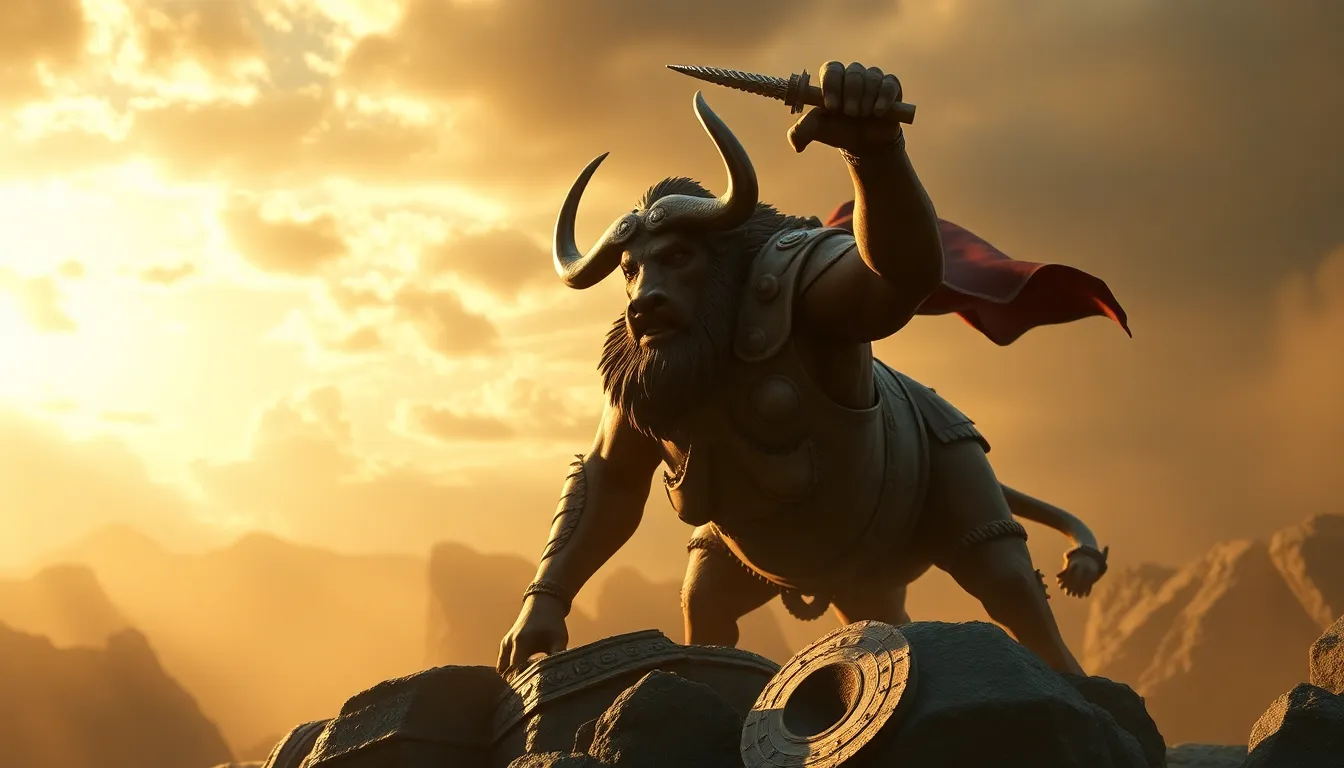
The Minotaur in the Context of Greek Heroism and Valor
I. Introduction
The myth of the Minotaur is one of the most captivating stories from Greek mythology, intertwining themes of heroism, monstrosity, and the struggle against fate. The Minotaur, a creature that is half-man and half-bull, occupies a unique place in the pantheon of Greek myths, symbolizing the complexities of human nature and the challenges that heroes must face. In ancient Greece, heroism and valor were not merely desirable traits but essential qualities that defined an individual’s legacy and relationship with the gods.
This article aims to explore the role of the Minotaur within the broader context of Greek heroism, examining how this myth reflects the ideals of bravery, sacrifice, and moral integrity that characterized the heroes of ancient Greece.
II. The Origins of the Minotaur Myth
The story of the Minotaur begins with King Minos of Crete, who, in his quest for power, angered the gods. To assert his superiority, Minos prayed for a sign from Poseidon and received a magnificent white bull. Instead of sacrificing it as promised, he kept the bull, which led Poseidon to curse Minos’s wife, Pasiphaë. She fell in love with the bull, resulting in the birth of the Minotaur, a monstrous being that embodied the consequences of human hubris and divine retribution.
The Minotaur was confined to a labyrinth, a complex maze designed by Daedalus, representing both the physical and psychological entrapments of fear and shame. In ancient Greek society, the Minotaur came to symbolize the darker aspects of human nature and the inevitable punishment that follows moral transgressions.
Cultural significance of the Minotaur in ancient Greek society
- Embodiment of human flaws and divine punishment.
- Representation of the struggle between civilization and chaos.
- Reflection of societal fears and the consequences of unchecked power.
III. Heroism Defined in Greek Mythology
Heroism in Greek mythology is characterized by a set of traits that include bravery, strength, and moral integrity. Greek heroes, such as Achilles, Heracles, and Theseus, are often portrayed as individuals who undertake perilous journeys and face formidable foes, all while grappling with their own inner turmoil and the whims of the gods.
The role of fate and divine intervention is paramount in shaping the destinies of these heroes, often leading them to confront challenges that test their courage and resolve. This intertwining of fate and free will distinguishes Greek heroism from other cultural narratives, where heroes might rely more on personal agency than divine influence.
Comparison of heroism in Greek mythology to other cultures
While many cultures celebrate heroism, Greek mythology is unique in its emphasis on the interplay between human flaws and divine will. Unlike the heroes of other traditions, Greek heroes often face tragic ends, reinforcing the idea that even the mightiest can fall due to their vulnerabilities.
IV. Theseus: The Quintessential Greek Hero
Theseus is often regarded as the archetypal Greek hero, embodying the virtues and complexities that define heroism in Greek mythology. His journey to Crete to confront the Minotaur showcases his bravery and commitment to his people, as he volunteered to enter the labyrinth in place of the Athenian youths who were to be sacrificed.
Throughout his journey, Theseus faces numerous challenges, from navigating the treacherous labyrinth to confronting the Minotaur itself. His successful slaying of the creature is not merely an act of violence but a pivotal moment that signifies the triumph of human courage over monstrous fear.
The slaying of the Minotaur: a pivotal moment in Theseus’s heroism
With the help of Ariadne, who provides him with a ball of thread to trace his path, Theseus navigates the labyrinth and confronts the Minotaur. The battle is fierce, symbolizing the struggle between civilization and barbarism. Ultimately, Theseus’s victory represents not only personal triumph but also the liberation of Athens from the tyranny of King Minos.
V. The Labyrinth as a Symbol of Valor
The labyrinth itself serves as a powerful symbol of valor, representing the complex and often perilous journey that heroes must undertake. It is a place of danger, confusion, and moral ambiguity, challenging the hero to confront their fears and inner demons.
Heroes like Theseus must navigate not only the physical dangers of the labyrinth but also the psychological challenges that come with facing a formidable opponent. This duality highlights the importance of valor in both external and internal struggles.
Valor in navigating moral dilemmas and personal growth
As Theseus traverses the labyrinth, he confronts not only the Minotaur but also the moral implications of his quest. The journey becomes a metaphor for personal growth, as heroes learn from their experiences and emerge stronger and more virtuous.
VI. The Minotaur as a Reflection of Human Struggle
The Minotaur serves as a profound metaphor for the inner demons and societal fears that humans grapple with. This duality of monstrosity and heroism is a recurring theme in Greek narratives, illustrating the complexities of human nature.
The confrontation with the Minotaur can be seen as a reflection of the struggles individuals face in their lives, whether they are external adversities or internal conflicts. The lessons learned from such confrontations emphasize the importance of courage and resilience in overcoming obstacles.
Lessons learned from confronting the Minotaur
- Embracing one’s fears can lead to personal growth.
- Confronting the monstrous aspects of oneself is essential for self-understanding.
- Heroism often requires sacrifice and the willingness to face the unknown.
VII. Legacy of the Minotaur in Literature and Art
The Minotaur’s influence extends far beyond ancient Greece, impacting literature, art, and culture throughout history. Its representation in various forms showcases the enduring significance of the myth and its themes of heroism and valor.
Artistic representations of the Minotaur, from ancient pottery to contemporary sculptures, often highlight the creature’s dual nature and the complexities of the human experience. These interpretations invite reflection on the nature of heroism and the ongoing struggle between light and darkness within us.
Modern adaptations and their reflections on heroism and valor
In modern literature and media, the Minotaur continues to be a symbol of the battle against one’s inner demons. From novels to films, contemporary adaptations often explore themes of identity, fear, and the quest for understanding, reflecting the timeless relevance of the Minotaur myth in discussions of heroism.
VIII. Conclusion
In summary, the Minotaur myth serves as a rich narrative that encapsulates the ideals of heroism and valor in Greek mythology. Theseus’s confrontation with the Minotaur is not merely a tale of triumph but a profound exploration of the complexities of human nature, the struggles against one’s inner demons, and the moral dilemmas inherent in the journey of a hero.
The enduring relevance of the Minotaur myth in contemporary discussions of bravery and morality underscores its significance in understanding not only Greek heroism but also the universal themes of courage and sacrifice that resonate through time. Ultimately, the Minotaur stands as a reminder of the complexities of heroism and the importance of confronting the dark aspects of our nature in the pursuit of personal growth and understanding.