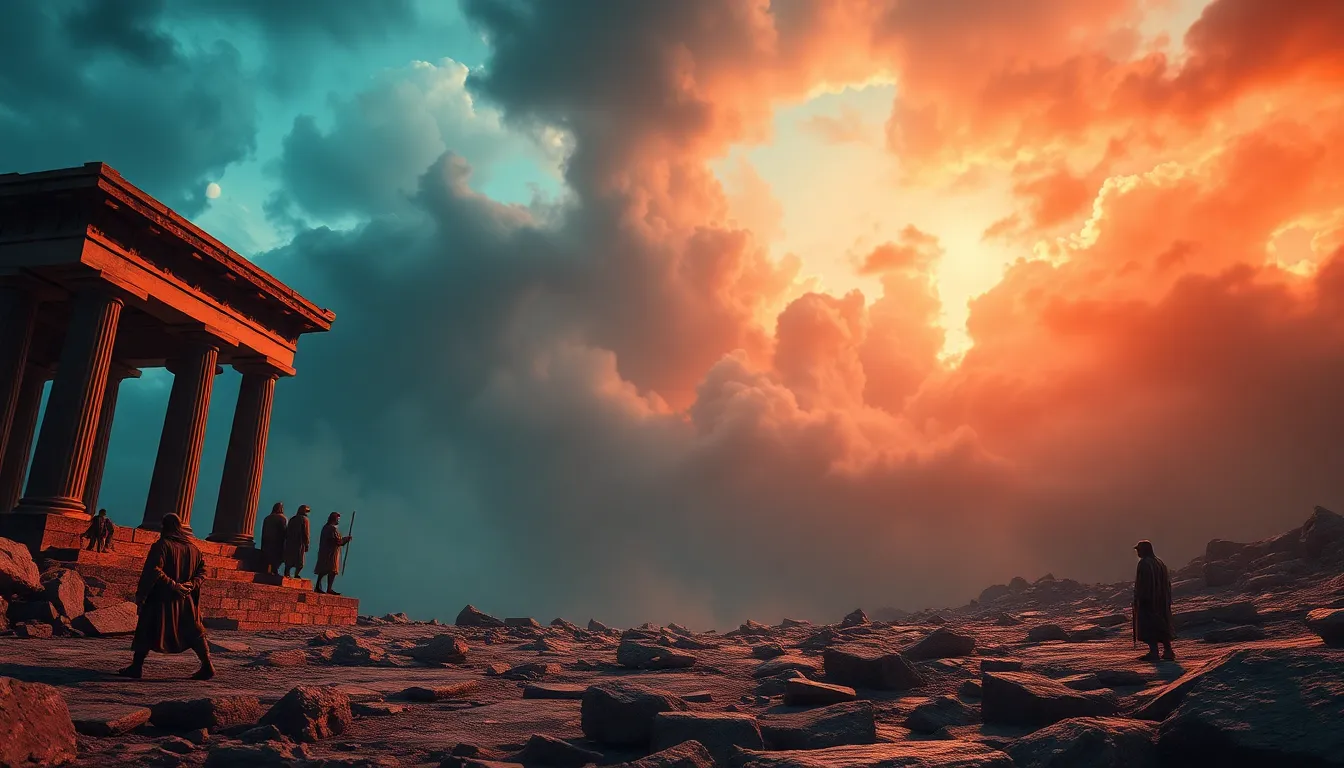
The Monsters of Tartarus: Myths That Still Haunt Us
I. Introduction
Tartarus, in Greek mythology, is a deep, gloomy abyss that lies beneath the underworld, Hades. It is not merely a place of punishment; it is a realm where the most heinous of souls are confined, serving as a stark reminder of the consequences of moral failure. The significance of Tartarus extends beyond its role as a prison; it embodies the ancient Greeks’ understanding of justice, fear, and the unknown. This article delves into the terrifying monsters that inhabit Tartarus and explores how their stories continue to resonate through time, influencing our culture and psyche.
II. The Origin of Tartarus in Greek Mythology
Tartarus is often depicted as a primordial entity, existing even before the gods themselves. According to Hesiod’s Theogony, Tartarus is described as a place that is as far below Hades as the earth is below the heavens. It is surrounded by a bronze wall and is filled with darkness and despair.
A. Creation and description of Tartarus
Tartarus is said to be created from the void, Chaos. It serves as both a geographical location and a symbolic representation of extreme punishment. It is described as a place that is not merely dark but also filled with horrors that reflect the worst of human nature.
B. Role of Tartarus in the Greek pantheon
In the Greek pantheon, Tartarus plays a crucial role as the ultimate destination for those who have committed grave sins. It is where the Titans were imprisoned after their defeat by Zeus and his siblings, marking it as a significant site of divine retribution.
C. Distinction between Tartarus and Hades
While both Tartarus and Hades are realms of the dead, they serve different purposes. Hades is more of a general afterlife for all souls, including the virtuous. In contrast, Tartarus is specifically reserved for punishment and torment, emphasizing the distinction between reward and punishment in the afterlife.
III. The Fearsome Inhabitants of Tartarus
Tartarus is home to some of the most fearsome creatures in Greek mythology. These monsters embody chaos, destruction, and the darker aspects of human nature. Among the most notable inhabitants are Typhon, the Giants, and other monstrous beings.
A. Overview of prominent monsters: Typhon, the Giants, and others
- Typhon: Often described as the father of all monsters, Typhon is a giant with a hundred dragon heads. He represents storms and chaos, and his battle against Zeus symbolizes the struggle between order and chaos.
- The Giants: Born from Gaia, the Giants sought to overthrow the Olympian gods. Their defeat in the Gigantomachy signifies the triumph of civilization over barbarism.
- Other Creatures: Various other beings, such as the Hecatoncheires (the hundred-handed ones) and the Titans, also reside in Tartarus, each representing unique aspects of chaos and punishment.
B. Characteristics and stories associated with each monster
The characteristics of these monsters are often exaggerated, reflecting the fears of the ancient Greeks. Typhon, for instance, is said to breathe fire and cause earthquakes, embodying the natural disasters that were beyond human control. The Giants, with their immense size and strength, represent the challenge to divine authority and order.
C. Symbolism of these creatures in ancient narratives
These monsters symbolize the chaos that exists outside the realm of civilization. They serve as cautionary tales, warning against hubris and the dangers of defying the natural order. Their stories often illustrate the consequences of moral failings, making them powerful figures in Greek mythology.
IV. The Role of Monsters in Ancient Greek Society
The myths surrounding Tartarus and its monsters were not merely stories; they reflected the societal fears and values of ancient Greece. These tales provided moral lessons and a means for the Greeks to confront their anxieties.
A. How these myths reflected societal fears and values
The monsters of Tartarus often embodied the fears of the Greeks. The unpredictable nature of Typhon mirrored their anxieties about natural disasters, while the Giants represented the threat of chaos against established order. Such myths reinforced the values of justice, obedience to the gods, and the importance of moral integrity.
B. Connection between monsters and moral lessons
Monsters served as metaphors for the consequences of immoral behavior. The fate of those condemned to Tartarus was a warning to the living about the importance of virtue and piety.
C. The psychological impact of these stories on ancient Greeks
These myths had a profound psychological impact, providing a framework for understanding the complexities of human existence. They allowed individuals to grapple with their fears and uncertainties by externalizing them in the form of monstrous beings.
V. Modern Interpretations and Retellings
The influence of Tartarus and its monsters continues to permeate contemporary literature, film, and art. Modern interpretations often adapt these ancient myths to resonate with current audiences.
A. Influence of Tartarus monsters in contemporary literature and film
- Movies like Clash of the Titans and the Percy Jackson series bring these ancient creatures to life, reimagining them for new generations.
- Literature often uses these monsters as metaphors for personal and societal challenges, highlighting the timeless nature of their stories.
B. Analysis of how these myths are adapted for modern audiences
Modern adaptations frequently focus on themes of empowerment, resilience, and the battle against one’s inner demons, showcasing the enduring relevance of these myths.
C. The enduring nature of fear and fascination with the monstrous
The fear of the monstrous remains a powerful theme in contemporary culture, reflecting our ongoing struggles with chaos, injustice, and the unknown.
VI. Psychological and Cultural Resonance of Tartarus Monsters
The monsters of Tartarus represent deep psychological archetypes that continue to resonate with modern audiences. They symbolize our fears, desires, and the darker aspects of human nature.
A. Exploration of the archetypes represented by these monsters
Typhon, as a representation of chaos, and the Giants, symbolizing rebellion against authority, serve as archetypes that reflect the human condition and societal structures.
B. The role of fear in shaping human consciousness
Fear is a fundamental aspect of the human experience, and the myths of Tartarus allow us to confront and explore these fears in a safe narrative space.
C. How these myths continue to resonate with modern existential concerns
The ongoing relevance of Tartarus monsters speaks to our collective anxieties about morality, justice, and the struggle for meaning in a chaotic world.
VII. The Legacy of Tartarus in Popular Culture
The legacy of Tartarus and its monstrous inhabitants is evident in various forms of popular culture, including literature, film, and video games.
A. Examples of Tartarus-themed media in books, movies, and video games
- In literature, authors like Rick Riordan have brought these myths to life for young readers, intertwining them with modern adventures.
- Video games such as God of War utilize the myth of Tartarus to create immersive experiences that challenge players with moral dilemmas.
B. The ongoing relevance of these myths in discussions of morality and justice
Discussions of morality and justice in modern contexts often evoke the tales of Tartarus, exploring the implications of punishment and redemption.
C. The impact of social media on the resurgence of interest in these myths
Social media platforms have facilitated a revival of interest in Greek mythology, with memes, discussions, and fan art celebrating Tartarus and its monsters.
VIII. Conclusion
The legacy of Tartarus and its monstrous inhabitants endures through time, serving as a powerful reminder of the complexities of human nature. These myths not only reflect ancient fears and moral values but also continue to resonate with our modern existential concerns. As we explore these timeless stories, we gain insight into the human experience, and the monsters of Tartarus remind us of the delicate balance between order and chaos that defines our lives.
Engaging with these myths allows us to confront our fears, reflect on our values, and appreciate the rich tapestry of human storytelling that transcends generations.