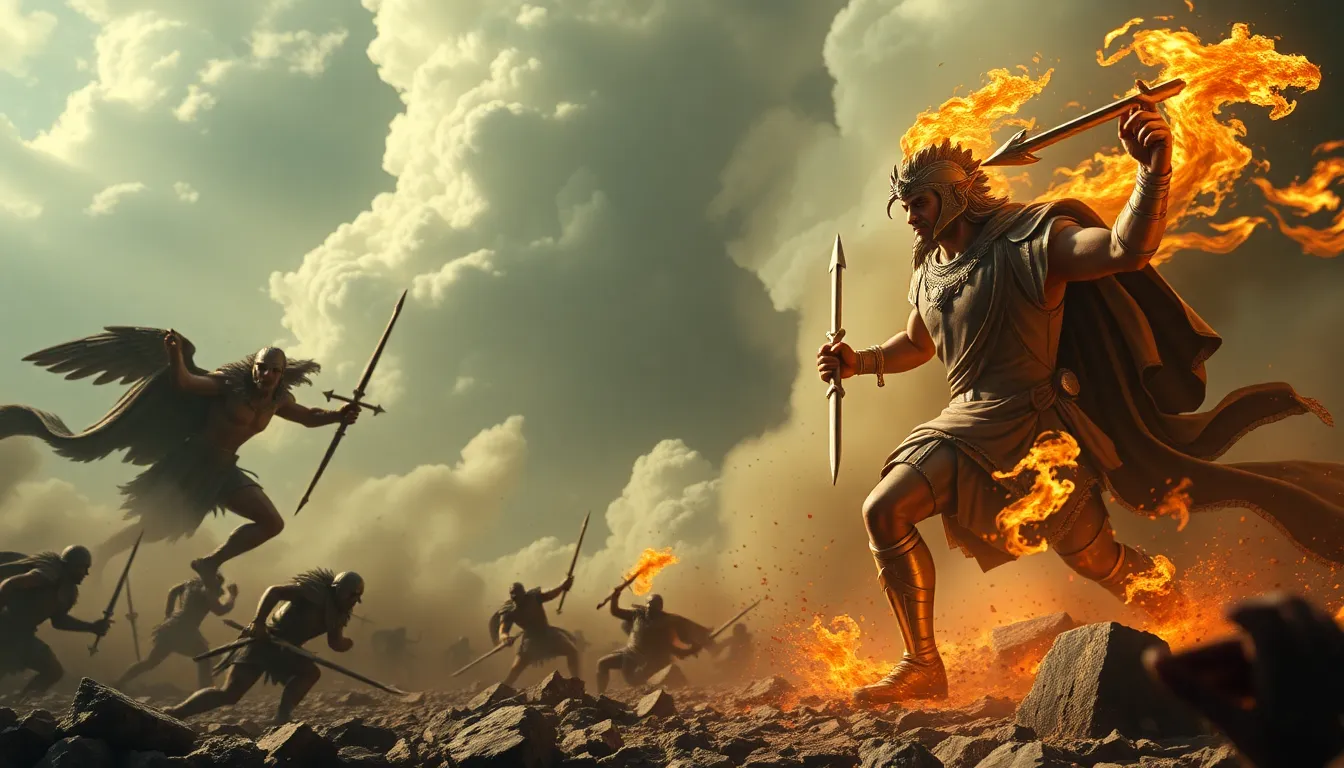
The Most Epic Battles Between Heroes and Gods You Never Knew About
I. Introduction
In the vast tapestry of mythology, heroes and gods occupy prominent roles, often intertwined in narratives that explore human struggle, morality, and the nature of divinity. Heroes, typically mortal beings endowed with extraordinary capabilities, represent the pinnacle of human potential. In contrast, gods embody the forces of nature, fate, and the cosmic order, wielding immense power. The conflicts between these two archetypes are not merely battles of strength but are rich in symbolism and significance.
Throughout mythological narratives, battles serve as critical turning points that reveal character, test limits, and ultimately lead to transformation. This article aims to delve into some of the lesser-known epic battles between heroes and gods, shedding light on their historical context, themes, and implications in ancient cultures.
II. The Origins of Hero-God Conflicts
The relationships between heroes and gods have evolved over millennia, rooted in ancient beliefs and cultural practices. Historically, heroes often emerged from a society’s collective consciousness, embodying the values and ideals of their people. Meanwhile, gods were worshipped as omnipotent beings whose favor was sought through rituals and sacrifices.
Common themes in these mythological battles include:
- Struggle for power and control
- Tests of virtue and valor
- Rebellion against divine authority
- The quest for identity and self-discovery
These conflicts held immense significance in ancient cultures, serving as allegories for human experiences—conflict, ambition, and the quest for immortality. They often reflected societal values, fears, and aspirations, resonating through generations and shaping cultural narratives.
III. The Battle of Hercules and Ares
Hercules, the legendary hero known for his incredible strength and heroic deeds, is a central figure in Greek mythology. His twelve labors, a series of challenges imposed by King Eurystheus, are famous, but his encounter with Ares, the god of war, is lesser-known yet equally significant.
The confrontation arose when Hercules, in a fit of rage and fueled by his tragic past, clashed with Ares while defending his home from marauding forces. Ares, embodying the chaos of war, challenged Hercules, leading to a fierce battle between god and hero. Hercules, utilizing his strength and cunning, managed to wound Ares, showcasing the hero’s resilience against divine wrath.
This battle had profound implications for Greek mythology, as it underscored the idea that even the mightiest gods could be challenged by mortals. It also highlighted the complexities of Hercules’ character—his struggles with anger and his quest for redemption.
IV. The Clash of Gilgamesh and Enkidu Against the Gods
The Epic of Gilgamesh, one of the oldest known literary works, narrates the adventures of Gilgamesh, the king of Uruk, and his companion Enkidu. Their friendship and shared exploits lead them to confront the gods themselves, challenging the natural order.
Enkidu, created by the gods as a counterpart to Gilgamesh, becomes a pivotal figure in their adventures. Together, they embark on quests that defy the will of the gods, including slaying the Cedar Forest’s guardian, Humbaba, and killing the Bull of Heaven sent by the goddess Ishtar. Their defiance ultimately leads to Enkidu’s death, a consequence of angering the divine.
Their struggles against the gods reflect themes of friendship, mortality, and the quest for immortality. The epic serves as a meditation on the limits of human power and the inevitability of death, making it a timeless narrative in the annals of mythology.
V. The Showdown Between Cú Chulainn and the Morrigan
Cú Chulainn, a hero from Irish mythology, is celebrated for his unmatched combat skills and fierce loyalty to his homeland. The Morrigan, a complex figure, is often depicted as a goddess of war, fate, and sovereignty, embodying the tumultuous nature of battle.
Their confrontation is steeped in prophecy and fate. The Morrigan, who transforms into a raven, appears to Cú Chulainn both as an ally and an adversary, foretelling his death and testing his resolve. The two engage in a series of encounters that culminate in a fierce battle, symbolizing the conflict between human ambition and the inexorable fate dictated by the gods.
This showdown emphasizes themes of honor and sacrifice, as Cú Chulainn fights valiantly despite knowing the prophecies of his demise. The interplay between Cú Chulainn and the Morrigan illustrates the intricate relationships between heroes and divine forces, where alliances can quickly turn into enmities.
VI. The Duel of Thor and Jörmungandr
In Norse mythology, Thor, the god of thunder, is renowned for his strength and protective nature. Jörmungandr, the Midgard Serpent, is a colossal creature that encircles the Earth, representing chaos and destruction. Their destined clash is one of the most iconic battles in Norse lore.
The mythological significance of Jörmungandr lies in its role during Ragnarök, the end of the world in Norse cosmology. Thor and Jörmungandr are fated to confront each other during this cataclysmic event. As they battle, Thor wields his mighty hammer, Mjölnir, in an epic struggle that symbolizes the eternal fight between order and chaos.
The consequences of their duel are profound, resulting in both their deaths and the reshaping of the world. This battle encapsulates the themes of fate, heroism, and the cyclical nature of existence, highlighting the inevitable clash between the divine and the monstrous.
VII. The Epic Confrontation of Arjuna and Krishna
The Mahabharata, an ancient Indian epic, revolves around the epic conflict between the Pandavas and the Kauravas. Central to this narrative is Arjuna, a skilled archer, and Krishna, who serves as his charioteer and divine guide. Their relationship is pivotal in the context of duty and righteousness.
As Arjuna stands on the battlefield of Kurukshetra, he is engulfed in doubt and moral confusion about fighting against his own kin. Krishna, embodying divine wisdom, imparts the teachings of the Bhagavad Gita, encouraging Arjuna to embrace his duty as a warrior.
This confrontation is not merely a physical battle; it represents the internal struggle of adhering to dharma (duty) versus personal morality. The dialogue between Arjuna and Krishna resonates with themes of righteousness, spirituality, and self-realization, making it one of the most profound dialogues in literature.
VIII. Conclusion
The epic battles between heroes and gods explored in this article reveal the rich tapestry of mythological narratives that have shaped human understanding of morality, power, and the divine. These conflicts reflect enduring themes of heroism, sacrifice, and the complex relationships between mortals and deities.
As we reflect on these ancient tales, we can see their lasting impact on modern storytelling, resonating through literature, film, and art. The struggles faced by heroes against divine beings continue to inspire and challenge us, inviting us to explore the depths of our own humanity.
We encourage readers to delve deeper into these mythological stories, discovering the myriad of narratives that highlight the timeless struggle between the mortal and the divine.