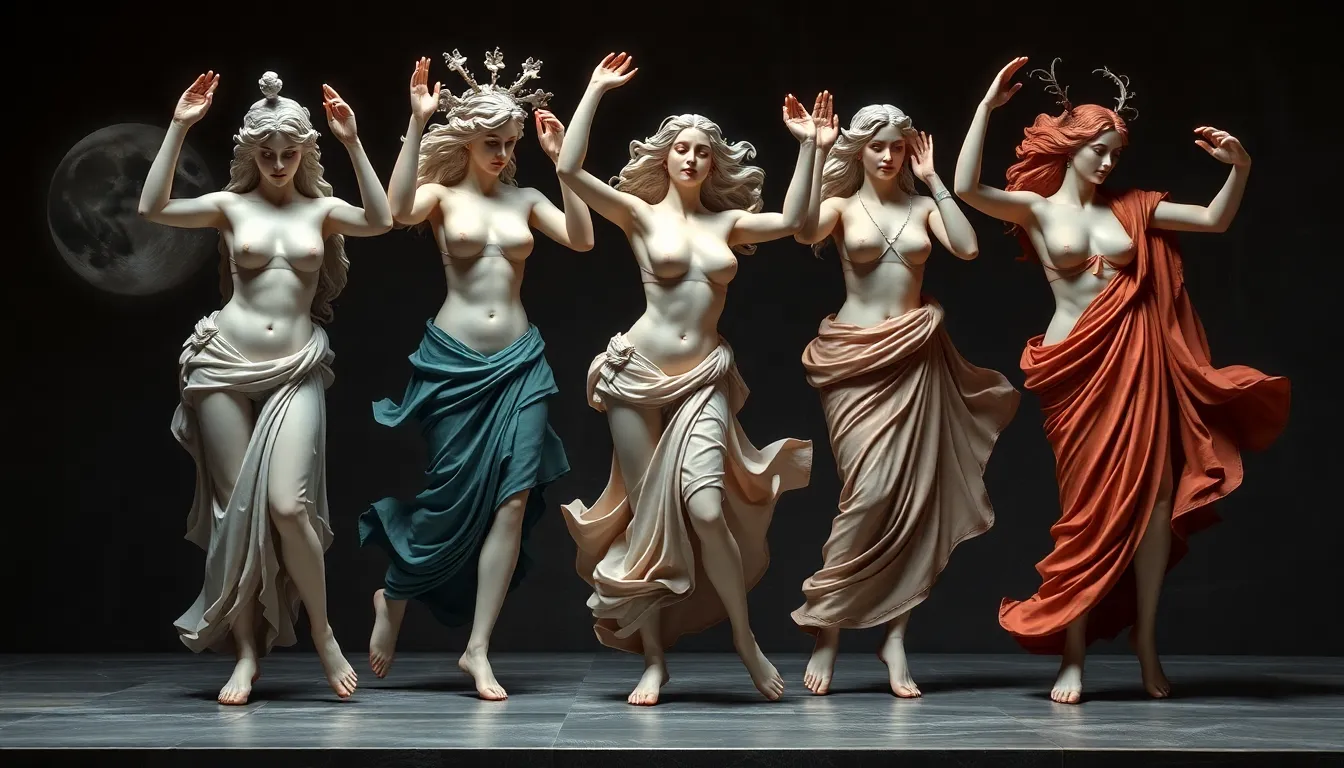
The Muses and Their Role in the Development of Dance Forms
I. Introduction
The Muses, in Greek mythology, are the nine goddesses who preside over the arts and sciences. They are considered the sources of inspiration for artists, musicians, and scholars, each representing a different domain of human creativity.
The significance of the Muses in the arts is profound, as they embody the very essence of artistic expression and creativity. They are invoked by artists seeking inspiration, guidance, and insight in their work, symbolizing the connection between divine influence and human endeavor.
This article will explore the Muses’ influence on dance forms, tracing their historical impact, their embodiment in various dance styles, and their enduring legacy in contemporary dance.
II. Historical Context: The Muses and the Arts
A. Origin and characteristics of the Muses
The Muses are typically described as the daughters of Zeus and Mnemosyne, the goddess of memory. Each Muse has a distinct personality and area of expertise:
- Calliope: Muse of epic poetry
- Clio: Muse of history
- Erato: Muse of love poetry
- Euterpe: Muse of music
- Melpomene: Muse of tragedy
- Polyhymnia: Muse of sacred poetry
- Terpsichore: Muse of dance
- Thalia: Muse of comedy
- Urania: Muse of astronomy
B. The role of the Muses in ancient Greek culture
In ancient Greece, the Muses were revered and often invoked in artistic endeavors. Poets, musicians, and dancers would call upon them for inspiration before beginning their work. Temples and shrines dedicated to the Muses were common, where individuals would seek their favor and guidance.
C. Evolution of the concept of Muses through history
The concept of the Muses has evolved over the centuries, influencing various artistic movements and styles. From the Renaissance to the Romantic period, the Muses served as symbols of inspiration, and their legacy continues to inspire artists today.
III. The Muses of Dance: Terpsichore and Beyond
A. Introduction to Terpsichore, the Muse of Dance
Terpsichore, the Muse of dance, is often depicted as a beautiful woman dancing with a lyre. She embodies the grace and rhythm of movement, representing the joy and creativity found in dance. As the patroness of dance, Terpsichore inspires dancers to express their emotions through movement.
B. Influence of Terpsichore on classical dance forms
Terpsichore has significantly influenced classical dance forms such as ballet. The elegance, precision, and storytelling aspects of ballet can be traced back to the inspiration drawn from her. Ballet choreography often incorporates themes of beauty, passion, and the celebration of life, reflecting the essence of Terpsichore.
C. Other Muses associated with rhythm and movement
While Terpsichore is primarily associated with dance, other Muses also contribute to the rhythmic and emotional aspects of movement:
- Euterpe: Muse of music, whose melodies inspire dance.
- Melpomene: Muse of tragedy, whose themes can evoke powerful expressions in dance.
IV. The Muses and Cultural Dance Forms
A. How Muses inspired folk dances across cultures
The influence of the Muses extends beyond classical dance forms; they have also inspired folk dances around the world. Various cultures celebrate their traditions and stories through dance, often invoking the Muses for inspiration. Folk dances reflect the essence of communities, showcasing their history, struggles, and joys.
B. The impact of Muses on theatrical and performance dance
The Muses have also played a crucial role in the development of theatrical and performance dance. Choreographers often draw upon the themes associated with the Muses to create compelling narratives and emotional performances. The integration of music, storytelling, and movement in theatrical dance can be seen as a tribute to the Muses’ influence.
C. Examples of cultural dances influenced by the Muses
Several cultural dance forms have been influenced by the Muses, including:
- Samba: A Brazilian dance that embodies joy and celebration.
- Bharatanatyam: An Indian classical dance that tells stories through intricate movements.
- Flamenco: A passionate Spanish dance that reflects deep emotional narratives.
V. The Muses as Symbols of Inspiration
A. The psychological and emotional role of Muses in dance creation
The Muses serve as powerful symbols of inspiration, tapping into the psychological and emotional depths of dancers and choreographers. They represent the quest for creativity and the exploration of human experience through movement.
B. The concept of divine inspiration in choreography
Choreographers often speak of moments of divine inspiration, where ideas flow effortlessly, much like the ancient Greeks invoked the Muses. This concept emphasizes the connection between the artist and the divine, with the Muses acting as intermediaries in the creative process.
C. Modern interpretations of Muses in dance
In contemporary dance, the idea of the Muses continues to evolve. Dancers and choreographers often reinterpret the attributes of the Muses, finding new ways to express inspiration, creativity, and emotional truth through their art.
VI. Case Studies: Iconic Dance Works and Their Muses
A. Analysis of famous ballets and their themes of inspiration
Many famous ballets draw directly from the themes embodied by the Muses. For example, “Swan Lake” explores themes of love and transformation, reflecting the influence of both Terpsichore and Melpomene.
B. Contemporary dance pieces influenced by the Muses
Contemporary dance pieces often resonate with the spirit of the Muses, such as works by choreographers like Martha Graham and Pina Bausch, who explore deep emotional themes through innovative movement.
C. Profiles of choreographers who embody the spirit of the Muses
Notable choreographers, including George Balanchine and Alvin Ailey, have embodied the essence of the Muses in their work, drawing from their inspiration to create powerful pieces that resonate with audiences.
VII. The Legacy of the Muses in Contemporary Dance
A. The ongoing relevance of the Muses in today’s dance community
The Muses remain relevant in today’s dance community, serving as symbols of inspiration for dancers and choreographers alike. Their influence is seen in the way artists approach their work, continually seeking that spark of creativity.
B. How modern dance forms continue to draw from ancient inspiration
Modern dance forms, such as hip-hop and jazz, incorporate elements of rhythm and emotion that echo the influence of the Muses. Dancers often blend traditional techniques with contemporary styles, creating a dynamic fusion of influences.
C. The role of Muses in promoting creativity and innovation in dance
The Muses play a crucial role in promoting creativity and innovation in dance, encouraging artists to explore new ideas, techniques, and forms of expression. This ongoing legacy ensures that the spirit of the Muses lives on in the ever-evolving world of dance.
VIII. Conclusion
A. Summary of the Muses’ impact on dance forms
The Muses have profoundly impacted the development of dance forms throughout history, providing inspiration, guidance, and emotional depth to artists.
B. Reflection on the continuing journey of dance as an art form
As dance continues to evolve, the Muses remain central to its journey, reminding us of the importance of inspiration in the creative process.
C. Final thoughts on the importance of inspiration in the creative process
Inspiration, as embodied by the Muses, is essential for artistic expression. Whether through classical ballet, contemporary dance, or cultural folk dances, the spirit of the Muses endures, encouraging generations of dancers to create, innovate, and express their