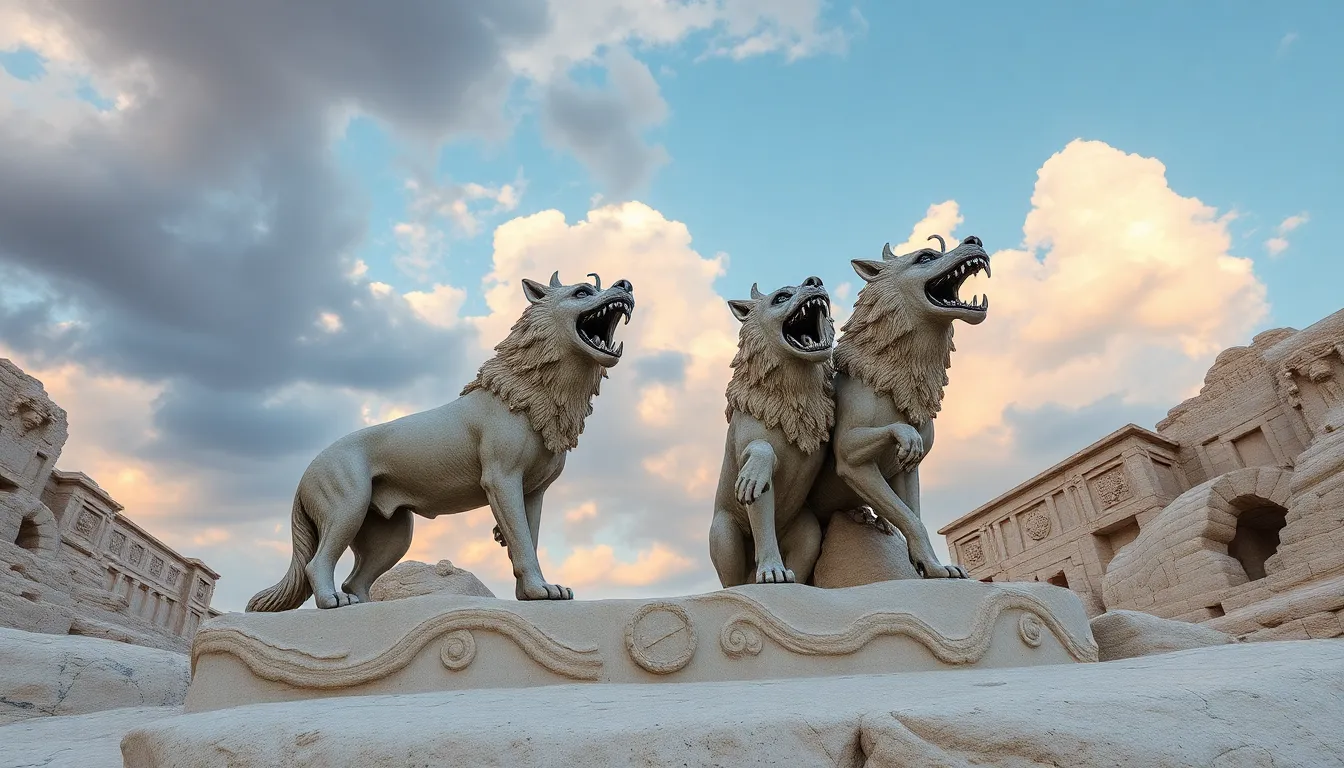
The Myth of Cerberus: Insights into Greek Spirituality
I. Introduction
Cerberus, the three-headed dog of Greek mythology, is a fascinating figure that encapsulates the complexities of life, death, and the afterlife. As the guardian of the Underworld, Cerberus serves not only as a fearsome creature but also as a symbol deeply intertwined with Greek spirituality. Understanding the myth of Cerberus provides valuable insights into ancient beliefs and the human condition.
Greek mythology plays a crucial role in exploring spirituality and the cultural psyche of ancient Greece. Myths served as narratives that provided explanations for natural phenomena, moral lessons, and insights into human emotions and experiences. This article aims to delve into the origins, symbolism, and cultural significance of Cerberus, shedding light on what this myth teaches us about spirituality.
II. The Origins of Cerberus
A. Birth and parentage in Greek myths
Cerberus is often depicted as the offspring of Echidna and Typhon, two formidable creatures in Greek mythology. Echidna, known as the mother of monsters, and Typhon, the father of all monsters, produced Cerberus as part of a lineage that symbolizes chaos and the wildness of nature. This parentage sets the stage for Cerberus’s role as a guardian of the Underworld.
B. Symbolism of Cerberus in relation to the Underworld
Cerberus’s three heads symbolize various aspects of existence: the past, present, and future. This triadic structure represents the cyclical nature of life and death, emphasizing that while death is an end, it also leads to new beginnings. In the context of the Underworld, Cerberus stands as a sentinel, ensuring that the dead do not escape and the living do not intrude without permission.
C. Cerberus in ancient texts and art
Ancient texts and artworks feature Cerberus prominently, depicting him as a fearsome guardian. In the “Hercules” myths, he is famously captured by the hero during one of his labors. Artistic representations often show him with serpents entwined around his body and various monstrous features, emphasizing his role as a creature of both fear and awe.
III. Cerberus as a Guardian Symbol
A. Role in protecting the gates of the Underworld
Cerberus’s primary role is to guard the gates of the Underworld, preventing the living from entering and the dead from escaping. This protective function highlights the concept of boundaries, which is crucial in Greek spirituality. Boundaries serve to maintain order, whether in life or in the afterlife.
B. The concept of boundaries in Greek spirituality
In ancient Greece, boundaries were sacred. They defined the limits of the known world and the mystical realms beyond. Cerberus, as a guardian, reinforces the idea that certain thresholds should not be crossed lightly, reflecting the respect ancient Greeks had for the mysteries of life and death.
C. Cerberus as a metaphor for life’s transitions
Cerberus also symbolizes life’s transitions, particularly the moment of death. His presence at the gates of the Underworld serves as a reminder that death is a profound transition, marking the end of one phase and the beginning of another. This idea is mirrored in various rites and rituals that honor the passage from life to death.
IV. Cerberus and the Afterlife
A. Beliefs about the afterlife in ancient Greece
Ancient Greek beliefs about the afterlife were complex and varied. The Underworld, ruled by Hades, was seen as a place where souls would dwell after death. Cerberus’s role in this context is vital, as he ensures that the souls remain in their designated place, reflecting the belief that the dead must accept their fate.
B. Cerberus’s significance in the journey of souls
In many myths, Cerberus is not just a barrier, but also part of the journey of the soul. Souls were believed to be judged upon entering the Underworld, and Cerberus’s presence ensured that they faced the consequences of their earthly lives. This signifies the importance of moral choices and accountability in Greek spirituality.
C. The duality of fear and safety represented by Cerberus
Cerberus embodies a duality: he is both a source of fear and a figure of safety. While his three heads can instill terror, his role as a guardian ensures that the Underworld remains a place of order. This complexity invites reflection on how fear can coexist with safety in our lives, particularly regarding the unknown aspects of death.
V. Cerberus in Literature and Mythology
A. Key literary works featuring Cerberus (e.g., The Aeneid, The Odyssey)
Cerberus appears in several key literary works, including Virgil’s “The Aeneid” and Homer’s “The Odyssey.” In “The Aeneid,” he is portrayed as the fearsome guardian of the Underworld, while in “The Odyssey,” he is encountered by Odysseus, reinforcing his role as a significant figure in the mythological landscape.
B. Interpretations of Cerberus in different contexts
Throughout history, Cerberus has been interpreted in various ways. Some view him as a purely malevolent force, while others see him as a necessary guardian that upholds cosmic balance. These interpretations reflect the diverse ways in which myths are understood and reinterpreted across cultures.
C. Influence on later adaptations and cultural references
- In Dante’s “Inferno,” Cerberus appears as a symbol of gluttony, showcasing his adaptability in literature.
- Modern adaptations in films and video games often reinterpret Cerberus, portraying him as a loyal yet fearsome creature.
- He has become a popular figure in pop culture, often representing themes of loyalty, protection, and the struggle against chaos.
VI. Cerberus and Spiritual Lessons
A. Lessons on fear, death, and acceptance
The myth of Cerberus teaches important lessons about facing fear and accepting the inevitability of death. By confronting Cerberus, heroes in mythology demonstrate the necessity of understanding and accepting one’s mortality.
B. The importance of facing one’s demons
Cerberus can also be seen as a metaphor for the inner demons we all face. Just as heroes must confront Cerberus to progress, individuals must confront their fears and challenges to achieve personal growth and transformation.
C. Cerberus as a guide for personal transformation
In this light, Cerberus serves as a guide for personal transformation. By embracing fear and understanding death, individuals can navigate their own journeys through life, finding strength in vulnerability and wisdom in acceptance.
VII. The Modern Legacy of Cerberus
A. Cerberus in contemporary culture (film, literature, games)
Today, Cerberus continues to appear in various forms of contemporary culture. Films, literature, and video games often draw upon his myth, reimagining him in ways that resonate with modern audiences. He is frequently depicted as a loyal companion or a formidable obstacle, reflecting our ongoing fascination with mythological figures.
B. Ongoing relevance of mythological figures in modern spirituality
The relevance of figures like Cerberus in modern spirituality is significant. They remind us of the timeless themes of fear, death, and transformation, serving as archetypes that guide our understanding of contemporary challenges and personal struggles.
C. The role of Cerberus in reinterpreting ancient beliefs
As society evolves, so too does the interpretation of ancient myths. Cerberus remains a powerful symbol, representing the complexities of existence and the human experience. His myth encourages people to explore their own beliefs about life, death, and the beyond.
VIII. Conclusion
A. Summary of insights gained from the myth of Cerberus
The myth of Cerberus offers profound insights into the nature of fear, the significance of boundaries, and the journey of the soul. Through his role as a guardian of the Underworld, Cerberus embodies the complexities of life and death, inviting deep reflection on our own experiences.
B. Reflection on the enduring nature of Greek mythology
Greek mythology continues to endure because it resonates with fundamental human experiences. The stories, characters, and themes remain relevant, allowing us to explore our spirituality and the mysteries of existence.
C.