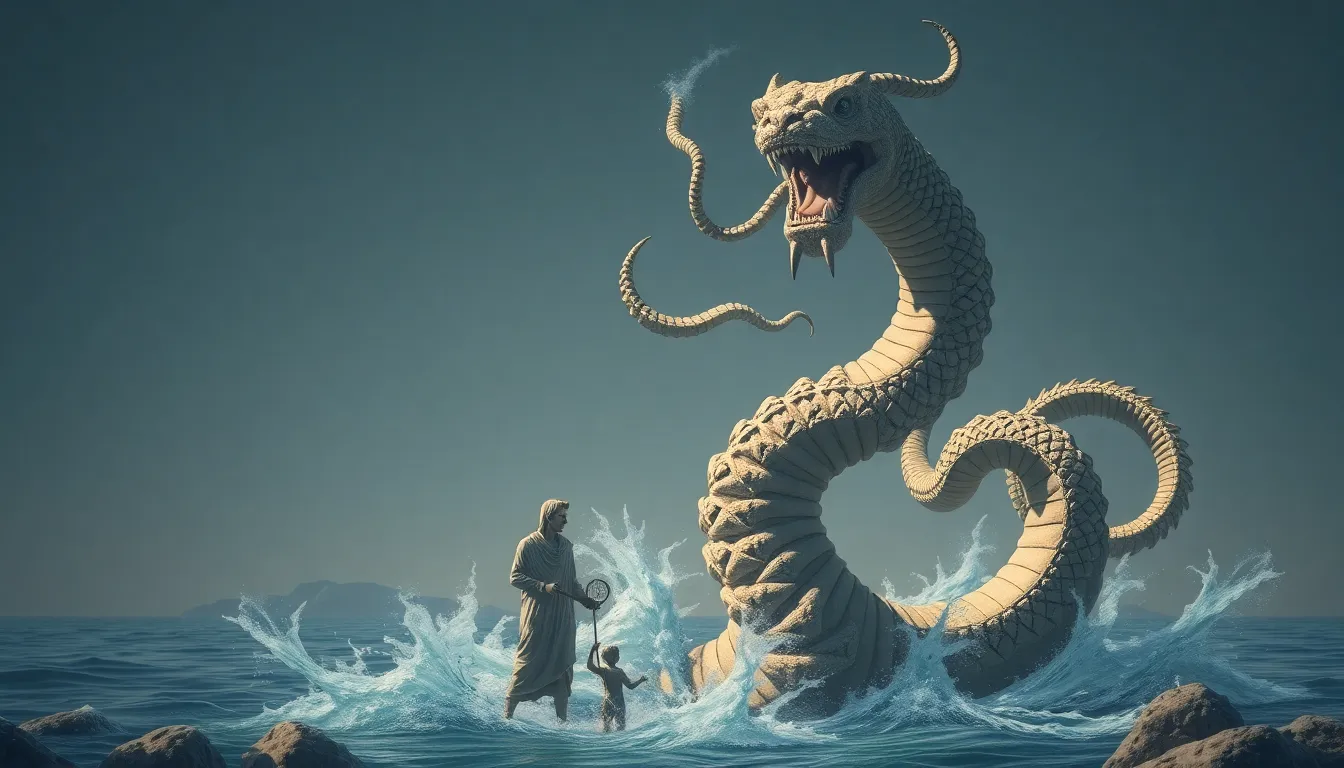
The Myth of the Hydra: Confronting Challenges in Modern Life
I. Introduction
The myth of the Hydra is one of the most fascinating tales from Greek mythology, showcasing not only the monstrous nature of the creature but also the underlying themes of resilience and the struggle against seemingly insurmountable challenges. The Hydra, a serpent-like creature with multiple heads, was known for its ability to regenerate two heads for every one that was cut off, symbolizing the persistent nature of difficulties that we face in life.
In today’s society, the Hydra metaphor resonates deeply as we confront a myriad of challenges that can feel overwhelming, much like the mythical beast itself. This article aims to explore these modern challenges through the lens of the Hydra myth, emphasizing the enduring lessons that can be drawn from this ancient story.
II. Understanding the Hydra Myth
A. Origin and significance in Greek mythology
The Hydra is a creature from Greek mythology, often depicted as a giant serpent with multiple heads. It was said to reside in the swamps of Lerna and terrorized the surrounding regions. The most famous story involving the Hydra is the second labor of Heracles (Hercules), who was tasked with slaying the beast as part of his penance. The Hydra’s regenerative powers made it a formidable opponent, requiring Heracles to think strategically in order to defeat it.

B. Symbolism of the Hydra: resilience and multiplicity of challenges
The Hydra symbolizes the complexity and multiplicity of challenges that individuals and societies face. Each head of the Hydra represents a different obstacle, and cutting off one head only results in the emergence of two more, illustrating the idea that challenges can often multiply when not addressed directly. This mythology serves as a powerful reminder that avoiding challenges may lead to greater difficulties in the long run.
C. Lessons from the myth: confronting versus avoiding challenges
From the myth of the Hydra, several key lessons emerge:
- Confront challenges head-on rather than avoiding them.
- Develop strategies to manage and mitigate obstacles.
- Understand that challenges can multiply if not addressed properly.
III. The Modern Hydra: Challenges We Face Today
A. Overview of contemporary societal challenges
In modern life, individuals and communities face a range of challenges that can mirror the experience of confronting the Hydra. These challenges are complex, interconnected, and often overwhelming:
- Mental health crises: The rise of anxiety, depression, and other mental health issues has become a significant concern, exacerbated by factors such as social media, economic pressure, and global crises.
- Economic instability: Many individuals face job insecurity, wage stagnation, and the impacts of economic downturns, leading to financial stress and uncertainty.
- Environmental issues: Climate change, pollution, and the depletion of natural resources pose existential threats to humanity, requiring collective action and innovative solutions.
- Social inequality: Disparities in wealth, education, and opportunity continue to widen, creating divisions within societies and hindering progress toward equity.
B. How these challenges mirror the Hydra’s many heads
Each of these contemporary challenges can be seen as a “head” of the modern Hydra. Just as Heracles had to confront each head to defeat the creature, society must address these issues directly to find solutions. Ignoring one challenge often leads to the emergence of others, creating a cycle of difficulty that can feel unmanageable.
IV. Strategies for Confronting Challenges
A. Acknowledging the existence of challenges
The first step in confronting any challenge is to acknowledge its existence. This means recognizing the various “heads” of the modern Hydra and understanding their significance. By identifying the challenges we face, we can begin to develop a plan to address them.
B. Developing resilience and adaptability
Resilience is the ability to bounce back from adversity. It is critical in confronting challenges. Developing resilience involves:
- Building a strong support system.
- Practicing self-care and mindfulness.
- Learning from failures and setbacks.
C. The importance of community support and collaboration
Facing challenges is often easier when done collaboratively. Community support provides individuals with resources, encouragement, and shared knowledge. Engaging with others allows for the pooling of ideas and solutions, much like Heracles relied on his cousin Iolaus for assistance in defeating the Hydra.
V. The Role of Technology in Facing Modern Hydras
A. Technology as a tool for problem-solving
In the modern age, technology serves as a powerful tool for addressing many of the challenges we encounter. Innovations in communication, data analysis, and resource management can help us tackle issues ranging from mental health to environmental sustainability.
B. The double-edged sword: dependency versus empowerment
While technology can empower us to confront challenges, there is also the risk of becoming overly dependent on it. This dependency can lead to a loss of personal agency and connection, which are essential in building resilience. Striking a balance is crucial.
C. Case studies of successful technological interventions
Several case studies highlight how technology can effectively address modern challenges:
- Mental Health Apps: Applications like Headspace and Calm provide resources for mental well-being, offering guided meditations and stress relief techniques.
- Telehealth Services: Telemedicine has made healthcare more accessible, allowing individuals to seek help without geographical barriers.
- Environmental Monitoring: Technologies such as satellite imagery and data analytics are used to track climate change and manage resources more effectively.
VI. Personal Narratives: Real-Life Hydras
A. Stories of individuals overcoming significant challenges
Many individuals have faced their own “Hydras,” emerging stronger from their experiences. Personal narratives provide insight into the resilience and determination of those who confront their challenges directly.
B. Common themes in personal resilience and growth
Across these stories, several themes often emerge:
- The power of perseverance and determination.
- The importance of seeking help and building a support network.
- Learning from experiences and growing stronger in the process.
C. The impact of facing one’s own “Hydra” on personal development
Confronting challenges can lead to significant personal growth. By facing their own Hydras, individuals often discover new strengths, develop greater empathy, and gain a deeper understanding of themselves and others.
VII. Cultivating a Hydra Mindset
A. Encouraging a proactive approach to challenges
Adopting a Hydra mindset involves being proactive rather than reactive. This means anticipating challenges and preparing for them, rather than waiting for them to arise. Strategies include setting goals, planning ahead, and being open to change.
B. Mindfulness and emotional intelligence as tools for coping
Practicing mindfulness and developing emotional intelligence can significantly enhance our ability to cope with challenges. These skills help individuals remain calm under pressure, recognize their emotions, and respond thoughtfully to difficult situations.
C. Building a culture of perseverance and innovation
Creating a culture that values perseverance and innovation can empower individuals and communities to confront their Hydras. This involves fostering environments where creativity is encouraged, and failures are seen as opportunities for growth.
VIII. Conclusion
In conclusion, the Hydra metaphor serves as a powerful lens through which we can examine the myriad challenges of modern life. By understanding the lessons of the Hydra myth, we can equip ourselves with the tools and mindset necessary to confront these challenges head-on. Embracing obstacles as opportunities for growth can lead to personal and collective development.
As we navigate our own journeys, let us remember the lessons of the Hydra: that challenges, much like the heads of the beast, can be daunting but are not insurmountable. Together, by acknowledging our challenges, building resilience, and supporting one another, we can slay our own Hydras and emerge stronger on the other side.