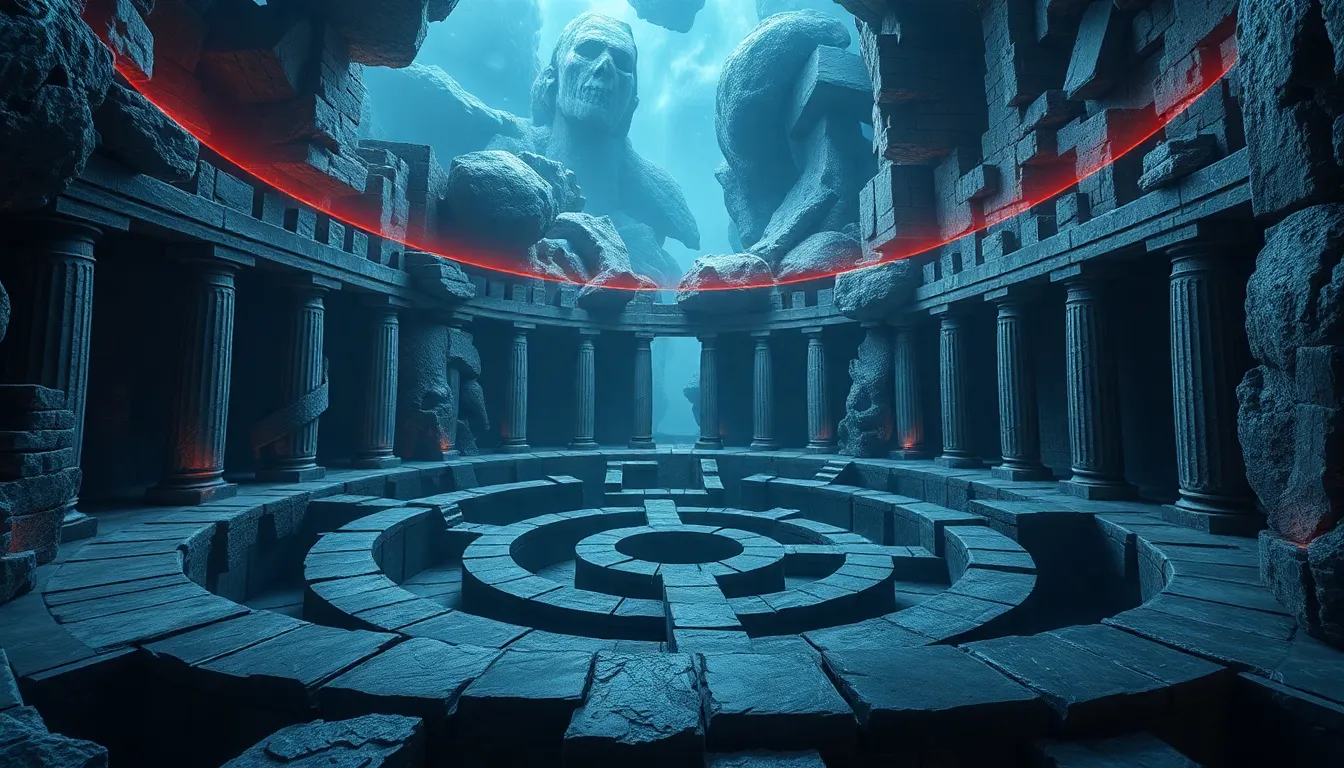
The Myth of the Labyrinth: A Connection to Hades’ Realm
I. Introduction
The myth of the Labyrinth is one of the most fascinating tales from Greek mythology, intertwining themes of fear, courage, and the complex nature of existence. At its heart lies the story of the Minotaur, a creature born of unnatural circumstances, trapped within a maze designed by the genius architect Daedalus. This tale not only captivates with its narrative but also serves as a reflection of deeper psychological and philosophical concepts, particularly in relation to Hades, the ancient Greek Underworld.
In Greek mythology, Hades is not merely a god of the dead but represents the deeper aspects of life, including death, rebirth, and the unknown. This article aims to explore the intricate connections between the Labyrinth and the realm of Hades, revealing how these myths resonate within the human experience.
II. Origins of the Labyrinth Myth
A. Historical context and ancient sources
The origins of the Labyrinth myth are deeply rooted in the ancient Minoan civilization, particularly on the island of Crete. The story is primarily derived from ancient texts such as Ovid’s “Metamorphoses” and Plutarch’s writings, which detail the legendary King Minos and his monstrous offspring, the Minotaur. These sources reflect the complex interplay between human ambition, divine intervention, and the consequences of hubris.
B. The story of King Minos and the Minotaur
King Minos, ruler of Crete, was known for his piety and his desire to please the sea god Poseidon. To demonstrate his devotion, he prayed for a magnificent bull to sacrifice. Poseidon sent a glorious bull, but Minos, struck by its beauty, decided to keep it for himself and sacrificed a lesser animal instead. Angered, Poseidon cursed Minos’ wife, Pasiphaë, causing her to fall in love with the bull. The result of this unnatural union was the Minotaur, a creature with the body of a man and the head of a bull.
To contain the Minotaur, Minos commissioned the construction of the Labyrinth, a complex maze designed by Daedalus. Each year, Athens was required to send seven young men and seven young women as tribute to be sacrificed to the Minotaur, a grim reminder of Minos’ power and the consequences of his actions.
C. Symbolism of the Labyrinth in ancient Greek culture
The Labyrinth symbolizes various concepts in ancient Greek culture, including:
- Complexity of human existence: The intricate design of the Labyrinth reflects the convoluted nature of life, filled with challenges and uncertainties.
- Fear of the unknown: The Minotaur represents the fears and darker aspects of humanity that we often avoid confronting.
- Heroism and sacrifice: Theseus, the hero who eventually slays the Minotaur, embodies the qualities of bravery and the willingness to face one’s fears.
III. The Labyrinth as a Symbol of the Human Psyche
A. Psychological interpretations of the Labyrinth
The Labyrinth can be seen as a powerful metaphor for the human psyche, representing the internal struggles we face. Psychologists have often drawn parallels between the journey through the Labyrinth and the process of self-discovery and personal growth.
B. The journey to confront inner demons
In this interpretation, the Minotaur serves as the embodiment of one’s inner demons, fears, and unresolved issues. To confront these aspects of ourselves is to embark on a journey through the Labyrinth, navigating its twists and turns, ultimately leading to self-acceptance and healing.
C. Connection to themes of death and rebirth
The journey through the Labyrinth also resonates with themes of death and rebirth. The struggle against the Minotaur symbolizes the confrontation with mortality and the transformative power that comes from facing one’s fears. This cyclical process reflects the human experience of growth through adversity.
IV. Hades: The Underworld in Greek Mythology
A. Overview of Hades and its significance
Hades, the god of the Underworld, governs the realm where souls go after death. Unlike the common misconception of Hades as a place of eternal punishment, it is more accurately a realm of existence that encompasses different areas, including Elysium, a paradise for the virtuous, and Tartarus, a pit of torment for the wicked.
B. Description of the realms within Hades
The Underworld consists of several distinct regions:
- Elysium: A blissful realm reserved for those who led virtuous lives.
- Asphodel Meadows: A neutral zone where souls who lived average lives wander.
- Tartarus: A deep abyss used for the punishment of the wicked.
C. The role of the Minotaur as a symbol of fear and the unknown
The Minotaur, as a creature born from unnatural circumstances, embodies the fears that reside within the human psyche. It represents the unknown aspects of death and the journey to Hades, challenging the hero to confront not only external dangers but also internal struggles.
V. The Journey through the Labyrinth and its Relation to the Underworld
A. The Labyrinth as a metaphor for the journey to Hades
The Labyrinth serves as a metaphor for the journey to Hades, representing the trials one must face in life and the inevitable confrontation with death. Just as Theseus navigates the twists and turns of the Labyrinth, so too must every individual navigate their own life’s challenges.
B. Allegorical interpretations of Theseus’ journey
Theseus’ journey can be interpreted allegorically as a rite of passage, wherein he must confront the Minotaur—a representation of his fears and mortality. His eventual victory signifies the triumph of the human spirit over adversity and the acceptance of one’s fate.
C. The role of sacrifice and redemption in the myth
In the myth, the sacrifice of the Athenian youths symbolizes the cost of human existence and the struggle for redemption. Theseus’ quest not only seeks to liberate the victims but also represents the universal desire for freedom from fear and the unknown.
VI. Comparative Mythology: Other Cultures’ Labyrinths and Underworlds
A. Similar myths from other cultures
Labyrinths and underworlds are prevalent themes in various cultures. For instance:
- Mesopotamian Mythology: The Epic of Gilgamesh features a journey to the underworld, filled with challenges and trials.
- Egyptian Mythology: The journey through the Duat, the Egyptian underworld, involves navigating obstacles and facing dangers.
- Indigenous Mythologies: Many indigenous cultures have myths involving labyrinthine paths leading to the spirit world.
B. Analysis of shared themes and symbols
Across cultures, labyrinths often symbolize the journey of the soul and the trials faced in the afterlife. The archetype of the hero confronting a monstrous entity, akin to the Minotaur, appears in various forms, highlighting a universal struggle against fear and the quest for understanding.
C. The universal nature of labyrinths and the afterlife experience
The concept of labyrinths as metaphors for life’s complexities and the afterlife experience reveals a shared human consciousness. These narratives resonate across cultures, emphasizing the importance of facing fears and seeking enlightenment through struggle.
VII. Modern Interpretations and Adaptations
A. Influence of the Labyrinth myth in literature and art
The Labyrinth myth has inspired countless literary works, films, and artistic expressions throughout history. From classical literature to contemporary fantasy, the themes of the Labyrinth continue to captivate audiences.
B. Contemporary representations of Hades and the Labyrinth
Modern adaptations often reinterpret Hades and the Labyrinth, presenting them as symbols of personal struggle and existential exploration. Works such as “The Hunger Games” and “Pan’s Labyrinth” draw upon these ancient themes, reflecting societal fears and the journey towards self-discovery.
C. How modern society perceives the myth’s relevance today
In today’s context, the Labyrinth and Hades serve as powerful