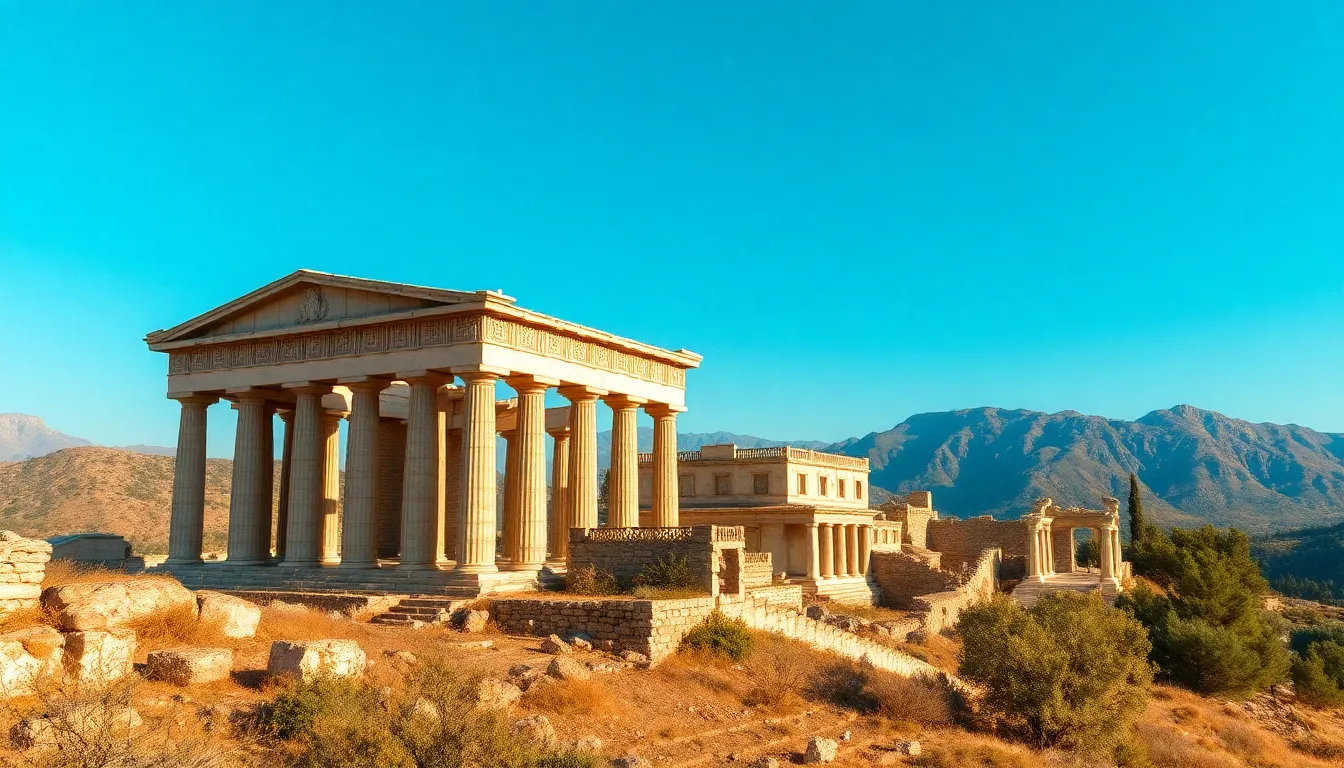
The Mythical Cities of Ancient Greece: Where Legends Came to Life
I. Introduction
The ancient civilization of Greece is replete with a rich tapestry of myths and legends that have shaped its cultural heritage. Among these, the mythical cities hold a prominent place, serving as the backdrop for some of the most enduring stories in Western literature. These cities, not only rooted in historical fact but also embellished by myth, provide insight into the beliefs, values, and aspirations of the ancient Greeks.
Understanding these mythical cities is crucial for grasping the complexities of ancient Greek civilization. They serve as a lens through which we can explore the social, political, and religious dynamics of the time. This article will delve into the role of mythology in ancient Greek society, explore significant cities like Athens, Sparta, Troy, and Delphi, and conclude with the lasting impact of these legends on modern culture.
II. The Role of Mythology in Ancient Greek Society
Mythology in ancient Greece was not merely a collection of fanciful stories; it was woven into the very fabric of daily life and culture. Myths served various purposes, from entertainment to moral instruction, and were integral to rituals and community identity.
A. Influence of myths on daily life and culture
Myths influenced various aspects of life, including:
- Religion: Myths were central to religious beliefs and practices, providing narratives for worship and rituals.
- Art and Literature: Artists and writers drew inspiration from myths, creating works that celebrated the gods and heroes.
- Festivals: Many festivals were dedicated to mythological figures, such as the Panathenaea in Athens honoring Athena.
B. Myths as moral lessons and historical narratives
Myths often conveyed moral lessons, illustrating virtues such as bravery, wisdom, and justice. They served as historical narratives, linking the past with the present and providing a sense of identity and continuity for the Greek people.
C. Connection between mythology and the physical geography of Greece
The geography of Greece, with its mountains, seas, and islands, influenced the creation of myths. Many myths were tied to specific locations, such as the sacred sites of Delphi and Olympia, thus embedding the divine within the landscape.
III. Athens: The Birthplace of Democracy and Philosophy
Athens, one of the most significant cities in ancient Greece, is often hailed as the cradle of democracy and Western philosophy. Its historical and mythological significance is profound.
A. Historical background of Athens
Established around the Neolithic period, Athens evolved into a powerful city-state by the 5th century BCE. It became a cultural and political hub, fostering innovations in governance, philosophy, and the arts.
B. Key myths associated with Athena and the founding of the city
The city’s patron goddess, Athena, played a crucial role in its mythology. According to legend, Athena and Poseidon competed for the city’s patronage. Poseidon offered a saltwater spring, while Athena provided the olive tree, symbolizing peace and prosperity. The citizens chose Athena, naming the city in her honor.
C. Influence of Athenian mythology on democracy and philosophy
Athenian mythology not only celebrated its divine protectress but also influenced its democratic ideals. The myths promoted values of civic duty, wisdom, and justice, which were central to the functioning of its democratic system. Philosophers like Socrates, Plato, and Aristotle drew upon these myths to explore concepts of ethics and governance.
IV. Sparta: The Warrior City of Legends
Sparta, renowned for its military prowess, presents a stark contrast to Athens. Its society was centered around discipline, strength, and communal living, all of which were reflected in its mythology.
A. Overview of Spartan society and military prowess
Spartan society was organized around the idea of producing elite warriors. From a young age, boys were trained in the agoge, a rigorous education and training system that emphasized endurance, bravery, and loyalty.
B. Myths surrounding Lycurgus and the Spartan ideal
Lycurgus, the legendary lawgiver of Sparta, is often credited with establishing the militaristic and austere social structure of the city. Myths surrounding him depict a society forged in discipline and sacrifice, where individual desires were subordinated to the needs of the state.
C. The role of mythology in shaping Spartan values and culture
Spartan myths reinforced values such as bravery and loyalty, often exemplified in tales of warriors like Leonidas and his stand at Thermopylae. These stories served to galvanize the Spartan identity, emphasizing the glory of sacrifice for the greater good.
V. The Enigmatic City of Troy
Troy, often shrouded in mystery and intrigue, is best known for its role in the legendary Trojan War. Its historical and archaeological significance continues to captivate scholars and enthusiasts alike.
A. Historical context and archaeological significance
Located in modern-day Turkey, the site of Troy has been excavated extensively, revealing layers of civilization that suggest a city of great importance in ancient times. The archaeological findings have sparked debates about the historical accuracy of the myths surrounding the city.
B. The Trojan War: Myth vs. Reality
The Trojan War, immortalized in Homer’s epics, is a blend of myth and potential historical events. Key elements include the abduction of Helen, the Greek siege of Troy, and the cunning use of the Trojan Horse. While the exact historical truth remains elusive, the narratives reflect themes of love, betrayal, and heroism.
C. Key figures in the myths: Helen, Achilles, and Hector
Key figures in the Trojan War mythology include:
- Helen: Her beauty sparked the conflict, symbolizing the consequences of desire.
- Achilles: The greatest Greek warrior, embodying the struggle between fate and free will.
- Hector: The noble Trojan prince, representing honor and the tragic cost of war.
VI. Delphi: The Oracle and Sacred Sanctuary
Delphi, known as the center of the world in ancient Greek belief, was home to the Oracle of Delphi, a pivotal site for consultation and prophecy.
A. Importance of Delphi in ancient Greek religion
Delphi was revered as a sacred site where the god Apollo was believed to communicate with mortals through the Oracle, a priestess known as the Pythia. Pilgrims flocked to Delphi seeking guidance on personal and political matters.
B. Myth of Apollo and the origins of the oracle
The myth of Apollo’s conquest of the Python, a serpent guarding the site, marks the establishment of Delphi as a sanctuary. According to legend, Apollo slew the Python and took over the site, transforming it into a center for prophecy and worship.
C. The role of Delphi in providing guidance and prophecy
The Oracle delivered cryptic messages that often required interpretation, influencing decisions of city-states and individuals alike. The famous maxim Know thyself reflects the philosophical inquiry encouraged by the Oracle.
VII. The Enchantment of Atlantis and Other Legendary Cities
Atlantis, perhaps the most famous mythical city, captivates imaginations with its tales of advanced civilization and tragic downfall. Yet, it is just one of many cities that populate Greek mythology.
A. Overview of the myth of Atlantis
First mentioned by Plato, Atlantis was described as a powerful naval kingdom that sank into the ocean due to its moral and cultural decline. The story serves as a cautionary tale about hubris and the consequences of moral decay.
B. Other notable mythical cities: Thebes, Argos, and Mycenae
Several other cities also play significant roles in Greek mythology:
- Thebes: Associated with the myths of Oedipus and the heroic tales of Cadmus.
- Argos: Home to heroes like Perseus and the site of the legendary Golden Fleece.
- Mycenae: Known for its connections to Agamemnon and the epic tales of the Trojan War.
C. How these cities reflect ancient Greek ideals and fears
These mythical cities embody the hopes and fears of the ancient Greeks, reflecting themes