The Mythical Origins of Delphi: A Tale of Earth and Sky
I. Introduction
Delphi holds a unique place in ancient Greek culture as a center of worship, prophecy, and philosophical inquiry. Renowned for its Oracle, the site became a focal point for individuals seeking wisdom and guidance from the divine. The myths surrounding Delphi are rich in symbolism, particularly focusing on the interplay between earth and sky, represented by the Titaness Gaia and the Olympian god Apollo.
This article aims to explore the mythical origins of Delphi, delving into the stories and beliefs that shaped its significance and the broader themes of earth and sky as they relate to human existence and understanding.
II. The Geographic and Cultural Context of Delphi
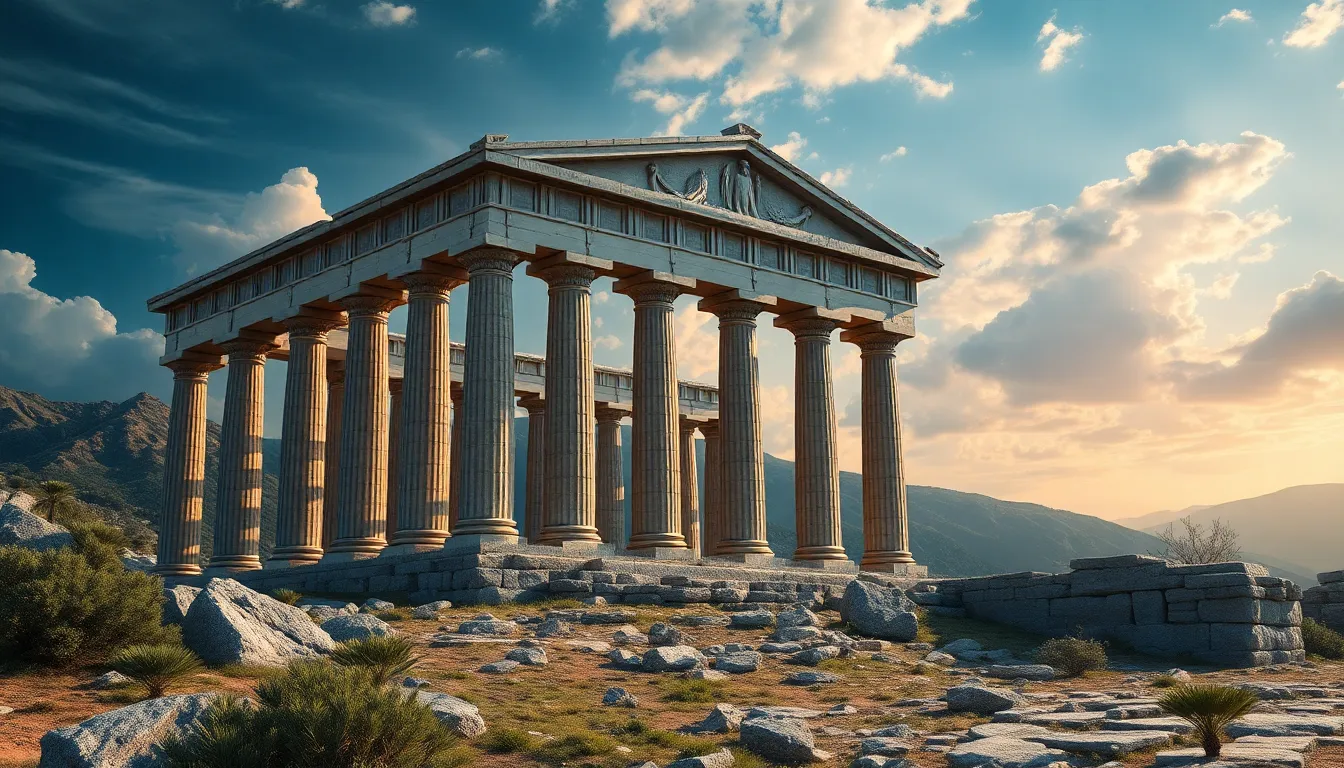
Situated on the slopes of Mount Parnassus, Delphi is a breathtaking site characterized by its rugged terrain and scenic beauty. The sanctuary is surrounded by imposing mountains and lush valleys, creating a natural setting that was considered sacred by the ancient Greeks. This geographic distinction not only highlights the site’s spiritual importance but also its role as a natural temple, where the divine was believed to be intimately connected to the earth.
Historically, Delphi was not only a religious site but also a hub of cultural exchange and political power. It hosted the Pythian Games, which were held every four years and included athletic and musical competitions, drawing participants from all over Greece. This made Delphi a melting pot of ideas, beliefs, and traditions, reinforcing its status as a focal point of ancient Greek civilization.
III. The Legend of the Python and the Sacred Site
One of the most compelling myths associated with Delphi is that of the Python, a serpent that guarded the sacred site long before Apollo’s arrival. According to legend, the Python was born from the earth, embodying the primordial forces of nature and chaos. This powerful creature was said to inhabit the region around Delphi, instilling fear in all who dared approach.
The myth takes a dramatic turn with the arrival of Apollo, the god of light, music, and prophecy. In a fierce battle, Apollo defeated the Python, symbolizing the triumph of order and civilization over chaos and darkness. This conflict is emblematic of the larger theme of the earth represented by the Python and the sky embodied by Apollo. The victory marked the establishment of Delphi as a sacred site dedicated to the god of prophecy.
The location where Apollo vanquished the Python later became the site of the Oracle, further solidifying the connection between the divine and the earth. The sacredness of this site was reflected in the rituals and practices that took place there, emphasizing the bond between the gods and the natural world.
IV. Apollo’s Establishment of the Oracle
After defeating the Python, Apollo claimed the site of Delphi as his own. This act signified the transformation of Delphi from a site of chaos into the center of prophecy and divine communication. Apollo established the Oracle, a conduit through which he could convey messages from the divine to mortals.
The oracle was famously presided over by the Pythia, a priestess who would enter a trance-like state, often induced by vapors rising from a chasm in the earth. In this altered state, the Pythia would deliver cryptic messages and prophecies, which were often open to interpretation. People from all walks of life, including kings, warriors, and commoners, would seek her wisdom, solidifying Delphi’s status as the most important oracle in the ancient world.
V. The Interplay of Gods: Gaia, Zeus, and Apollo
The mythology surrounding Delphi is enriched by the interactions of various deities, particularly Gaia, Zeus, and Apollo. Gaia, the primordial goddess of the earth, is deeply connected to the land and its natural forces. Her role in the myth of the Python underscores the theme of earth as a powerful, life-giving force that can also be chaotic and destructive.
Zeus, the king of the gods, played a crucial role in the establishment of Delphi as the center of the world. According to myth, he sent two eagles from opposite ends of the earth to find the navel of the world, which was identified as Delphi. This divine selection further emphasized the site’s significance as a bridge between the earthly realm and the heavens.
The balance between earth and sky in the governance of the universe is a recurring theme in these myths, illustrating the interconnectedness of nature, divinity, and human experience.
VI. The Cultural Impact of Delphi’s Myths
The myths surrounding Delphi have had a profound influence on various aspects of ancient Greek culture, including literature, art, and philosophy. Writers such as Herodotus and Plutarch referenced the oracle in their works, emphasizing its importance in the decision-making processes of leaders and the moral dilemmas faced by individuals.
Artistically, Delphi inspired countless depictions of the Pythia and Apollo, symbolizing the divine connection between the gods and humanity. The Delphic maxims, such as “Know thyself” and “Nothing in excess,” have echoed through the ages, reflecting the philosophical underpinnings of Greek thought.
Moreover, Delphi served as a unifying force among the various Greek city-states, fostering a sense of shared identity and purpose. The Oracle’s prophecies often influenced alliances, wars, and cultural exchanges, highlighting the centrality of Delphi in the Hellenic world.
VII. Modern Interpretations and Legacy of Delphi
Today, the myths of Delphi continue to resonate, influencing modern literature, art, and spiritual practices. The themes of earth and sky, chaos and order, remain relevant as people seek to understand their place in the universe and the forces that shape their lives.
The archaeological significance of Delphi is also notable, with ongoing excavations revealing the rich history of the site. Visitors from around the world come to explore the ruins of the temple, the theater, and the ancient stadium, all of which bear witness to the legacy of the Oracle and its divine connections.
The fascination with Delphi and its myths reflects a broader human curiosity about the divine and the natural world, inspiring countless stories and artistic expressions that explore the complexities of existence.
VIII. Conclusion
The mythical origins of Delphi illustrate the profound connections between earth and sky, chaos and order, as represented by the figures of Gaia and Apollo. These stories not only shaped the cultural and religious landscape of ancient Greece but also continue to influence contemporary thought and expression.
Delphi’s enduring legacy invites us to explore the intricate relationships between nature, divinity, and humanity. As we reflect on these themes, we are encouraged to delve deeper into the connections that bind us to the earth and the sky, and to seek wisdom in the myths that have shaped our understanding of the world.
In conclusion, the tale of Delphi serves as a reminder of the timeless interplay between the forces of nature and the divine, urging us to consider our own place within this grand narrative.