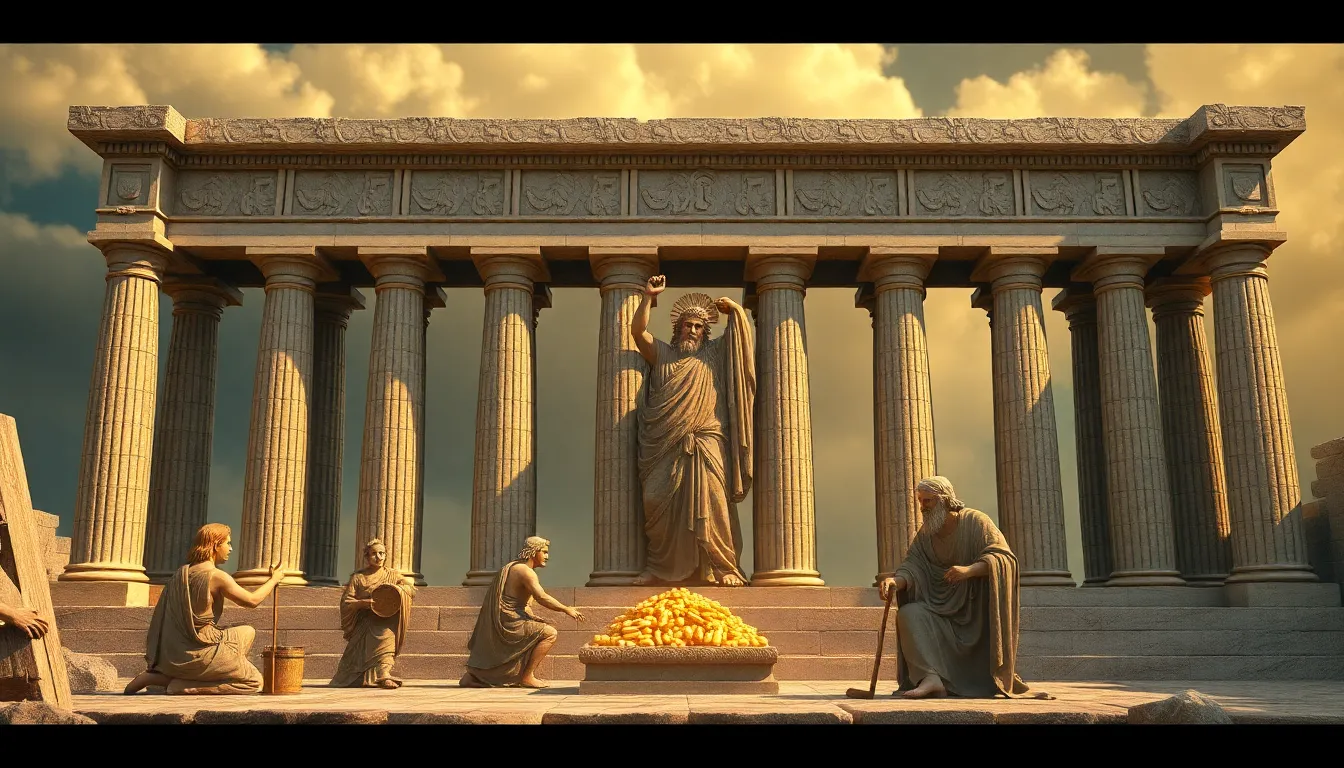
The Myths of Sacrifice: How Ancient Greeks Honored Their Gods
I. Introduction
In ancient Greek culture, sacrifice held profound significance that permeated various aspects of daily life and religious practice. Sacrificial rites were not merely acts of devotion; they were essential to maintaining the relationship between humans and the divine. Through sacrifices, the ancient Greeks sought favor from their gods, appeasing them and ensuring prosperity, health, and protection.
Despite their importance, many misconceptions surround Greek sacrificial practices. Often viewed through a modern lens that emphasizes brutality, these rituals were complex and multifaceted, reflecting deep spiritual beliefs and communal values.
II. The Historical Context of Sacrifice in Ancient Greece
A. Origins of sacrificial rituals in early Greek society
The roots of sacrificial rituals can be traced back to the earliest periods of Greek civilization. Archaeological evidence suggests that offerings to deities date back to the Minoan and Mycenaean civilizations, where altars and sacred spaces were established. These early practices laid the foundation for the elaborate sacrificial systems that would develop in later Greek society.
B. The role of sacrifice in the context of Greek mythology and religion
In ancient Greek religion, gods were believed to have direct influence over human affairs. Sacrifice was a means of communication with these deities. Myths often depicted gods as temperamental beings who required appeasement. The act of sacrifice was not only a demonstration of piety but also a necessary step to ensure divine favor and avert potential wrath.
III. Types of Sacrifices: Animals, Offerings, and Rituals
A. Different forms of sacrifices (animal, grain, libations)
Greek sacrificial practices included several forms, each with its unique significance:
- Animal Sacrifices: The most common form, where animals such as sheep, goats, and cattle were offered. These sacrifices were often grand and public, particularly during festivals.
- Grain Offerings: Symbolic offerings of grains, fruits, and other agricultural products were made to honor gods associated with fertility and harvest.
- Libations: Pouring of liquids such as wine, oil, or honey onto the ground or an altar was a common practice, often performed alongside animal sacrifices.
B. Significance of each type of sacrifice in honoring specific deities
Each type of sacrifice was tailored to the specific characteristics and requirements of the deity being honored. For example:
- Zeus: Often honored with the sacrifice of bulls, reflecting his status as the king of gods.
- Demeter: Grain offerings were made to her, symbolizing gratitude for the harvest.
- Dionysus: Libations of wine were central to rituals celebrating his influence over fertility and ecstasy.
IV. Myths and Legends Surrounding Sacrifice
A. Prominent myths involving sacrifice (e.g., Iphigenia, the Trojan War)
Many Greek myths revolve around the theme of sacrifice, often serving as moral tales reflecting human nature and divine expectations. One of the most notable stories is that of Iphigenia, daughter of Agamemnon. According to myth, Agamemnon was required to sacrifice Iphigenia to appease Artemis and secure favorable winds for his fleet heading to Troy.
The Trojan War itself can be seen as a result of sacrificial themes, where the gods played a crucial role in the fates of mortals. The sacrifices made by various characters throughout the war highlight the intertwining of divine will and human action.
B. Interpretation of these myths and their moral implications
These myths often convey complex moral lessons. The story of Iphigenia, for instance, explores the conflict between duty to family and obligation to the gods. Such narratives served to reinforce societal values regarding sacrifice, devotion, and the often precarious balance of power between humans and the divine.
V. The Role of Priests and Priestesses in Sacrificial Rites
A. Responsibilities of religious leaders in conducting sacrifices
Priests and priestesses played a vital role in Greek sacrificial practices, serving as intermediaries between the divine and the mortal realms. Their responsibilities included:
- Preparing the offerings and ensuring they met religious standards.
- Conducting rituals with precision, often invoking specific prayers or hymns.
- Interpreting omens and signs from the gods.
B. The importance of ritual purity and proper methodology
Ritual purity was paramount in sacrificial rites. Priests and priestesses underwent specific purification processes before performing sacrifices to ensure that they were worthy of approaching the gods. This included bathing, fasting, and wearing appropriate garments, emphasizing the sacredness of the act.
VI. Public vs. Private Sacrifices: Community and Individual Practices
A. Differences between communal sacrifices during festivals and private offerings
Greek sacrificial practices could be broadly categorized into public and private rituals. Public sacrifices, often held during festivals, were communal events that brought together members of the city-state to honor a god collectively. These events fostered a sense of community and shared identity.
In contrast, private sacrifices were more personal and often took place within the home. Individuals or families would make offerings to protect their households or seek assistance in personal matters.
B. The social dynamics and community bonding through shared rituals
The communal nature of public sacrifices strengthened social bonds among citizens. Festivals such as the Panathenaea in Athens or the Olympic Games included significant sacrificial rites, reinforcing civic pride and unity. These events were not only religious observances but also celebrations of culture and identity.
VII. Modern Misinterpretations of Ancient Greek Sacrifice
A. Common myths and misconceptions (e.g., bloodthirstiness, cruelty)
In contemporary discourse, ancient Greek sacrificial practices are often misinterpreted as barbaric or excessively cruel. This perspective overlooks the nuanced understanding of sacrifice within Greek culture. While sacrifices did involve the killing of animals, they were performed with specific rituals intended to honor and please the gods, not out of mere violence or bloodlust.
B. How modern perspectives often misrepresent ancient practices
Modern interpretations frequently fail to capture the religious significance and cultural context of sacrifices. Many view these rites through a lens of moral superiority, disregarding the complexity of ancient beliefs. The Greeks viewed sacrifice as a vital means of maintaining harmony between the human and divine, rather than an act of cruelty.
VIII. Conclusion
In conclusion, the sacrificial practices of ancient Greece reveal a rich tapestry of belief, community, and spirituality. While the imagery of sacrifice may evoke discomfort in modern audiences, it is essential to understand these rituals within their historical context. They reflect a society deeply engaged with the divine, striving to navigate the complexities of existence through acts of devotion.
The legacy of these practices continues to resonate today, inviting reflection on the ways in which humans seek connection with the transcendent. By encouraging a deeper understanding of ancient Greek spirituality and its rituals, we can appreciate the intricate relationship between sacrifice, community, and the divine, which has shaped human culture across the ages.