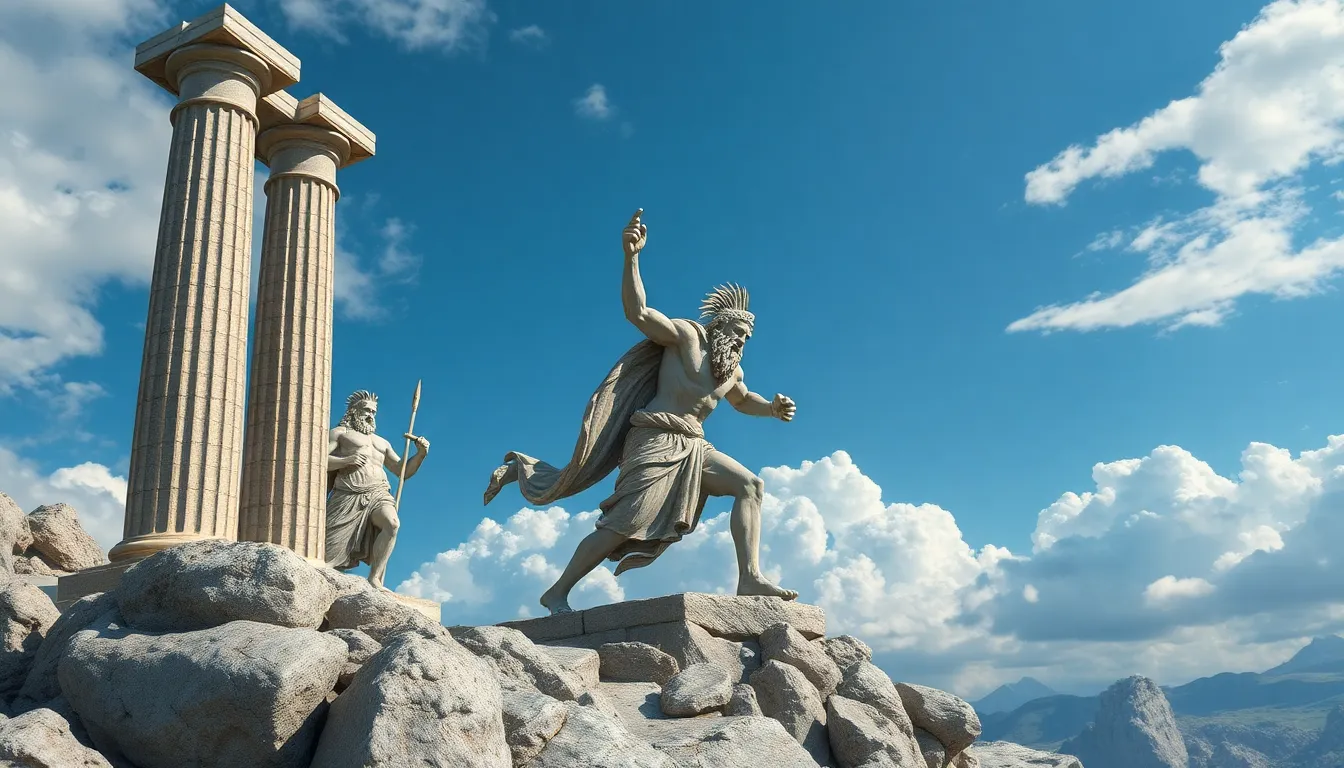
The Nature of Courage in Greek Myths: A Philosophical Inquiry
I. Introduction
Courage, in contemporary contexts, is often defined as the ability to confront fear, pain, or adversity. It is a virtue that is celebrated in various cultures and is seen as a hallmark of strong character. In the realm of Greek mythology, courage takes on multifaceted dimensions, serving not only as a trait of individual heroes but also as a pivotal theme that weaves through the narratives of gods and mortals alike.
This article aims to explore the nature of courage as depicted in Greek myths, delving into the historical context, archetypal heroes, the duality of courage, and the consequences of courageous acts. By examining these themes, we seek to uncover the philosophical inquiries surrounding courage that have persisted through the ages.
II. Historical Context of Courage in Ancient Greece
The concept of courage held immense cultural significance in ancient Greece. It was closely associated with heroism and the ideals of strength, honor, and valor. In a society that valued martial prowess and the glory of battle, courage was not merely an individual trait; it was a communal expectation.
Greek literature and mythology are replete with tales of heroes who exemplified courage, often facing insurmountable odds or formidable foes. The epic narratives, such as those found in Homeric poems, illustrate that heroism was a blend of physical bravery and moral integrity.
Philosophical schools of thought in ancient Greece, such as Stoicism and Aristotelian ethics, further contributed to the discourse on courage. Stoics viewed courage as an essential virtue that enabled individuals to endure hardship and maintain composure in the face of challenges. Aristotle, on the other hand, defined courage as the mean between recklessness and cowardice, emphasizing the importance of reason in determining courageous actions.
III. Archetypal Heroes and Their Expressions of Courage
Greek mythology is rich with archetypal heroes, each embodying unique expressions of courage. Figures such as Heracles, Theseus, and Achilles serve as prime examples of how courage manifests in various forms:
- Heracles: Known for his immense strength, Heracles undertook the Twelve Labors, demonstrating physical courage in the face of daunting monsters and challenges.
- Theseus: The hero who confronted the Minotaur in the labyrinth, Theseus exhibited moral courage by facing his fears to save others.
- Achilles: A central figure in the Trojan War, Achilles’ courage was evident in battle, yet his internal struggles reveal the complexities of heroic bravery.
The expressions of courage among these heroes can be categorized into three distinct forms:
- Physical Courage: The bravery to confront physical danger, as seen in the labors of Heracles.
- Moral Courage: The resolve to uphold one’s principles or to take a stand against wrongdoing, exemplified by Theseus.
- Intellectual Courage: The willingness to challenge societal norms or face difficult truths, often seen in the philosophical musings of characters like Odysseus.
Moreover, the impact of fate and divine intervention often complicates the expressions of courage in these myths, suggesting that while heroes may act courageously, their outcomes are sometimes dictated by forces beyond their control.
IV. The Duality of Courage: Fear and Bravery
In Greek mythology, the relationship between fear and courage is complex. Many heroes are depicted as grappling with fear, yet their ability to confront it defines their character. This duality is essential in understanding the true nature of courage.
Case studies of characters who confront fear include:
- Odysseus: Throughout his journey in “The Odyssey,” Odysseus faces numerous fears, from the wrath of Poseidon to the temptation of the Sirens. His cleverness and resilience highlight the interplay of fear and courage.
- Perseus: Tasked with slaying Medusa, Perseus embodies the courage to face the unknown, armed with divine gifts and a resolve to succeed despite the terror of his mission.
Philosophically, fear is often viewed as a necessary component of courage. The Stoics, for instance, taught that true courage involves acknowledging fear but choosing to act despite it. This perspective aligns with the experiences of many Greek heroes, who often acknowledged their fears yet chose to confront them head-on.
V. The Consequences of Courage in Greek Myths
The consequences of courageous acts in Greek mythology can be both positive and negative, reflecting the complex nature of heroism.
Positive outcomes of courage include:
- Glory: Many heroes are celebrated for their deeds, earning immortal fame and admiration.
- Honor: Acts of bravery often lead to honor and respect from peers and society.
- Legacy: The stories of courageous heroes are passed down through generations, inspiring future individuals.
However, courage can also lead to negative consequences:
- Hubris: Many heroes, in their pursuit of glory, fall into the trap of excessive pride, leading to their downfall (e.g., Achilles’ rage and subsequent fate).
- Tragedy: The tragic outcomes of courageous actions often serve as cautionary tales, highlighting the fragility of human endeavors.
- Downfall: Characters like Oedipus showcase how courage, when intertwined with fate and flaws, can lead to catastrophic results.
The moral lessons derived from these consequences emphasize the need for balance and self-awareness in the pursuit of courage.
VI. Gender Perspectives on Courage in Mythology
Gender perspectives on courage present a fascinating dimension in Greek mythology. While male heroes dominate many narratives, female figures also embody significant acts of courage.
Female figures such as:
- Atalanta: A swift huntress who defied societal norms and showcased both physical and moral courage in her quests.
- Antigone: A symbol of moral courage, Antigone defied King Creon’s edict to honor her brother with a proper burial, emphasizing the conflict between personal ethics and societal laws.
The societal implications of gendered courage are profound. Male courage often aligns with physical prowess and warfare, while female courage frequently manifests in moral decisions and defiance against patriarchal constraints. This comparative analysis reveals how courage is portrayed differently across genders in myths.
VII. Modern Interpretations of Courage Inspired by Greek Myths
The influence of Greek myths on contemporary philosophical thought remains significant. Modern interpretations of courage often draw from the complexities presented in these ancient tales.
Courage in modern literature and media reflects the lessons learned from Greek mythology:
- Characters who confront personal demons often echo the struggles of Odysseus.
- The themes of heroism and moral courage are explored in various narratives, from novels to films.
The relevance of ancient notions of courage in today’s world is evident. As society grapples with issues of justice, equality, and personal integrity, the lessons from Greek mythology continue to inspire individuals to act courageously in the face of adversity.
VIII. Conclusion
In summary, the nature of courage in Greek myths is a rich tapestry that intertwines heroism, fear, and moral integrity. The exploration of archetypal heroes, the duality of courage, and the consequences of courageous acts reveals the complexity of this virtue in ancient narratives.
The enduring legacy of Greek mythological lessons on courage encourages continued philosophical inquiry into the nature of bravery and its implications in modern life. As we reflect on these ancient tales, we are reminded of the timeless significance of courage as a fundamental aspect of the human experience.