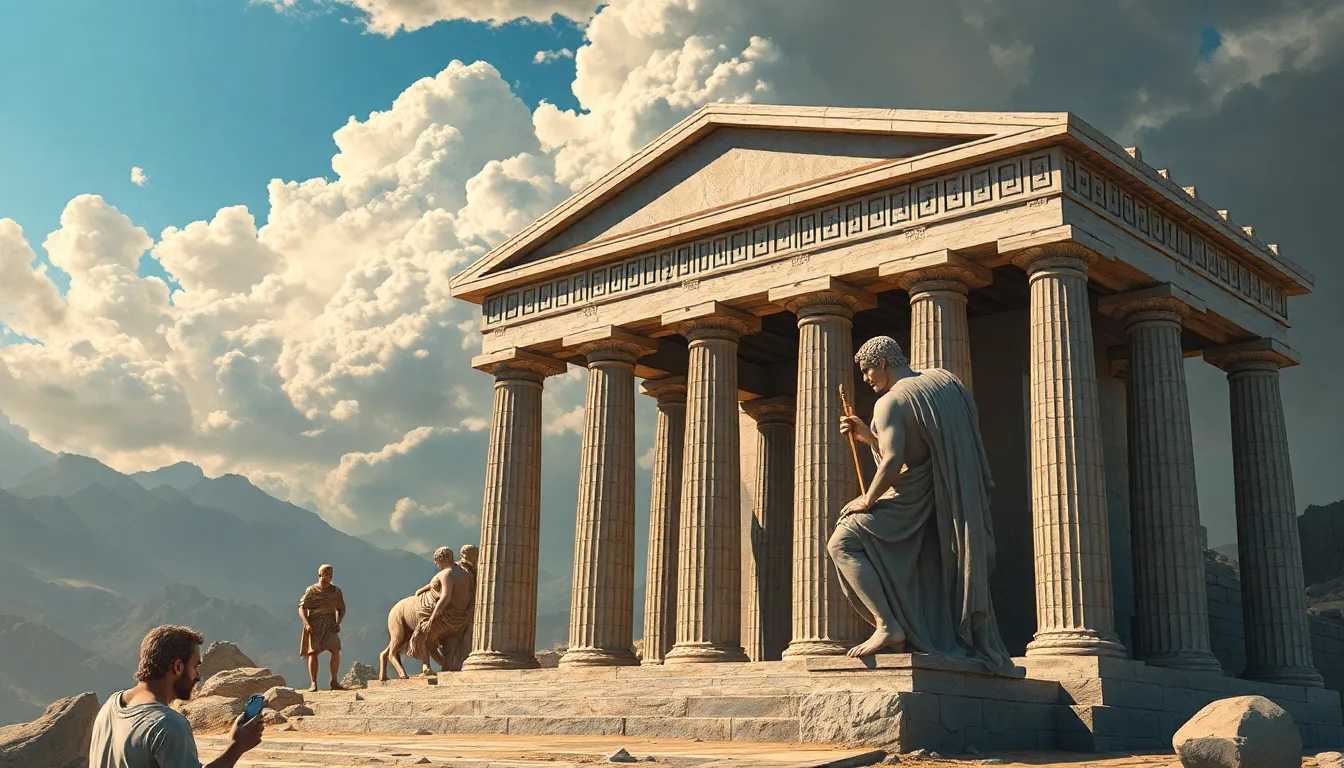
The Nature of Fate in Greek Myths: A Philosophical Perspective
I. Introduction
Fate, in the context of Greek mythology, is a powerful and often inexorable force that dictates the destinies of gods and mortals alike. It is seen as a cosmic order that governs the universe, often represented by the Moirae, or Fates, who weave the threads of life. This concept plays a crucial role in ancient Greek culture and philosophy, influencing how individuals perceived their lives, choices, and the divine. In this article, we will explore the multifaceted nature of fate in Greek mythology, examining its origins, philosophical interpretations, its representation in tragedy, and its relevance to modern thought.
II. The Concept of Fate in Greek Mythology
The origin of the idea of fate is deeply rooted in Greek mythology, primarily embodied by the Moirae, three sisters known as Clotho, Lachesis, and Atropos. Clotho spins the thread of life, Lachesis measures its length, and Atropos cuts it, signifying the inevitability of death. This representation of fate underscores its unalterable nature.
A. Origins of the Idea of Fate (Moirae)
- Clotho: The spinner of the thread of life.
- Lachesis: The measurer, who determines the length of life.
- Atropos: The unturnable, who cuts the thread, ending life.
These figures illustrate not only the inevitability of fate but also the limited agency of individuals in the face of predetermined destinies. Key myths, such as those of Oedipus and Achilles, illustrate the complex interplay between fate and human actions.
B. Key Myths Illustrating the Role of Fate
Several myths highlight the centrality of fate, including:
- The Myth of Oedipus: Prophesied to kill his father and marry his mother, Oedipus’s attempts to escape his fate ultimately lead him to fulfill it.
- The Iliad: The fates of heroes like Achilles are determined by the gods, emphasizing the tension between divine will and human action.
- Agamemnon’s Sacrifice: His fate is sealed by his decision to sacrifice his daughter, illustrating the tragic consequences of actions taken under the pressure of fate.
C. Distinction Between Fate and Free Will
While fate represents a predetermined path, free will suggests the ability to make choices. In Greek mythology, this distinction is often blurred, leading to philosophical debates about the nature of human agency. Characters may believe they are making choices, yet their fates often appear inevitable, raising questions about the extent of their freedom.
III. Philosophical Interpretations of Fate
The philosophical discourse surrounding fate in Greek thought is rich and varied, with several key figures contributing to this dialogue.
A. Fate in Pre-Socratic Philosophy
Pre-Socratic philosophers began to explore the nature of existence and causality. Figures like Heraclitus viewed fate as a fundamental principle of change and permanence, while others, like Pythagoras, considered the mathematical aspects of fate as indicative of a deeper cosmic order.
B. The Role of Fate in the Works of Plato
Plato’s dialogues often touch upon fate, particularly in relation to the Forms and the ideal realm of existence. In works such as “Timaeus,” he suggests that while the cosmos is structured by reason, individual souls may still exercise a degree of choice within the bounds of their fates.
C. Aristotle’s View on Fate and Causality
Aristotle provides a more systematic approach, linking fate with causality. He posits that while fate can determine certain outcomes, human actions and decisions can influence other aspects of life, creating a complex interplay between fate and free will.
IV. Fate vs. Free Will in Greek Tragedy
Greek tragedy brings the conflict between fate and free will to the forefront, often presenting tragic heroes caught in the web of destiny.
A. Examination of Tragic Heroes and Their Fates
Tragic heroes are often portrayed as noble figures who are ultimately doomed by fate. Their journeys highlight the struggle against an inevitable destiny.
B. The Influence of Fate on Character Decisions and Outcomes
In the context of Greek tragedy, characters often make decisions that they believe are free choices, yet their fates suggest that they were always meant to follow a certain path. This tension creates a powerful dramatic irony, as audiences are aware of the predetermined outcomes.
C. Case Studies: Oedipus Rex and Agamemnon
Two prominent examples include:
- Oedipus Rex: Oedipus’s attempt to avoid his fate ultimately leads him to fulfill the prophecy, showcasing the tragic irony of fate.
- Agamemnon: His decision to sacrifice his daughter for victory leads to his downfall, illustrating the catastrophic consequences of fateful choices.
V. Theological Perspectives on Fate
The role of the gods in determining fate adds another layer of complexity to the discussion. Greek mythology presents a pantheon of deities who influence human affairs, often blurring the lines between fate and divine intervention.
A. The Role of the Gods in Determining Fate
The gods often intervene in human lives, shaping destinies according to their whims. This raises questions about the nature of fate: is it a fixed path, or can it be altered by divine actions?
B. Fate Versus Divine Intervention: Are They Compatible?
Many myths suggest that while fate is predetermined, the gods can intervene, leading to a dynamic interplay between fate and divine will. This duality reflects the complexities of human existence and the uncertainty of life.
C. The Interplay Between Human Agency and Divine Will
Characters in Greek mythology often exhibit agency, yet their choices are influenced by divine forces, creating a dialogue between human action and fate. This interplay raises profound questions about responsibility and the nature of existence.
VI. The Modern Relevance of Greek Concepts of Fate
The themes of fate and free will in Greek mythology continue to resonate in contemporary literature, philosophy, and popular culture.
A. Fate in Contemporary Literature and Media
Modern narratives frequently explore themes of fate, often reinterpreting ancient myths to reflect current societal concerns. Works such as “The Matrix” and “Harry Potter” grapple with questions of destiny and choice.
B. Philosophical Discussions on Fate in Modern Contexts
Philosophers today continue to engage with the concept of fate, particularly in existential and postmodern frameworks. Discussions around determinism, free will, and existentialism echo the debates of ancient Greece.
C. Lessons from Greek Myths on the Nature of Destiny
Greek myths offer timeless lessons about the human condition, emphasizing the importance of understanding one’s place within the cosmos and the acceptance of fate as part of life’s journey.
VII. Critical Responses to the Idea of Fate
The notion of fate has not been without its critics, and various philosophical movements have offered alternative interpretations.
A. Existentialist Critiques of Fate
Existentialists challenge the deterministic view of fate, arguing for the primacy of individual choice and responsibility. Figures like Sartre emphasize the role of personal freedom in shaping one’s destiny.
B. Postmodern Interpretations of Fate in Greek Myths
Postmodern thought often deconstructs traditional narratives of fate, suggesting that meanings are subjective and constructed. This perspective encourages a reevaluation of how fate is understood in the context of culture and identity.
C. Alternative Views from Other Philosophical Traditions
Other philosophical traditions, such as Buddhism, offer contrasting views on fate and free will, often emphasizing the role of karma and the impermanence of existence, providing a different lens through which to examine fate.
VIII. Conclusion
In summary, the exploration of fate in Greek mythology reveals a complex interplay between destiny, free will, and divine influence. The enduring legacy of these concepts continues to shape philosophical discourse and cultural narratives today. As we reflect on the philosophical implications of fate, it becomes clear that the ancient Greeks have left us with profound insights into