The Nature of Sacrifice in Greek Myths: A Philosophical Inquiry
I. Introduction to Sacrifice in Greek Myths
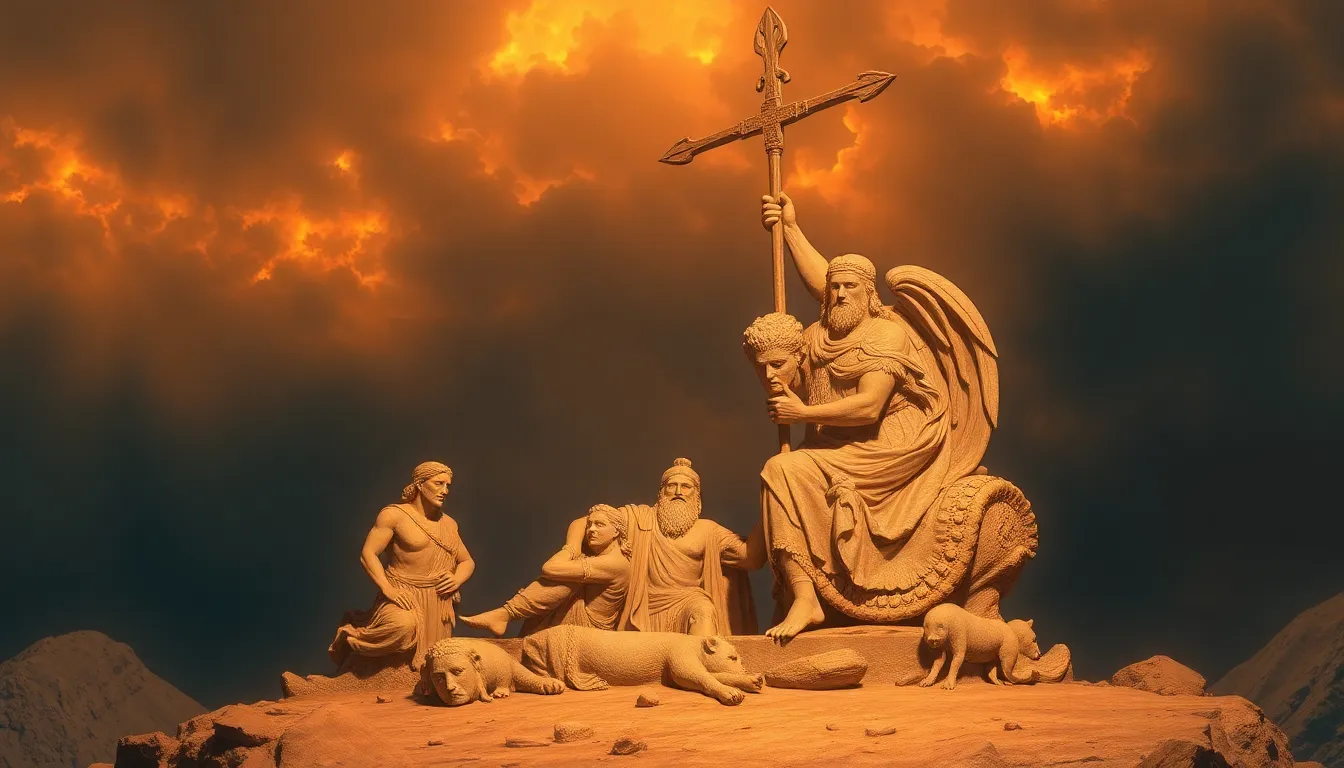
In the rich tapestry of Greek mythology, sacrifice emerges as a pivotal theme, deeply woven into the cultural and religious fabric of ancient Greece. Sacrifice, in this context, can be understood as a ritualistic offering made to the gods, intended to appease, honor, or seek favor from the divine. It embodies a range of acts, from the offering of animals to the more abstract sacrifices of human lives, emotions, and ethical dilemmas.
The importance of sacrifice in Greek culture cannot be overstated. It served not only as a means of worship but also as a way to reinforce social bonds, establish communal identity, and navigate the complexities of human existence in relation to the divine. Moreover, the act of sacrifice raises profound philosophical questions: What does it mean to give up something valuable? What are the moral implications of sacrifice? These inquiries form the backbone of our exploration into the nature of sacrifice within Greek myths.
II. The Historical Context of Sacrifice in Ancient Greece
The practice of sacrifice in ancient Greece evolved significantly over the centuries, shaped by cultural, political, and religious changes. Initially, sacrifices were likely simple acts of offering, gradually developing into elaborate rituals involving specific protocols and ceremonies.
A. Evolution of sacrificial practices in Greek society
As Greek society became more structured, so too did its sacrificial practices. Key stages in the evolution of sacrifice include:
- Pre-Classical Period: Early forms of sacrifice were often spontaneous and personal.
- Classical Period: Rituals became more formalized, with established procedures and roles for priests.
- Hellenistic Period: Sacrifice was integrated into state-sponsored ceremonies, linking religion to politics.

B. Key rituals and ceremonies involving sacrifice
Several key rituals exemplify the sacrificial practices of the Greeks:
- Animal Sacrifices: Typically involved the offering of sheep, goats, or cattle, accompanied by prayers and hymns.
- Human Sacrifices: Rare but potent in myths, reflecting extreme circumstances or divine demands.
- Public Festivals: Events like the Panathenaea featured large-scale sacrifices, reinforcing community identity.
C. The role of sacrifice in communal and individual identity
In ancient Greece, sacrifice functioned as a bridge between the individual and the community, intertwining personal faith with collective identity. Participating in sacrifices was a way for individuals to contribute to the welfare of the polis and to seek divine favor, thereby reinforcing their status within the social hierarchy.
III. Major Myths Featuring Sacrifice
Several myths vividly illustrate the theme of sacrifice, encapsulating its complexities and moral ambiguities.
A. The story of Prometheus and the gift of fire
In this myth, Prometheus defies the gods by stealing fire from Olympus and giving it to humanity. His act of rebellion is a form of sacrifice, as he endures eternal punishment for his generosity. This narrative raises questions about the nature of sacrifice: Is it noble to suffer for the sake of others, or is it an act of hubris?
B. The sacrifice of Iphigenia in “Agamemnon”
The story of Agamemnon’s sacrifice of his daughter Iphigenia is a poignant example of the tragic nature of sacrifice. Faced with the need to appease the goddess Artemis to ensure safe passage for his fleet, Agamemnon’s decision reflects the harsh realities of duty and the personal cost of leadership. This myth serves as a commentary on the conflicts between personal and communal obligations.
C. The tale of Odysseus and the sacrifices to the gods
Throughout “The Odyssey,” Odysseus makes several sacrifices to the gods, seeking their favor and guidance on his journey home. His offerings illustrate the reciprocal nature of divine-human relationships, where sacrifices are often necessary to navigate the challenges of fate and destiny.
IV. Philosophical Perspectives on Sacrifice
The act of sacrifice in Greek mythology invites various philosophical interpretations, particularly concerning existential choices and ethical dilemmas.
A. Sacrifice as a form of existential choice
From a philosophical standpoint, sacrifice can be viewed as an existential choice, where individuals confront the weight of their decisions. The characters in Greek myths often choose sacrifice as a means to assert their agency, even in the face of inevitable consequences.
B. The ethical implications of sacrifice in myth
The ethical dimensions of sacrifice raise critical questions:
- Is it justifiable to sacrifice one for the many?
- What moral responsibilities do individuals owe to their families versus their communities?
- How do personal desires conflict with societal demands?
C. The relationship between sacrifice and the concept of duty
In Greek mythology, the concept of duty often dictates the necessity of sacrifice. Characters are frequently compelled to prioritize their obligations to the gods, family, or state over personal desires, illustrating the tension between individual autonomy and collective responsibility.
V. The Dual Nature of Sacrifice: Destruction and Creation
Understanding sacrifice in Greek myths requires an exploration of its dual nature, embodying both destruction and creation.
A. Sacrifice as a means of transformation
Sacrifice often serves as a catalyst for transformation, leading to new beginnings or the birth of heroes. For example, in the myth of Demeter and Persephone, the sacrifice of Persephone to Hades results in the seasonal cycle of life and death, representing rebirth through loss.
B. The paradox of loss and gain in sacrificial acts
This paradox is evident throughout Greek mythology, where characters often gain wisdom, power, or favor at the cost of personal loss. The sacrifice of Iphigenia, while tragic, ultimately leads to the salvation of the Greek fleet, highlighting the complex interplay between sacrifice and its outcomes.
C. Case studies of myths illustrating this duality
Several myths exemplify the dual nature of sacrifice:
- Prometheus: His sacrifice of freedom for humanity’s enlightenment.
- Orpheus: Sacrificing his happiness to retrieve Eurydice from the underworld.
- Theseus: Sacrificing his safety for the sake of his people by facing the Minotaur.
VI. Sacrifice and the Divine: The Role of the Gods
The relationship between humans and gods in Greek mythology is deeply intertwined with the practice of sacrifice, reflecting expectations and consequences that shape the narratives.
A. The expectations of gods regarding human sacrifice
Gods often demanded sacrifices as a means of ensuring their favor and maintaining cosmic order. These expectations varied, with some gods requiring blood offerings, while others accepted less severe tributes, such as food or libations.
B. Interactions between mortals and deities in sacrificial contexts
Myths frequently depict interactions between mortals and deities during sacrificial rites, where mortals seek divine guidance or intervention. This dynamic underscores the belief that the gods are active participants in human affairs, responding to offerings with blessings or curses.
C. The consequences of divine favor or disfavor in myths
The outcomes of sacrifices often hinge on the approval of the gods. Favorable outcomes, such as victory in battle or bountiful harvests, are seen as rewards for proper sacrifices, while disasters or misfortunes result from neglecting divine expectations.
VII. Contemporary Interpretations of Sacrifice in Greek Myths
Modern philosophical discourse continues to engage with the concept of sacrifice, drawing parallels between ancient practices and contemporary ethical dilemmas.
A. Modern philosophical thoughts on ancient sacrifices
Contemporary philosophers often examine the implications of sacrifice in terms of morality, ethics, and social justice, interpreting ancient practices through modern lenses. This includes discussions on the morally permissible forms of sacrifice and how they relate to personal autonomy and collective good.
B. The relevance of Greek myths in contemporary discussions of sacrifice
Greek myths remain relevant in contemporary society, serving as frameworks for understanding personal and societal sacrifices. They provoke thought regarding the ethical dimensions of sacrifice in various contexts, including warfare,