The Parthenon: A Journey Through Its Most Famous Myths
I. Introduction
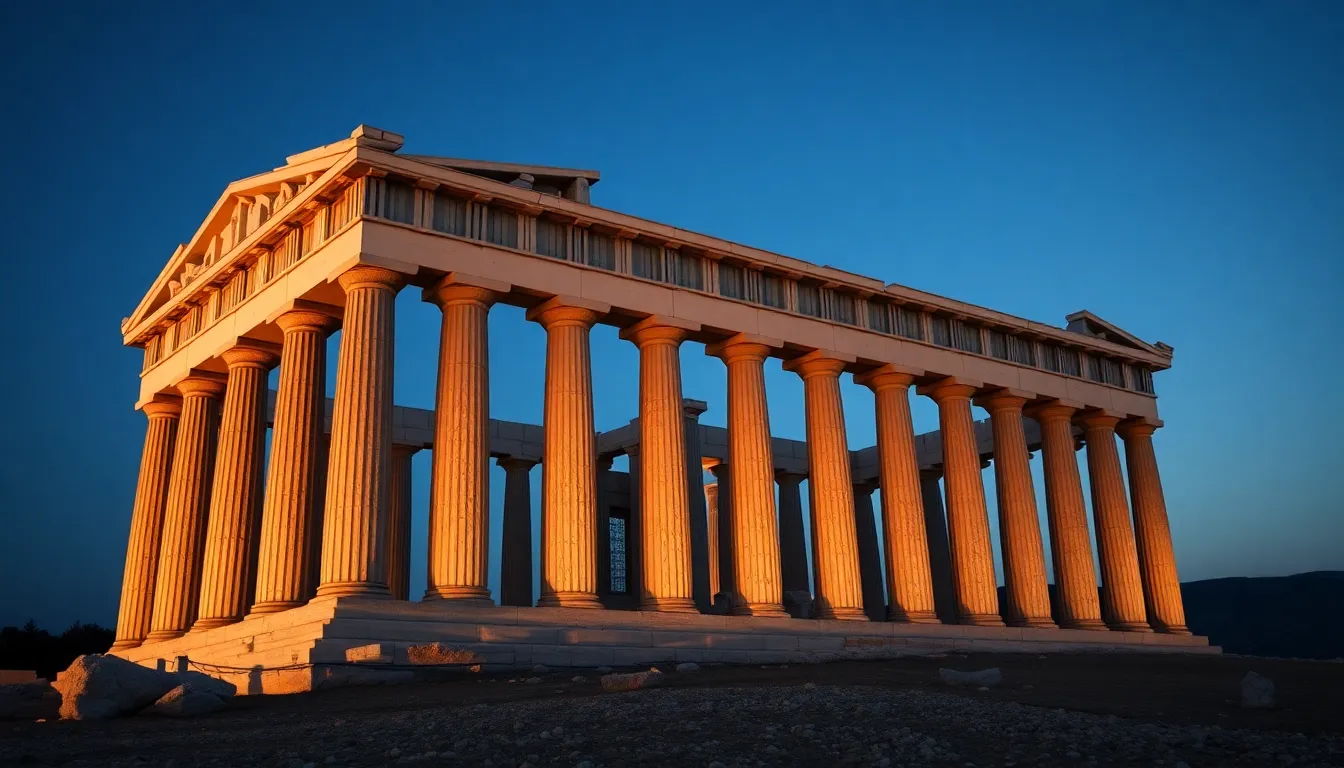
The Parthenon, an enduring symbol of ancient Greece, stands majestically on the Acropolis of Athens. This temple, dedicated to the goddess Athena, represents the pinnacle of classical architecture and reflects the cultural and political achievements of the Athenian city-state during its Golden Age. With its impressive Doric columns and intricate sculptures, the Parthenon is not merely a structure; it is a testament to the values, beliefs, and artistic prowess of ancient Greeks.
Myths play a crucial role in the legacy of the Parthenon, as they are intertwined with its history and purpose. From the origins of Athena to the contest between the gods, these stories have shaped the identity of Athens and its most iconic monument. This article aims to explore the most famous myths associated with the Parthenon, illustrating their significance and impact on the ancient world and their relevance today.
II. The Myth of Athena: The Birth of a Goddess
Athena, the goddess of wisdom, war, and crafts, holds a central place in Greek mythology. Her birth is one of the most remarkable tales, as it is said that she sprang fully grown and armored from the forehead of Zeus, the king of the gods. This unusual birth symbolizes her association with intellect and strategic warfare, distinguishing her from other deities.
Athena’s connection to the city of Athens is profound. According to legend, she became the city’s patron after winning a contest against Poseidon, the god of the sea. The Parthenon was constructed as a temple to honor her, embodying the reverence the Athenians had for the goddess who protected their city. Athena’s symbolism extends beyond the Parthenon; she represents wisdom, courage, and the ideals of democracy that flourished in ancient Athens.
III. The Contest Between Athena and Poseidon
The myth of the contest between Athena and Poseidon is pivotal in understanding the significance of the Parthenon. As the story goes, both deities sought to become the patron of the new city, which would later be known as Athens. To determine the rightful guardian, they presented gifts to the people.
- Athena’s Gift: Athena offered the olive tree, a symbol of peace and prosperity. This gift not only provided food and wood but also became a vital resource for the Athenian economy.
- Poseidon’s Gift: In contrast, Poseidon struck the ground with his trident, producing a saltwater spring. While impressive, it was deemed less useful compared to Athena’s offering.
The citizens of Athens ultimately chose Athena’s gift, leading to her being honored as the city’s protector. This decision had a direct impact on the construction of the Parthenon, as it was built to celebrate her victory and the wealth of the city she inspired.
IV. The Role of the Parthenon in Athenian Democracy
The Parthenon is not only a religious temple but also a symbol of Athenian democracy. Myths surrounding this sacred site emphasize its role as a gathering place for civic life and decision-making. The temple was a central location for various public activities, including festivals, ceremonies, and political discussions.
As democracy flourished in Athens, the Parthenon became emblematic of the ideals that underpinned this new political system:
- Equality: The Parthenon was accessible to all citizens, reflecting the democratic principle that every voice mattered.
- Participation: The temple served as a backdrop for civic engagement, with the people actively participating in shaping their governance.
- Unity: The collective worship of Athena fostered a sense of community and shared identity among Athenians.
The enduring legacy of these myths associated with the Parthenon continues to influence modern democratic ideals, underscoring the importance of civic involvement and collective responsibility.
V. The Myths of the Elgin Marbles
The Elgin Marbles, a collection of classical Greek marble sculptures that adorned the Parthenon, have a contentious history that is steeped in myth and debate. Initially removed by Lord Elgin in the early 19th century, these artifacts have sparked discussions about cultural heritage and ownership.
Myths surrounding the Elgin Marbles include:
- Ownership Claims: The British Museum asserts that Elgin legally acquired the marbles, while Greece claims they were taken unlawfully, arguing for their return based on cultural and historical grounds.
- Cultural Significance: The marbles are considered integral to the identity of the Parthenon and, by extension, to Greek heritage, raising questions about the implications of their removal.
- Restoration Myths: The ongoing restoration efforts of the Parthenon have been complicated by the absence of the Elgin Marbles, leading some to believe that their return is essential for the complete restoration of the site.
The debate surrounding the Elgin Marbles serves as a reminder of the complexities of cultural heritage and the importance of preserving historical artifacts in their original context.
VI. The Parthenon as a Symbol of Western Civilization
The Parthenon has been mythologized as a cornerstone of Western art and architecture. Its design and aesthetic principles have influenced countless structures around the world, marking it as a symbol of enduring beauty and civic pride.
The impact of the Parthenon on neoclassical architecture is evident in:
- Government Buildings: Many state capitols and national monuments, such as the United States Capitol and the British Museum, draw inspiration from the Parthenon’s design.
- Art Movements: The Renaissance and neoclassical movements revered the Parthenon, viewing it as the epitome of artistic achievement.
- Contemporary Culture: The Parthenon remains a powerful symbol in films, literature, and art, often representing ideals like democracy, beauty, and civilization.
These myths related to the Parthenon highlight its role as a universal symbol of cultural aspirations and the ideals of Western civilization.
VII. The Legacy of the Parthenon in Modern Times
The legacy of the Parthenon extends into modern times, with ongoing preservation efforts and restoration myths surrounding this iconic structure. As one of the most recognizable monuments in the world, the Parthenon has become a focal point of Greek identity and tourism.
Key aspects of the Parthenon’s modern legacy include:
- Preservation Efforts: Various restoration projects aim to stabilize and preserve the Parthenon, with some myths suggesting that its restoration is an impossible task due to the extent of damage over centuries.
- Tourism: The Parthenon attracts millions of visitors annually, contributing significantly to Greece’s economy while serving as a cultural landmark.
- Myths and Misconceptions: Popular narratives often romanticize the Parthenon, leading to misconceptions about its original purpose, architecture, and historical context.
These elements underscore the importance of the Parthenon in contemporary society, as it continues to serve as a source of pride and identity for Greeks and a symbol of cultural heritage for the world.
VIII. Conclusion
In summary, the myths explored throughout this article reveal the profound significance of the Parthenon in ancient Greece and its lasting legacy. From the birth of Athena to the contest with Poseidon, and the ongoing debate over the Elgin Marbles, these stories enrich our understanding of the Parthenon as a cultural, political, and artistic symbol.
As we reflect on these myths, it becomes clear that the Parthenon continues to inspire and influence modern ideals, reminding us of the enduring power of storytelling in shaping our understanding of history and heritage.