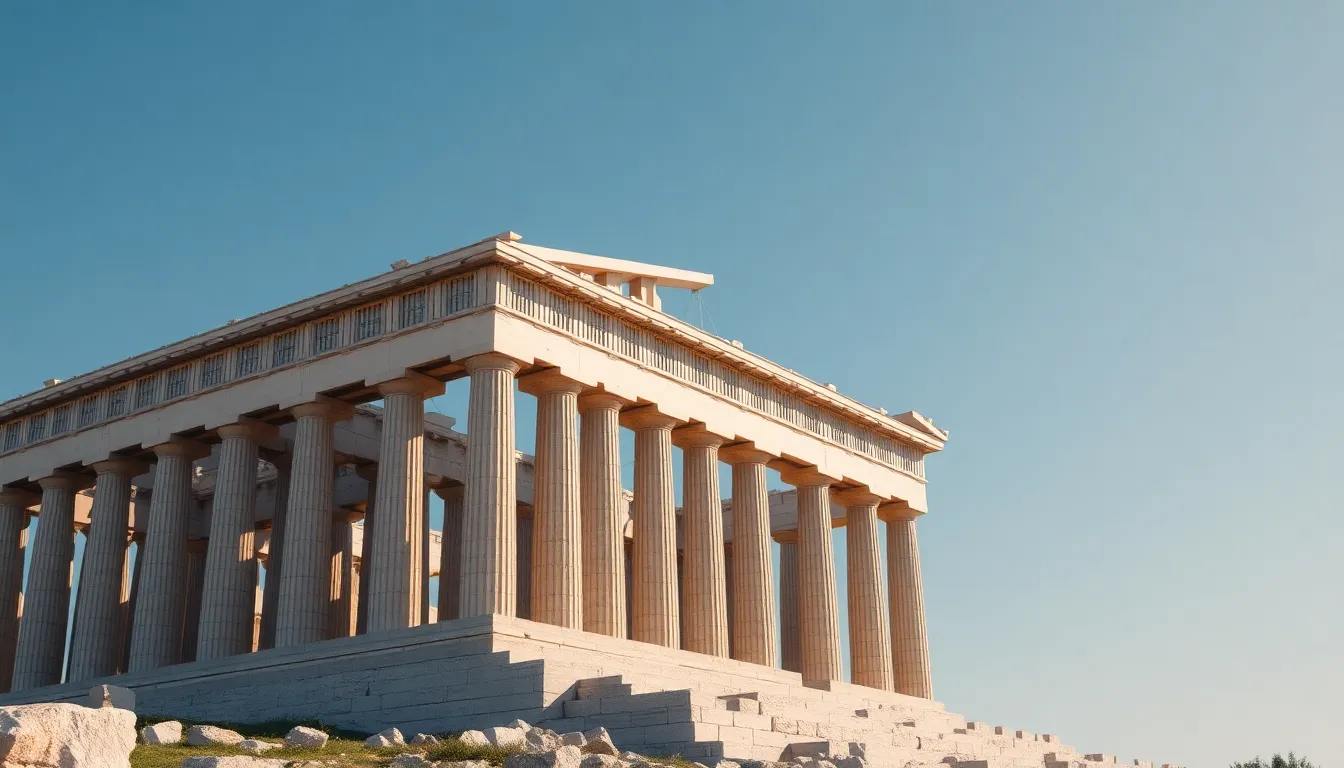
The Parthenon: Discover the Myths That Inspired Its Creation
I. Introduction
The Parthenon stands as a remarkable architectural marvel, symbolizing the glory of ancient Athens and the ingenuity of its people. Built between 447 and 432 BC, it was dedicated to Athena, the goddess of wisdom and warfare, who was also the patron of the city. The significance of mythology in Ancient Greece cannot be overstated, as it permeated every aspect of life, from politics to art, and even architecture. The Parthenon is not merely a temple; it serves as a representation of the myths that shaped Greek culture and identity.
II. Historical Context of the Parthenon
The Parthenon was constructed during a period of great prosperity and cultural advancement in Athens, known as the Golden Age. It was designed by the architects Ictinus and Callicrates under the supervision of the sculptor Phidias. The architectural features of the Parthenon include its Doric columns, intricate sculptures, and the overall symmetry that reflects the ideals of classical beauty.
During this period, Athens was at the height of its power, following its victory over the Persians. The socio-political landscape was characterized by the rise of democracy, where citizens took active roles in governance. The Parthenon served not only as a religious sanctuary but also as a symbol of Athenian democracy and pride.
Within Athenian society, the Parthenon played a central role. It housed the monumental statue of Athena Parthenos, crafted by Phidias, which stood nearly 40 feet tall and was made of ivory and gold. This temple was a focal point for religious activities and civic events, reinforcing the connection between the divine and the political.
III. Athena: The Goddess of Wisdom and War
Athena was one of the most venerated deities in Ancient Greece, embodying wisdom, courage, and strategic warfare. To the Athenians, she represented not only military success but also intellectual achievement and civic responsibility. The Parthenon was built as a tribute to her, specifically as a dedication to her virgin aspect, Athena Parthenos.
The myths surrounding Athena’s birth are rich and varied. According to legend, she sprang fully grown and armored from the forehead of Zeus, a testament to her role as a goddess of wisdom and war. This extraordinary birth emphasizes her unique position among the Olympian deities, reflecting her attributes of intelligence and strength.
- Wisdom: Athena was revered for her knowledge and strategic thinking.
- War: Unlike Ares, the god of chaotic warfare, Athena represented the discipline and strategy of war.
- Civilization: She was associated with the founding of cities and the development of arts and crafts.
IV. Mythological Influences in Parthenon Art and Architecture
The Parthenon is adorned with exquisite sculptures and friezes that depict various mythological battles, highlighting the rich tapestry of Greek mythology. These artistic elements not only showcase the skill of ancient artisans but also convey powerful stories that were central to Athenian identity.
A. Sculptures and Friezes Depicting Mythological Battles
Among the most notable artistic features are the metopes, which illustrate scenes from Greek mythology, such as the battle between the Lapiths and the Centaurs, representing the triumph of civilization over barbarism.
B. The East Pediment: The Birth of Athena
The east pediment of the Parthenon is particularly famous for its depiction of the birth of Athena, where various gods and goddesses witness her miraculous emergence. This scene captures the moment when the goddess arrives, signifying her importance to the city of Athens.
C. The West Pediment: The Contest Between Athena and Poseidon
In contrast, the west pediment portrays the contest between Athena and Poseidon for the patronage of the city. This myth not only illustrates the rivalry between the two deities but also serves as a metaphor for the values of Athens, emphasizing the importance of wisdom and strategy over brute strength.
V. The Role of Myth in Athenian Identity
Myths played a crucial role in shaping civic pride and identity in Athens. They provided a shared narrative that united citizens and reinforced their cultural values. The Parthenon, as a monumental representation of these myths, became a symbol of Athenian democracy and cultural achievement.
The stories of gods and heroes were not just tales of old; they were integral to public life, influencing festivals, rituals, and civic duties. The Panathenaea, a major religious festival in honor of Athena, featured competitions and sacrifices, further solidifying the connection between the city and its divine protector.
- Civic Pride: Myths fostered a sense of belonging and identity among Athenians.
- Democracy: The narratives celebrated the values of democracy, intelligence, and strategic success.
- Public Life: Myths were celebrated through art, theater, and festivals, becoming part of the everyday experience.
VI. The Legacy of Myths in Later Interpretations of the Parthenon
The influence of the Parthenon extends far beyond ancient Athens, impacting architectural styles throughout history. During the Renaissance and Neoclassical periods, the Parthenon inspired a revival of classical architecture, symbolizing the ideals of beauty, proportion, and harmony.
In modern times, the Parthenon has found its way into literature and popular culture, becoming a symbol of enduring beauty and cultural heritage. It has been referenced in various works, from poetry to novels, illustrating the timeless nature of its myths.
- Renaissance Influence: The Parthenon inspired architects like Andrea Palladio, who sought to emulate its grandeur.
- Modern Literature: The Parthenon is often referenced in literature as a symbol of ancient wisdom and beauty.
- Preservation Myths: Various stories have emerged surrounding the restoration and preservation of the Parthenon, reflecting its cultural significance.
VII. The Parthenon Today: Myths and Reality
Today, the Parthenon stands as a symbol of ancient Greek heritage and cultural significance. Despite its state of disrepair due to centuries of neglect and damage, it remains a focal point for tourists and scholars alike. The ongoing debate over restoration and conservation highlights the challenges of preserving such an iconic structure while respecting its historical integrity.
Tourists often carry with them perceptions shaped by myths, viewing the Parthenon not only as a historical site but as a symbol of democracy, culture, and the divine. The myths surrounding the Parthenon continue to resonate, reminding us of the profound impact of ancient stories on contemporary society.
VIII. Conclusion
In conclusion, the Parthenon is a remarkable testament to the myths and legends that have shaped Greek culture and identity. Its architectural splendor, adorned with mythological motifs, serves as a lasting tribute to Athena and the values she represents. The enduring legacy of these myths continues to influence modern perceptions of the Parthenon, highlighting the importance of understanding the stories behind architectural wonders.
As we reflect on the significance of the Parthenon, we recognize that it is more than a mere building; it is a cultural landmark that embodies the spirit of ancient Greece and the timeless stories that have shaped human civilization.