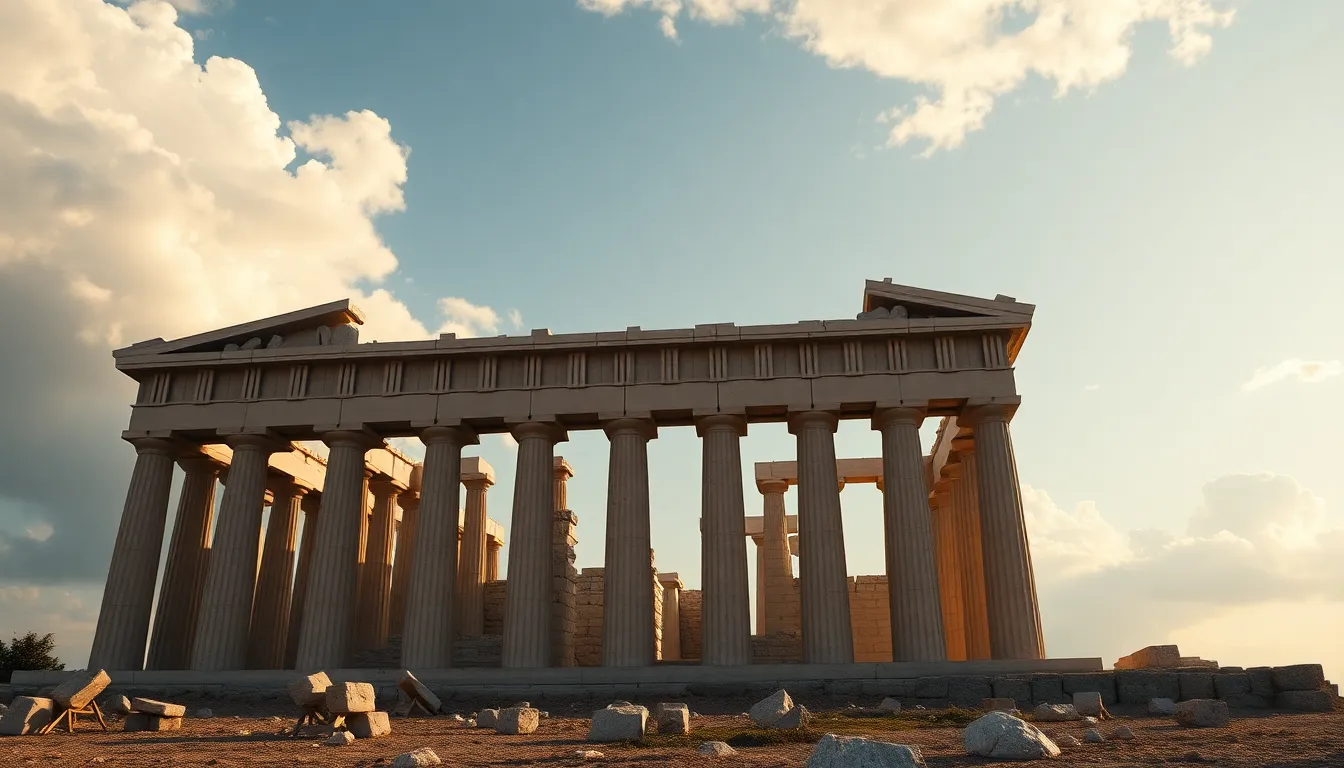
The Parthenon in Popular Culture: How It Continues to Inspire
I. Introduction
The Parthenon, an iconic symbol of ancient Greece, stands majestically on the Acropolis of Athens. Completed in 432 BC, this temple dedicated to the goddess Athena represents not only the zenith of ancient Greek architecture but also the cultural and political achievements of Athens during its Golden Age. The historical significance of the Parthenon extends far beyond its physical structure; it embodies the values and aspirations of a civilization that laid the groundwork for modern democracy, philosophy, and art.
This article aims to explore the Parthenon’s influence on modern culture, examining its role as a symbol of democracy, its architectural legacy, and its presence in various forms of media, including film, literature, and video games. By analyzing these aspects, we can appreciate how the Parthenon continues to inspire and resonate with contemporary society.
II. The Parthenon as a Symbol of Democracy and Western Civilization
A. Historical context of the Parthenon in ancient Athens
Built during a time when Athens was at the forefront of political innovation, the Parthenon serves as a physical manifestation of the democratic ideals that emerged during this period. It was commissioned by the Athenian leader Pericles as part of a larger project to beautify the city and celebrate its power and culture. The Parthenon not only housed a monumental statue of Athena Parthenos, crafted by the renowned sculptor Phidias, but also functioned as a treasury and a symbol of Athenian unity.

B. Its representation of democratic ideals in contemporary media
In contemporary media, the Parthenon is often utilized as a powerful symbol of democracy and freedom. It appears in various forms, including:
- Political campaigns and speeches that invoke its legacy to underscore the importance of democratic values.
- Documentaries and educational programs highlighting the evolution of governance and civic responsibility.
- Artworks and installations that reimagine the Parthenon to comment on contemporary political issues.
These representations reinforce the Parthenon’s status as a universal emblem of the ideals of democracy and human rights.
III. Architectural Influence in Modern Design
A. Examples of Parthenon-inspired architecture in the 19th and 20th centuries
The influence of the Parthenon extends into the realm of architecture, where its Doric columns and grand proportions have inspired numerous public buildings around the world. Notable examples include:
- The British Museum in London, which features a façade reminiscent of classical Greek temples.
- The United States Capitol Building in Washington, D.C., which incorporates elements of neoclassical design inspired by ancient Greece.
- The National Gallery of Art in Washington, D.C., showcasing a portico that echoes the Parthenon’s iconic columns.
B. The Parthenon’s influence on contemporary buildings and public spaces
Modern architecture still draws inspiration from the Parthenon, as seen in:
- Public libraries and civic centers that embody accessibility and democracy through their grand entrances and open spaces.
- Memorials and monuments that adopt classical elements to convey permanence and significance.
This architectural homage serves as a reminder of the Parthenon’s enduring legacy and its role in shaping public spaces that reflect democratic ideals.
IV. The Parthenon in Film and Television
A. Notable films and TV shows featuring the Parthenon or its imagery
The Parthenon has made its way into popular film and television, often serving as a backdrop or symbol for themes of civilization, conflict, and cultural heritage. Some notable examples include:
- 300 – A stylized retelling of the Battle of Thermopylae, featuring imagery of the Parthenon to evoke themes of heroism and sacrifice.
- The Adventures of Asterix – Animated and live-action adaptations that frequently reference the Parthenon as part of their storytelling.
- Documentaries like The Parthenon: The Last Great Temple of Ancient Greece, which delve into its history and significance.
B. Analysis of the themes associated with its representation in visual media
In film and television, the Parthenon often embodies themes such as:
- Heroism and sacrifice in the face of tyranny.
- The clash of civilizations and the endurance of culture.
- The quest for knowledge and enlightenment.
These themes resonate with audiences, reinforcing the Parthenon’s status as a symbol of enduring human values.
V. The Parthenon in Literature and Art
A. Exploration of how authors and poets reference the Parthenon
The Parthenon has inspired countless authors and poets throughout history. Writers such as Lord Byron and John Keats have alluded to its grandeur and cultural significance in their works. Byron’s poem Childe Harold’s Pilgrimage reflects on the beauty and decay of the Parthenon, highlighting its historical context and emotional resonance.
B. The Parthenon’s impact on visual artists and their interpretations
Visual artists have also drawn inspiration from the Parthenon, creating works that capture its beauty and symbolism. Artists like:
- Edwin Landseer, known for his romanticized landscapes featuring classical structures.
- Jean-Auguste-Dominique Ingres, who depicted the Parthenon in the context of neoclassical themes.
- Contemporary artists, who reinterpret the Parthenon in modern contexts to address themes of identity, culture, and heritage.
These artistic interpretations serve to keep the spirit of the Parthenon alive in the cultural consciousness.
VI. The Parthenon in Video Games and Digital Media
A. Overview of games that feature the Parthenon or its themes
In the realm of video games, the Parthenon has been featured in various titles, often serving as a setting or inspiration for gameplay. Notable examples include:
- Assassin’s Creed Odyssey – Players can explore a detailed recreation of ancient Athens, including the Parthenon, while engaging in historical narratives.
- God of War – The game incorporates elements of Greek mythology and features locations inspired by ancient Greek landmarks.
B. Discussion on the portrayal of ancient Greek culture in gaming
Video games that feature the Parthenon often explore themes such as:
- The complexities of ancient Greek mythology and its heroes.
- The philosophical questions posed by ancient thinkers.
- The interplay between history and myth, allowing players to engage with the ancient world in an interactive format.
This engagement with ancient culture through gaming helps to educate and inspire a new generation about the significance of the Parthenon and its historical context.
VII. The Parthenon as a Site of Cultural Heritage and Tourism
A. Its role in attracting global tourism and cultural exchange
The Parthenon remains one of the most visited archaeological sites in the world, attracting millions of tourists each year. Its status as a UNESCO World Heritage Site underscores its importance as a cultural landmark. Tourists flock to the Acropolis to witness its architectural beauty and historical significance, engaging in cultural exchange and learning about ancient Greek civilization.
B. The impact of tourism on preservation and representation
While tourism brings economic benefits and promotes cultural appreciation, it also poses challenges for preservation. The influx of visitors can lead to:
- Wear and tear on the structure, necessitating ongoing restoration efforts.
- Debates about the balance between accessibility and conservation.
Efforts to manage tourism sustainably are essential to ensure that the Parthenon remains a symbol of cultural heritage for future generations.
VIII. Conclusion
The Parthenon’s multifaceted influence on popular culture is undeniable. From its role as a symbol of democracy and architectural inspiration to its presence in film, literature, video games, and tourism, the Parthenon continues to resonate with contemporary society. Its enduring legacy serves as a reminder of the values and aspirations of ancient Greece, while also inspiring new interpretations and conversations about culture, identity, and heritage. As we reflect on its significance, we recognize the Parthenon not