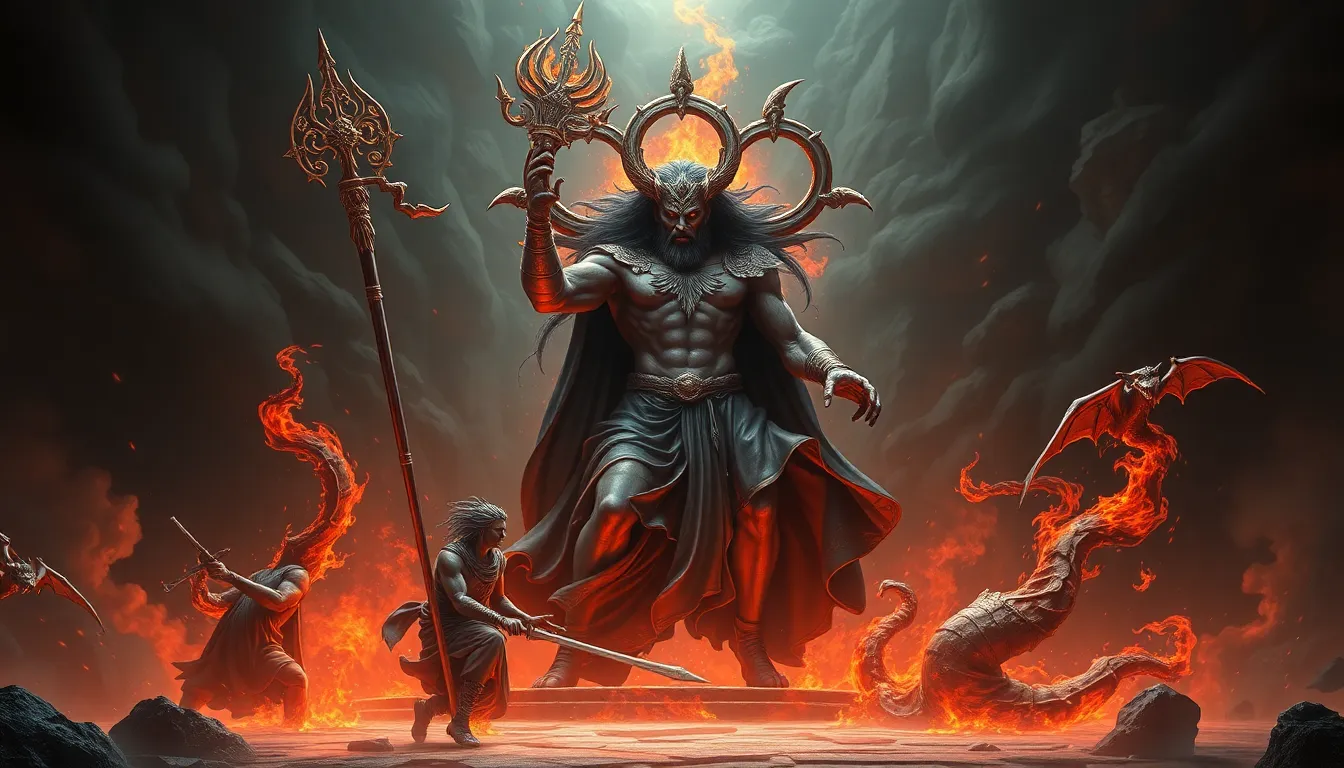
The Philosophical Dimensions of the Greek Myth of Hades
I. Introduction
In Greek mythology, Hades is often recognized as the god of the underworld, presiding over the realm of the dead. His portrayal is rich and complex, embodying both the feared aspect of death and the necessity of mortality. Hades is not merely a figure of terror; he holds significant philosophical implications that have resonated throughout history.
The significance of Hades extends beyond the mythological realm into philosophical discourse, prompting profound questions about existence, morality, and the human condition. This article aims to explore the multifaceted nature of Hades, examining his dual role as both deity and realm, the implications of death, the concept of justice, and the enduring influence of Hades in modern thought and culture.
II. The Nature of Hades: God and Realm
Hades embodies a dual role within Greek mythology: he is both the god of the underworld and the underworld itself. This duality is significant as it reflects the ancient Greeks’ understanding of death and the afterlife.
A. Dual role of Hades as both deity and underworld
As a god, Hades is often depicted as stern and unyielding, ruling over the souls of the deceased. However, the realm of Hades is also a complex and nuanced place, not merely a pit of despair, but a domain where souls are judged and assigned to various fates based on their earthly lives.

B. Symbolism of the underworld in ancient Greek thought
- The underworld represents the inevitable fate that awaits all mortals.
- It serves as a reminder of the transient nature of life and the importance of how one lives.
- The realms within Hades (Elysium, the Asphodel Meadows, and Tartarus) symbolize the varying outcomes of moral conduct.
C. Contrast between Hades and other deities in Greek mythology
Unlike the Olympian gods who often embody traits of virtue and heroism, Hades is associated with isolation and the inevitability of death. This contrast raises questions about the nature of divinity and its relationship to human existence, challenging the perception of gods as merely benevolent forces.
III. Life, Death, and the Human Condition
The myth of Hades reflects ancient Greek views on life, death, and what it means to be human. Hades is not just a god of the dead; he represents the fundamental truths of existence.
A. Hades as a reflection of ancient Greek views on life and mortality
In the Greek worldview, death is not an end but a transition. The presence of Hades signifies the continuity of existence beyond physical life, suggesting that the way one lives directly affects the afterlife.
B. Philosophical implications of death in the myth of Hades
The myth prompts philosophical inquiry into the nature of death itself. Is death to be feared, or is it a natural part of the human experience? The character of Hades encourages contemplation of mortality, urging individuals to consider their legacies and the impact of their choices.
C. The concept of the afterlife and its ethical considerations
The afterlife in Hades is a reflection of one’s moral actions. The ethical implications of this belief system encourage individuals to lead virtuous lives, knowing that their actions have lasting consequences. This raises questions about justice, morality, and the human capacity for redemption.
IV. The Concept of Justice in Hades
Justice is a prominent theme in the myth of Hades, as it is the realm where souls face judgment for their earthly deeds. Figures such as Minos and Rhadamanthus serve as judges, determining the fates of the deceased.
A. The role of judgment in the underworld (e.g., Minos, Rhadamanthus)
Minos, once a mortal king, is depicted as a just ruler who now oversees the judgment of souls. Rhadamanthus, his brother, is known for his stern fairness, ensuring that moral retribution is meted out appropriately. Their roles highlight the significance of justice in the afterlife.
B. Exploration of moral retribution versus mercy
- Hades embodies the tension between punishment and forgiveness.
- Some souls are given opportunities for redemption, while others face eternal consequences.
- This duality reflects the complexities of human morality and the possibility of change.
C. Philosophical parallels with concepts of justice in contemporary thought
The myth of Hades invites comparisons with modern philosophical discussions on justice and morality. Concepts of retribution, rehabilitation, and the nature of ethical behavior resonate with contemporary debates on justice systems and moral philosophy.
V. The Influence of Hades on Existential Thought
The myth of Hades has significantly influenced existential thought, particularly in relation to the search for meaning in the face of death.
A. Existential themes in the myth of Hades
Hades presents a stark confrontation with mortality, prompting individuals to seek meaning in their lives. This existential confrontation is a central theme in various philosophical frameworks.
B. The search for meaning in the face of death
In the shadow of Hades, individuals are compelled to reflect on their existence and the choices they make. The myth encourages a deeper understanding of life’s purpose and the significance of human agency.
C. Comparison with existential philosophers (e.g., Heidegger, Sartre)
- Heidegger’s concept of ‘Being-toward-death’ resonates with the themes of Hades.
- Sartre’s exploration of freedom and responsibility parallels the moral dimensions found in Hades.
- Both philosophers echo the idea that death imbues life with meaning and urgency.
VI. The Role of Fate and Free Will
Hades also embodies the themes of fate and free will, raising questions about the extent to which individuals control their destinies.
A. Hades as a representation of fate in Greek mythology
In Greek mythology, Hades symbolizes the inevitability of fate. The dead cannot escape their ultimate destination, highlighting the belief in a predetermined cosmic order.
B. The tension between predestination and individual agency
This tension invites philosophical inquiry into the nature of human agency. Are individuals merely puppets of fate, or do they possess the power to shape their destinies?
C. Philosophical interpretations of fate’s influence on human lives
Contemporary philosophical discussions often revolve around the interplay between fate and free will, echoing the dilemmas presented in the myth of Hades. The balance of control and inevitability remains a critical exploration in existential and moral philosophy.
VII. Hades in Modern Philosophy and Culture
The myth of Hades continues to resonate in modern philosophy and culture, influencing various disciplines.
A. Reinterpretations of Hades in contemporary philosophical debates
Modern thinkers often reinterpret Hades as a metaphor for contemporary existential crises, exploring themes of death, justice, and morality in novel contexts.
B. Influence of the Hades myth on literature, art, and popular culture
- Hades has inspired countless works of literature, from classical texts to contemporary novels.
- Artistic representations of Hades have evolved, reflecting cultural attitudes toward death and the afterlife.
- Popular culture, including films and video games, frequently references Hades, showcasing his enduring presence in the collective consciousness.
C. The enduring legacy of Hades in modern ethical discourse
The ethical considerations surrounding Hades continue to provoke discussion in moral philosophy, particularly regarding justice, redemption, and the nature of good and evil. Hades serves as a lens through which to examine contemporary moral dilemmas.
VIII. Conclusion
In summary, the myth of Hades offers rich philosophical dimensions that allow for a deeper understanding of human existence. Through his dual role as god and realm, Hades reflects ancient Greek views on life, death, and morality.
Hades serves as a potent symbol for exploring themes of justice, fate, and existential thought, bridging the ancient and modern worlds. As we continue to grapple with the questions surrounding existence and morality, the legacy of Hades remains relevant, reminding us of the enduring power of Greek mythology in shaping our understanding of life.
As we reflect on the philosophical dimensions