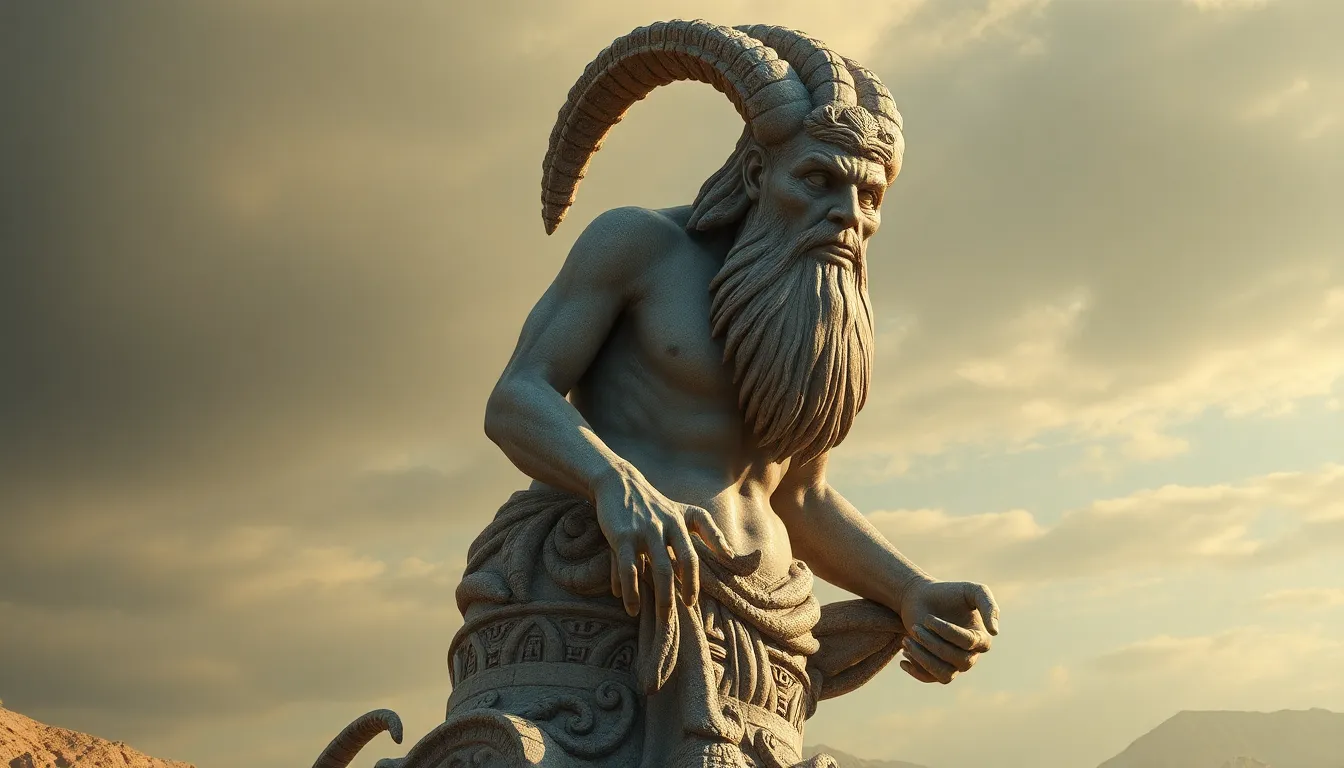
The Philosophical Implications of the Myth of the Cyclopes
I. Introduction
The Cyclopes, the one-eyed giants of Greek mythology, have captured the imagination of countless generations. These formidable creatures serve not only as intriguing figures in ancient tales but also as profound symbols that invite philosophical exploration. The myths surrounding the Cyclopes offer rich insights into themes such as isolation, power, community, and the nature of existence. This article delves into the philosophical implications of the Cyclopes myth, examining its significance in both cultural and philosophical discourse.
II. Historical Context of the Cyclopes Myth
The origins of the Cyclopes can be traced back to ancient texts, where they are depicted as formidable beings with a single eye in the center of their foreheads. The earliest references can be found in Homer’s epics, particularly in the “Odyssey,” where the Cyclops Polyphemus plays a crucial role in Odysseus’s journey home.
The evolution of the myth across different cultures reveals the adaptability of the Cyclopes as symbols. In some traditions, they are portrayed as craftsmen, while in others, they embody chaos and primal forces of nature. This duality reflects the varying perspectives of humanity’s relationship with the natural world and the unknown.
In Greek mythology, the Cyclopes are often associated with the forging of Zeus’s thunderbolts and are considered to be the children of Gaia and Uranus. Their portrayal in Homeric epics highlights their strength and lack of civilization, setting the stage for deeper philosophical inquiries into the nature of humanity and civilization itself.
III. Symbolism of the Cyclopes
The imagery of the Cyclopes extends beyond mere physical description; they serve as potent metaphors in philosophical discourse. Their single eye symbolizes perception, suggesting a limited viewpoint that can lead to ignorance or misunderstanding. This notion prompts questions about the nature of knowledge and the limitations of human perception.
Furthermore, the Cyclopes embody primal forces, representing the chaotic elements of nature that remain untamed by civilization. They stand as reminders of humanity’s struggle against the wild, unpredictable aspects of existence. Their association with nature’s chaos raises philosophical considerations about the balance between order and disorder in human life.
- The one-eyed creature as a metaphor for perception: The Cyclopes’ singular vision invites reflection on the limitations of human understanding.
- The Cyclopes as embodiments of primal forces: Their chaos represents the untamed aspects of nature that challenge human control.
- The relationship between the Cyclopes and nature’s chaos: They illustrate humanity’s ongoing struggle to impose order on the chaotic elements of existence.

IV. Themes of Isolation and Community
The Cyclopes are often depicted as solitary beings, living in isolation on remote islands. This portrayal invites a philosophical exploration of individualism versus community. While their isolation signifies a form of independence, it also highlights the potential dangers of solitude.
In contrast, human society thrives on cooperation and interconnectedness. The encounters between Odysseus and Polyphemus underscore the importance of social bonds and collaboration. Through these narratives, the myth of the Cyclopes offers lessons about the value of community and the inherent risks of isolation.
- The Cyclopes as solitary beings: Their isolation prompts reflection on the nature of individualism and its consequences.
- Contrast with human society: The Cyclopes’ lack of social structures serves as a foil to the complexity of human relationships.
- Lessons on the importance of community: The myth illustrates the necessity of cooperation in overcoming challenges.
V. The Nature of Power and Control
In exploring the Cyclopes, one cannot ignore the theme of power and control. The Cyclopes represent brute strength, often relying on their physical prowess rather than intellect. This raises philosophical questions surrounding the dynamics of power: should might always dictate right?
The encounters between Odysseus and Polyphemus also bring to light the complexities of authority and domination. Odysseus’s cunning ultimately allows him to outsmart the Cyclops, suggesting that intelligence can triumph over sheer strength. This dynamic reflects contemporary societal structures, prompting discussions about the nature of leadership and authority.
- Cyclopes as symbols of brute strength: Their power exemplifies the raw force of nature and its unpredictability.
- Philosophical debate on power dynamics: The myth invites discussions about the relationship between power and morality.
- Implications for contemporary power structures: The Cyclopes serve as a metaphor for examining authority in modern contexts.
VI. The Role of Fate and Free Will
The Cyclopes myth also delves into the philosophical discussions surrounding fate and free will. In the context of ancient Greek beliefs, destiny often plays a pivotal role in shaping the lives of characters. The Cyclopes, bound by their nature and the circumstances of their existence, illustrate the tension between predetermined fate and the exercise of free will.
Odysseus’s journey raises questions about human agency. While he encounters various challenges posed by the Cyclopes, his choices ultimately lead to his survival. This interplay between fate and free will invites reflections on the extent to which individuals can shape their destinies in the face of overwhelming circumstances.
- Cyclopes in the context of destiny: Their existence is marked by the constraints of fate.
- Exploration of free will: Odysseus’s actions demonstrate the potential for human agency.
- Philosophical reflections on human agency: The myth encourages contemplation of the balance between fate and choice.
VII. Ethical Considerations and Moral Lessons
The encounters between humans and Cyclopes are fraught with moral quandaries. The actions of Polyphemus, including his violent behavior towards Odysseus and his men, raise ethical questions about the nature of justice and retribution. The Cyclopes, while formidable, also evoke sympathy as beings shaped by their environment and instincts.
This complexity invites ethical considerations about the treatment of others, even those perceived as ‘monstrous.’ The myth serves as a reminder of the moral implications of human actions, particularly in the context of power and vulnerability.
- Moral quandaries presented by the Cyclopes’ actions: The myth challenges readers to consider the nature of right and wrong.
- Ethical implications of encounters: The interactions between humans and Cyclopes underscore the complexities of morality.
- Modern ethical discussions: The myth provides a framework for exploring contemporary moral dilemmas.
VIII. Conclusion
The myth of the Cyclopes offers a rich tapestry of philosophical implications that resonate through time. From the exploration of isolation and community to the nature of power and ethical considerations, the Cyclopes serve as compelling symbols that provoke deep thought and reflection.
As we examine the enduring relevance of the Cyclopes myth in contemporary discourse, it becomes clear that these ancient stories continue to shape our understanding of complex philosophical themes. The intersection of mythology and philosophy invites us to engage with these narratives, challenging us to reflect on our own lives and the world around us.
In conclusion, the Cyclopes are not merely figures of ancient folklore; they are profound representations of the human condition, embodying the struggles, triumphs, and ethical dilemmas that define our existence.