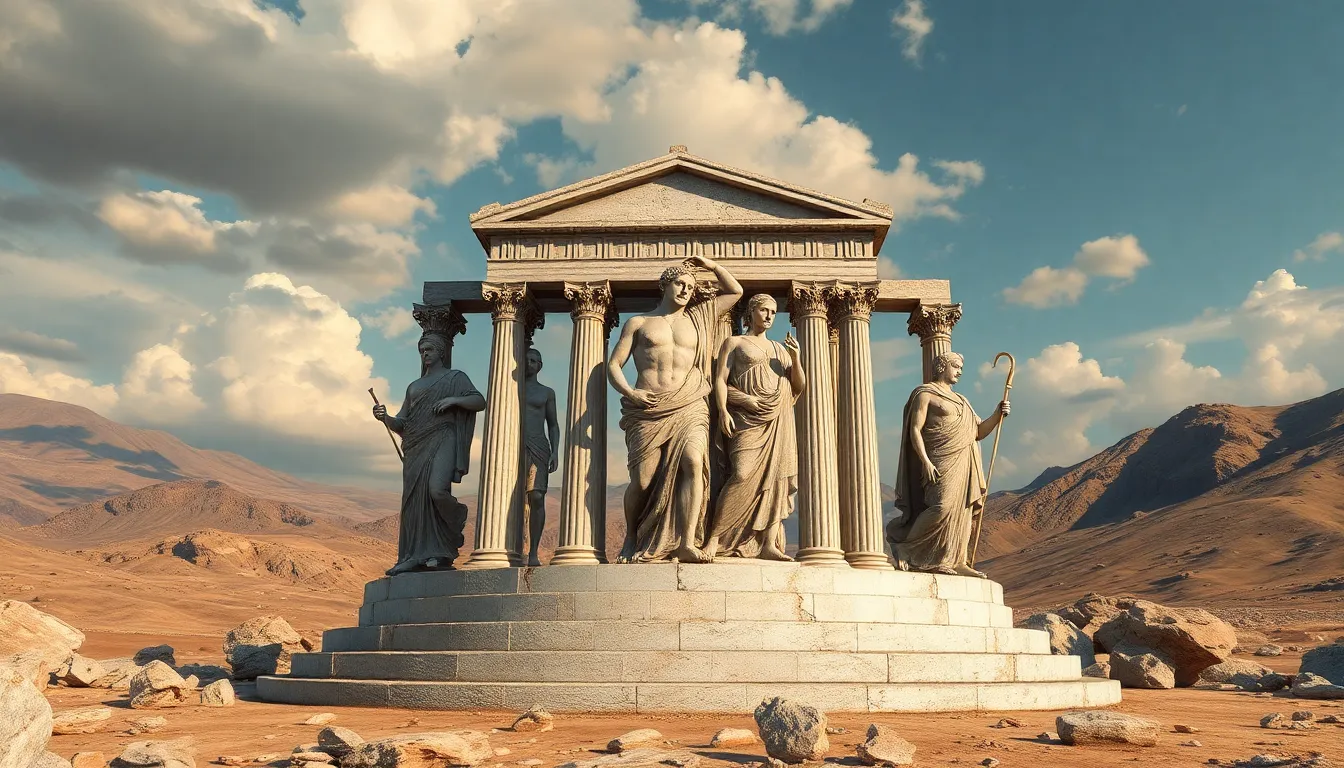
The Philosophical Implications of the Myth of the Fates
I. Introduction
The Myth of the Fates, known as the Moirai in Greek mythology, presents a rich tapestry of narratives centered around three sisters—Clotho, Lachesis, and Atropos—who personify the inescapable destiny that governs human lives. Each sister plays a crucial role: Clotho spins the thread of life, Lachesis measures it, and Atropos cuts it, signifying the inevitability of death. Their presence underscores a fundamental aspect of existence: the interplay between fate and free will.
The importance of the Fates in Greek mythology extends beyond mere storytelling; they embody the philosophical questions that continue to resonate through centuries of thought. This article aims to explore the profound philosophical implications of the Myth of the Fates, delving into themes of determinism, autonomy, moral responsibility, and existential inquiry.
II. The Nature of Fate and Free Will
A. Definition of Fate in the context of the Fates
In Greek mythology, fate is perceived as an unavoidable force that dictates the course of human lives. The Fates operate under a divine mandate, suggesting that the lives of mortals are preordained. This concept raises critical questions about the nature of existence: Are our choices genuinely ours, or are they merely illusions within a predetermined framework?
B. Historical perspectives on free will
Throughout history, philosophers have grappled with the concept of free will. Early thinkers such as Socrates and Plato debated the essence of choice and moral responsibility. In contrast, later philosophers like Aristotle acknowledged a more nuanced view, suggesting that while fate may influence life, individuals possess the capacity for rational thought and decision-making.
C. Tension between determinism and autonomy
The tension between determinism (the belief that all events are predetermined) and autonomy (the ability to make one’s own choices) creates a philosophical battleground. The Fates exemplify this dichotomy, serving as a reminder that while fate may chart a course, human agency can still influence the journey. This raises critical questions about the extent of our freedom and the implications of our choices.
III. The Role of the Fates in Human Life
A. The Fates as symbols of inevitability
The Fates symbolize the inevitability of life’s events. Their roles in spinning, measuring, and cutting the thread of life reflect a universal truth: death is an unavoidable endpoint. This symbolism invites individuals to confront their mortality and the transient nature of existence.
B. Implications for human agency
While the Fates dictate certain aspects of life, they do not entirely negate human agency. The awareness of fate can inspire individuals to live with purpose and intention, challenging them to make meaningful choices within the confines of predetermined circumstances. The balance between fate and agency becomes a foundation for understanding ethical behavior.
C. How the Fates shape ethical considerations
- Responsibility: If fate governs life, to what extent are individuals held accountable for their actions?
- Meaning: The search for meaning becomes more profound when recognizing the limitations imposed by fate.
- Community: Collective experiences of fate foster empathy and solidarity among individuals facing similar destinies.
IV. The Fates and Moral Responsibility
A. Connection between fate and moral accountability
The relationship between fate and moral accountability is a complex one. If our lives are controlled by the Fates, can we truly be held responsible for our actions? Ancient Greek tragedies often grapple with this dilemma, portraying characters who struggle against their fated outcomes yet ultimately succumb to them.
B. Case studies from literature and philosophy
Literary works such as Sophocles’ “Oedipus Rex” provide poignant illustrations of this struggle. Oedipus, despite his efforts to escape his fate, fulfills the very prophecy he seeks to avoid. This paradox raises profound questions about autonomy and culpability in the face of destiny.
C. The question of culpability in a predetermined world
The question of culpability becomes central to discussions of ethics. If individuals lack genuine freedom due to the dictates of fate, can they be truly deemed virtuous or vicious? This inquiry leads to further exploration of justice and retribution within a framework influenced by the Fates.
V. Existential Perspectives on the Fates
A. Existentialism vs. fatalism
Existentialism posits that individuals create their own meaning and essence through choices. In contrast, fatalism—the belief that all events are predetermined—suggests a more passive acceptance of life’s outcomes. The Fates challenge existential thought by embodying both the inevitability of fate and the potential for individual agency.
B. How the Fates align with or challenge existential thought
While the Fates impose limitations, they also serve as a catalyst for existential inquiry. The awareness of life’s fragility can motivate individuals to seek authenticity and make impactful choices, even in the shadow of predetermined outcomes. This duality enriches the philosophical discourse surrounding existence and meaning.
C. The search for meaning in a fate-controlled existence
The search for meaning becomes a defining aspect of the human experience, particularly when confronted with the influence of fate. Individuals may find solace in the notion that while fate provides structure, the interpretation of experiences and choices remains uniquely personal. This quest for meaning is both a challenge and an opportunity.
VI. Cultural Interpretations of the Fates
A. Variations of the Fates in different cultures
The concept of fate transcends Greek mythology, appearing in various cultural narratives. For instance, the Norns in Norse mythology serve a similar purpose, weaving the fates of gods and men. Similarly, the Hindu concept of karma reflects a belief in predetermined outcomes influenced by actions.
B. Comparative analysis with other mythologies
Comparing the Fates to figures in other mythologies reveals both similarities and differences in cultural understandings of destiny. While the Fates represent a fixed course, other traditions often incorporate the notion of change and the possibility of altering one’s fate through virtuous actions.
C. Impact of cultural interpretations on philosophical thought
Cultural interpretations of fate shape philosophical discourse across civilizations. The interplay between fate and free will informs ethical frameworks, societal norms, and individual beliefs, demonstrating the profound influence of mythology on human thought.
VII. The Fates in Modern Philosophy
A. Contemporary philosophical discourse on fate and free will
In contemporary philosophy, discussions surrounding fate and free will remain vibrant. Thinkers such as Daniel Dennett and Peter van Inwagen engage with these themes, exploring the nuances of determinism and the implications for moral responsibility. The Fates serve as a symbolic reference point in these debates, illustrating ancient concerns that persist today.
B. Influence of the Fates on modern existentialism and absurdism
The existentialist movement, particularly in the works of philosophers like Jean-Paul Sartre and Albert Camus, engages with the themes of freedom and absurdity in the face of an indifferent universe. The Fates resonate with these ideas, highlighting the struggle for meaning in a world where predetermined outcomes loom large.
C. Reflections on technology and fate in the 21st century
In the 21st century, technology introduces new dimensions to the discourse on fate. With advancements in artificial intelligence and genetic engineering, questions arise regarding the extent of control over our lives. The Fates serve as a metaphor for the ethical considerations surrounding technological determinism and the impact of human choices in an increasingly automated world.
VIII. Conclusion
The Myth of the Fates offers a profound exploration of the philosophical implications of fate and free will. Through their roles as arbiters of destiny, the Fates challenge us to consider the nature of our choices, the weight of moral responsibility, and the search for meaning in a predetermined world. As we navigate the complexities of existence, the enduring relevance of the Fates in contemporary thought serves as a reminder of the delicate balance between fate and free will. Ultimately, the interplay between these forces invites us to reflect on our agency and the narratives we weave in our lives.