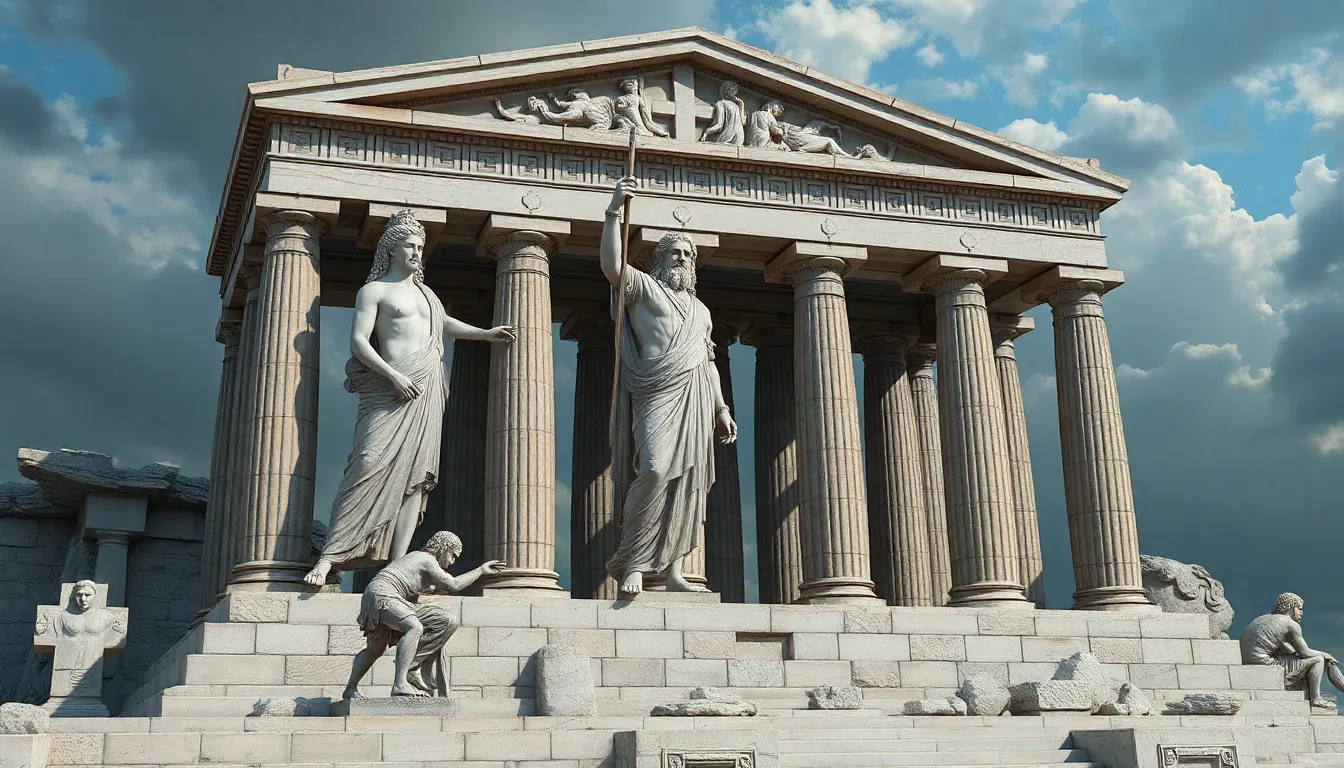
The Philosophical Inquiry into the Nature of the Gods in Greek Myths
I. Introduction
Philosophical inquiry refers to the rigorous examination of fundamental questions about existence, knowledge, values, reason, and the nature of the divine. In the context of Greek mythology, this inquiry delves into the essence and characteristics of the gods that populate the rich tapestry of ancient Greek narratives. Greek mythology, a collection of stories and traditions about gods, heroes, and the origins of the world, serves not only as a reflection of ancient beliefs but also as a profound source of philosophical exploration.
Understanding the nature of the gods in Greek mythology is vital. These deities embody various aspects of human experience and the natural world, providing insights into how the ancient Greeks perceived their universe and their place within it. The myths serve as a mirror, reflecting both the virtues and the vices of humanity, while also posing deeper questions about morality, existence, and the divine.
II. Historical Context of Greek Mythology
To appreciate the philosophical inquiries into the nature of the gods, one must first understand the historical context of Greek mythology.
A. Origins of Greek myths
Greek myths originated from oral traditions and were later transcribed, notably by poets such as Homer and Hesiod. These myths were often rooted in the natural world, using elements of nature and human experiences to create stories about the gods. The earliest myths can be traced back to the Mycenaean civilization (circa 1600–1100 BCE), and they evolved over centuries, influenced by various cultural exchanges and historical events.
B. The role of mythology in ancient Greek society
Myths played a crucial role in ancient Greek society, serving various functions:
- Religious Practices: Myths were integral to religious rituals and ceremonies, providing narratives that explained the origins and roles of the gods.
- Cultural Identity: Myths fostered a sense of shared cultural heritage among the Greek city-states.
- Moral Education: Stories about gods and heroes conveyed important moral lessons and societal values.
C. Influence of historical events on mythological narratives
Historical events, such as wars, political changes, and natural disasters, often influenced the evolution of myths. For example, the Trojan War, as depicted in Homeric epics, not only shaped Greek literature but also reflected the values and experiences of a society grappling with the consequences of conflict.
III. The Nature of the Gods: Anthropomorphism and Divine Traits
One of the most distinctive features of Greek mythology is its anthropomorphic portrayal of the gods. Unlike the abstract deities of other cultures, Greek gods exhibit human-like characteristics, emotions, and behaviors.
A. Characteristics of Greek gods
Greek gods are often characterized by their:
- Personality Flaws: Many gods possess human flaws, such as jealousy, pride, and vengeance.
- Supernatural Powers: They wield immense power, controlling various aspects of the universe, from the weather to human fate.
- Mortality: Despite their divine nature, they often engage in mortal affairs, blurring the lines between the divine and the human.
B. Anthropomorphic representations and their significance
The anthropomorphic nature of the gods serves several purposes:
- Relatability: By depicting gods as human-like, the myths allow individuals to relate to and understand the divine.
- Exploration of Human Experience: The gods’ interactions with humans reflect the complexities of human emotions and relationships.
- Philosophical Inquiry: Their flaws and complexities prompt philosophical questions about morality, justice, and the nature of existence.
C. Exploration of divine traits: omnipotence, morality, and emotion
Greek gods are often portrayed with traits such as:
- Omnipotence: Many gods possess the ability to manipulate the world around them, influencing fate and human actions.
- Morality: The gods’ behavior raises questions regarding their moral compass, often leading to debates about justice and punishment.
- Emotion: Their emotional responses often drive the narratives, displaying a spectrum from love to wrath, further complicating their divine nature.
IV. The Gods and Human Experience
The relationship between the gods and mortals is a central theme in Greek mythology, offering insights into the human condition and the nature of existence.
A. The relationship between gods and mortals
Greek myths often depict a complex dynamic between the divine and the mortal. Gods frequently intervene in human affairs, which can lead to both blessings and curses. This interaction underscores the belief in divine influence over human destiny.
B. Themes of fate, free will, and divine intervention
The interplay of fate and free will is a recurring theme in Greek mythology. The gods often represent forces beyond human control, yet individuals still navigate their paths:
- Fate: The Moirai (Fates) dictate the course of human lives, suggesting a predetermined destiny.
- Free Will: Characters like Odysseus demonstrate the exercise of free will, even in the face of divine constraints.
- Divine Intervention: Gods frequently intervene, either aiding or obstructing mortals, questioning the balance between fate and free agency.
C. Moral lessons conveyed through mythological tales
Greek myths often impart moral lessons, reflecting societal values and ethical dilemmas:
- Hubris: Many tales caution against excessive pride and arrogance, illustrating the consequences of defying the gods.
- Justice: Myths such as the story of Prometheus highlight themes of justice and retribution.
- Compassion: Stories of gods showing mercy emphasize the importance of compassion and humility.
V. Philosophical Perspectives on the Divine
Philosophers throughout history have grappled with the nature of the gods, offering diverse perspectives that contribute to our understanding of divinity.
A. Pre-Socratic views on the nature of gods
Pre-Socratic philosophers, such as Heraclitus and Anaximander, began to question traditional mythological explanations of the cosmos. They sought naturalistic explanations for the origins of the universe and the nature of existence.
B. Socratic and Platonic interpretations
Socrates challenged the anthropomorphic portrayal of gods, advocating for a more abstract understanding of the divine. Plato, in his dialogues, introduced the concept of the Forms, suggesting that the true essence of goodness and divinity is beyond the flawed representations found in myths.
C. Aristotle’s approach to divinity and the unmoved mover
Aristotle’s philosophy introduced the idea of the “unmoved mover,” a perfect and immutable entity that causes motion and change without itself being changed. This concept diverged from the anthropomorphic gods of mythology, proposing a more philosophical and abstract understanding of divinity.
VI. The Role of Myth in Philosophical Discourse
Myths are not merely stories; they serve as allegories for deeper philosophical concepts and questions.
A. Myths as allegories for philosophical concepts
Many Greek myths can be interpreted as allegories, representing complex philosophical ideas:
- The Allegory of the Cave: Plato’s allegory can be linked to myths that explore the nature of reality and perception.
- Prometheus and the Quest for Knowledge: The myth of Prometheus reflects themes of knowledge, sacrifice, and the consequences of enlightenment.
B. The impact of mythological narratives on philosophical thought
The narratives of Greek mythology have profoundly influenced philosophical thought, providing rich material for ethical discussions and metaphysical inquiries. Philosophers have drawn upon these stories to illustrate key concepts and dilemmas.