The Philosophical Significance of the Greek Myth of the Moirai
I. Introduction
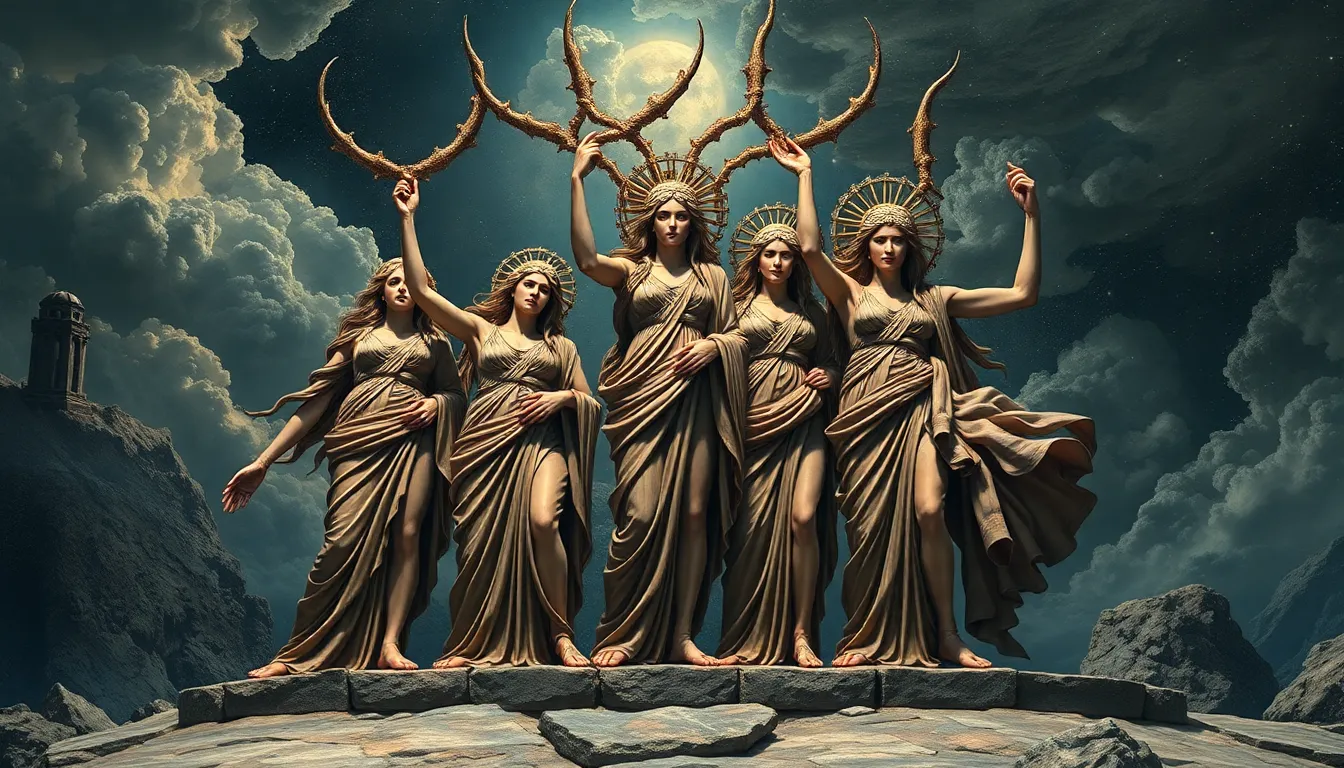
The Moirai, commonly known as the Fates, are pivotal figures in Greek mythology, representing the inescapable fate that governs all beings. They are often depicted as three sisters who weave the thread of life, determining the destiny of both mortals and gods alike. The Moirai are Clotho, who spins the thread, Lachesis, who measures it, and Atropos, who cuts it, symbolizing the beginning, middle, and end of life.
This article aims to explore the philosophical implications of the Moirai, particularly their roles in shaping human destiny, the tension between determinism and free will, and their reflections on the human condition. By examining these themes, we can gain insight into how ancient beliefs continue to influence contemporary philosophical discourse.
II. The Origin and Nature of the Moirai
A. Historical context and origins of the myth
The Moirai’s origins can be traced back to early Greek literature and oral traditions, where they were initially represented as personifications of fate. Their significance grew over time, and they became central figures in various mythological stories and epics, such as those penned by Hesiod and Homer.
B. Description of the three Fates: Clotho, Lachesis, and Atropos
- Clotho: The youngest of the three, she spins the thread of life, representing birth and the start of existence.
- Lachesis: The middle sister, she measures the length of the thread, symbolizing the duration of life and the choices made along the way.
- Atropos: The eldest, she is responsible for cutting the thread, representing death and the inevitable end of life.
C. Symbolism of their actions in the context of destiny
The actions of the Moirai symbolize the inextricable link between life and destiny. They embody the belief that while individuals may have the agency to make choices, the ultimate outcome is predetermined. This duality invites deep philosophical inquiry into the nature of existence and the human experience.
III. Determinism vs. Free Will
A. The role of the Moirai in discussions of fate and free will
The Moirai serve as a focal point in the ancient and modern dialogue surrounding determinism and free will. Their omnipresence in the lives of mortals raises questions about the extent to which individuals can influence their destinies versus being subject to a predetermined fate.
B. Philosophical interpretations of determinism in relation to human agency
Various philosophical traditions have grappled with determinism. Some argue that the Moirai’s control over fate negates individual agency, while others suggest that free will exists within the constraints of destiny. This tension is reflected in the myriad interpretations of human experience.
C. Case studies of characters in mythology who confront their fate
- Oedipus: His tragic story illustrates the futility of escaping fate, as he unwittingly fulfills the prophecy of killing his father and marrying his mother.
- Achilles: In the “Iliad,” Achilles grapples with his fate, choosing glory over a long life, thus highlighting the complexities of choice within predetermined paths.
- Heracles: Despite facing numerous challenges set by the Moirai, he ultimately forges his own path through courage and strength, demonstrating the interplay between fate and heroism.
IV. The Moirai and the Concept of Time
A. How the Moirai represent past, present, and future
The Moirai symbolize the continuum of time: Clotho represents the past, Lachesis the present, and Atropos the future. This triadic representation provides a framework for understanding how human actions are situated within a larger temporal context.
B. Philosophical implications of time and its linearity
The linear perspective of time, as represented by the Moirai, raises questions about the nature of existence and the human experience. Are our lives a mere series of events predetermined by fate, or do we possess the capacity to alter the course of our destiny through our choices?
C. Connections to modern philosophical theories of time
Modern philosophical theories, such as presentism and eternalism, echo the Moirai’s representation of time. Presentism asserts that only the present is real, while eternalism posits that all points in time are equally real. These theories invite deeper reflection on how we perceive our lives within the framework of fate.
V. Ethics and Morality in the Context of Fate
A. The moral responsibility of individuals when faced with predetermined paths
The Moirai’s influence on fate brings forth critical ethical questions regarding moral responsibility. If destiny is predetermined, can individuals be held accountable for their actions? This paradox challenges conventional notions of morality and justice.
B. Case examples from mythological narratives that highlight ethical dilemmas
- Agamemnon: His decision to sacrifice his daughter Iphigenia, driven by the Moirai’s prophecies, raises questions about the morality of choices made under duress.
- Prometheus: His act of defiance against Zeus in giving fire to humanity highlights the tension between fate, free will, and ethical considerations.
- Penelope: In “The Odyssey,” her loyalty and cunning in navigating her fate demonstrate the moral dimensions of choice in the face of overwhelming odds.
C. The influence of the Moirai on ancient and contemporary ethical thought
Throughout history, the Moirai have influenced ethical thought, prompting discussions about justice, responsibility, and the consequences of choice. Their legacy extends into contemporary philosophy, where debates continue regarding the nature of moral agency in a seemingly predetermined universe.
VI. Existential Reflections and Human Condition
A. The existential significance of accepting one’s fate
Acceptance of fate, as represented by the Moirai, carries profound existential implications. Recognizing the limits of control can lead to a deeper understanding of one’s place in the universe and the acceptance of life’s inherent uncertainties.
B. Philosophical perspectives on suffering and the inevitability of death
The Moirai’s role in determining the lifespan of individuals invites reflections on suffering and mortality. Philosophers such as Heidegger and Camus have explored these themes, suggesting that confronting the inevitability of death can lead to authentic existence.
C. The Moirai as a metaphor for the human search for meaning
In many ways, the Moirai symbolize humanity’s quest for meaning amidst chaos and uncertainty. Their actions serve as a reminder that while life is fraught with challenges, the search for purpose is an intrinsic part of the human experience.
VII. Comparative Analysis with Other Cultural Interpretations of Fate
A. Similarities and differences with concepts of fate in other cultures (e.g., Norse Norns, Hindu Karma)
Across various cultures, concepts of fate share both similarities and differences. The Norse Norns also represent the threads of fate, while Hindu philosophy emphasizes karma as a guiding principle of destiny. These comparisons highlight the universal themes that transcend cultural boundaries.
B. The universal themes of fate, free will, and morality across mythologies
Despite differing narratives, the themes of fate, free will, and morality resonate across mythologies. Whether through the Moirai, Norns, or other cultural symbols, the struggle between destiny and agency remains a central human concern.
C. Insights gained from cross-cultural comparisons
Examining fate across cultures enriches our understanding of human nature and the philosophical questions surrounding existence. These insights reveal commonalities in human thought while also appreciating the unique perspectives that each culture offers.
VIII. Conclusion
A. Recap of the philosophical significance of the Moirai
The Moirai encapsulate profound philosophical questions regarding fate, free will, morality, and the human condition. Their narrative invites us to reflect on our lives and the choices we make within the constraints of destiny.
B. The enduring legacy of the Moirai in contemporary philosophical discourse
The Moirai’s influence persists in modern philosophical discussions, reminding us of the complexities of existence and the interplay of destiny and agency. As we navigate our own lives, their stories continue to resonate, offering wisdom and insight.</