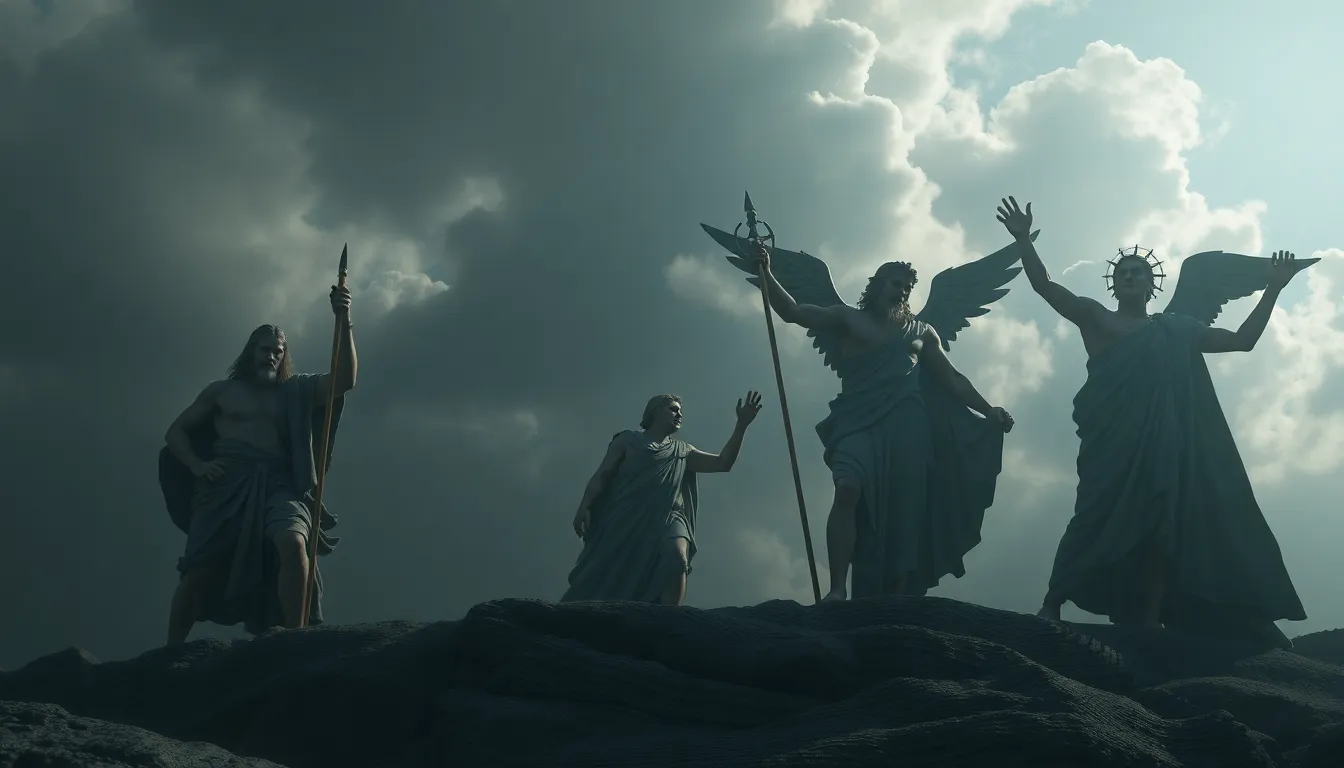
The Price of Defiance: Legendary Figures and Their Divine Punishments
I. Introduction
Throughout mythology and history, the theme of defiance resonates as a powerful narrative, illustrating humanity’s struggle against divine and societal constraints. Defiance often emerges from the desire to challenge the status quo, leading to significant consequences for those who dare to defy. The notion of divine punishment serves as a fundamental concept in many mythologies, emphasizing that rebellion against the gods or cosmic order invites severe repercussions. This article explores various legendary figures who exemplify this theme, shedding light on their stories and the lessons they impart.
II. The Concept of Defiance in Mythology
Defiance can be understood as the act of boldly resisting authority or opposing an established order. In mythology, this defiance often takes shape in the form of characters who challenge gods, fate, or societal norms. The cultural significance of defiance varies across different mythologies, reflecting the values and beliefs of the societies that created these tales.
- Greek Mythology: Defiance is often portrayed as hubris, leading to tragic consequences.
- Norse Mythology: Characters like Loki embody chaos and rebellion against cosmic order.
- Egyptian Mythology: Stories of Osiris and Set explore themes of betrayal and defiance against divine authority.
The role of gods and divine beings is crucial in enforcing cosmic order. They serve as guardians of balance, punishing those who overstep their bounds. This dynamic creates a rich tapestry of narratives that explore the consequences of defiance.
III. Prometheus: The Titan Who Gave Fire to Humanity
Prometheus, a Titan from Greek mythology, is renowned for his act of defiance against Zeus, the king of the gods. In a bold move to aid humanity, Prometheus stole fire from Mount Olympus and bestowed it upon mortals, an act that symbolized enlightenment and progress.
Zeus, enraged by this transgression, imposed a severe punishment on Prometheus. He was bound to a rock where an eagle would daily feast on his liver, which would regenerate each night, subjecting him to eternal torment. This punishment exemplifies the harsh consequences of defying divine authority.
Prometheus’s legacy endures in literature and modern culture, representing the spirit of rebellion and the quest for knowledge. He has become a symbol of the struggle against oppression, often invoked in discussions about the moral implications of scientific advancement and the limits of human ambition.

IV. Icarus: The Perils of Hubris
The story of Icarus is a poignant tale of ambition and the dangers of hubris. Icarus, the son of Daedalus, escaped imprisonment by flying with wings made of feathers and wax. Ignoring his father’s warnings not to fly too close to the sun, Icarus soared higher, eventually causing the wax to melt.
As he plummeted into the sea, Icarus’s fall serves as a cautionary tale about the consequences of overreaching and ignoring established boundaries. This narrative underscores the importance of humility and the dangers associated with excessive ambition. In contemporary contexts, Icarus’s story resonates with individuals who pursue lofty goals without regard for the risks involved, highlighting the fine line between aspiration and recklessness.
V. Loki: The Trickster God’s Rebellion
Loki, a central figure in Norse mythology, embodies the archetype of the trickster. His character is marked by cunning, mischief, and a propensity for defiance against the gods. Loki’s actions often disrupt the order of the cosmos, leading to both chaos and resolution.
The nature of divine punishment in Norse mythology is complex, as Loki ultimately faces severe consequences for his rebellious actions. After orchestrating the death of the beloved god Baldr, Loki is captured and punished by the gods, bound to a rock with a serpent dripping venom onto him. This punishment reflects the belief that chaos must be contained to maintain cosmic balance.
Loki’s story raises significant themes regarding the duality of chaos and order, exploring the necessity of defiance in the grand scheme of existence. His character invites reflection on the role of disruption in fostering growth and change, challenging us to consider the implications of rebellion within our lives.
VI. Cassandra: The Burden of Truth
Cassandra, a figure from Greek mythology, is renowned for her prophetic gifts. Gifted with the ability to see the future, she was ultimately cursed by Apollo to never be believed. This tragic irony highlights the complexities of truth and defiance.
Cassandra’s curse serves as a profound example of divine punishment, illustrating how her defiance—whether intentional or not—against the gods led to her isolation and suffering. Despite her accurate predictions, including the fall of Troy, her words fell on deaf ears, emphasizing the painful consequences of being unable to communicate truth effectively.
The implications of Cassandra’s story resonate in contemporary discussions surrounding truth, belief, and authority. It raises questions about the nature of knowledge and the struggles faced by those who challenge prevailing narratives, echoing the ongoing conflicts between truth and perception in modern society.
VII. Modern Parallels: Defiance and Consequences Today
The theme of defiance and its consequences is not confined to ancient mythology; it persists in contemporary society. Historical figures such as Martin Luther King Jr., Nelson Mandela, and Rosa Parks exemplify the spirit of defiance against oppressive systems, often facing severe repercussions for their actions.
- Martin Luther King Jr.: His defiance against racial injustice led to imprisonment and ultimately assassination.
- Nelson Mandela: His fight against apartheid resulted in years of imprisonment, yet he emerged as a symbol of resilience and change.
- Rosa Parks: Her act of defiance by refusing to give up her seat sparked the Civil Rights Movement, leading to both acclaim and backlash.
In modern contexts, individuals who challenge authority or societal norms often face backlash, reflecting the enduring relevance of divine punishment. This ongoing struggle highlights the complexities of defiance, where the pursuit of justice and truth can lead to both progress and personal cost.
VIII. Conclusion
In exploring the stories of Prometheus, Icarus, Loki, and Cassandra, we uncover key themes surrounding defiance and its consequences. These legendary figures illustrate the moral lessons inherent in their tales, reminding us of the potential costs of rebellion against divine or societal order.
The enduring power of these stories lies in their ability to illuminate the complexities of human nature, inspiring reflection on our actions and their repercussions. As we navigate our own lives, the lessons of defiance and punishment remind us to consider the balance between ambition and humility, truth and belief, chaos and order.