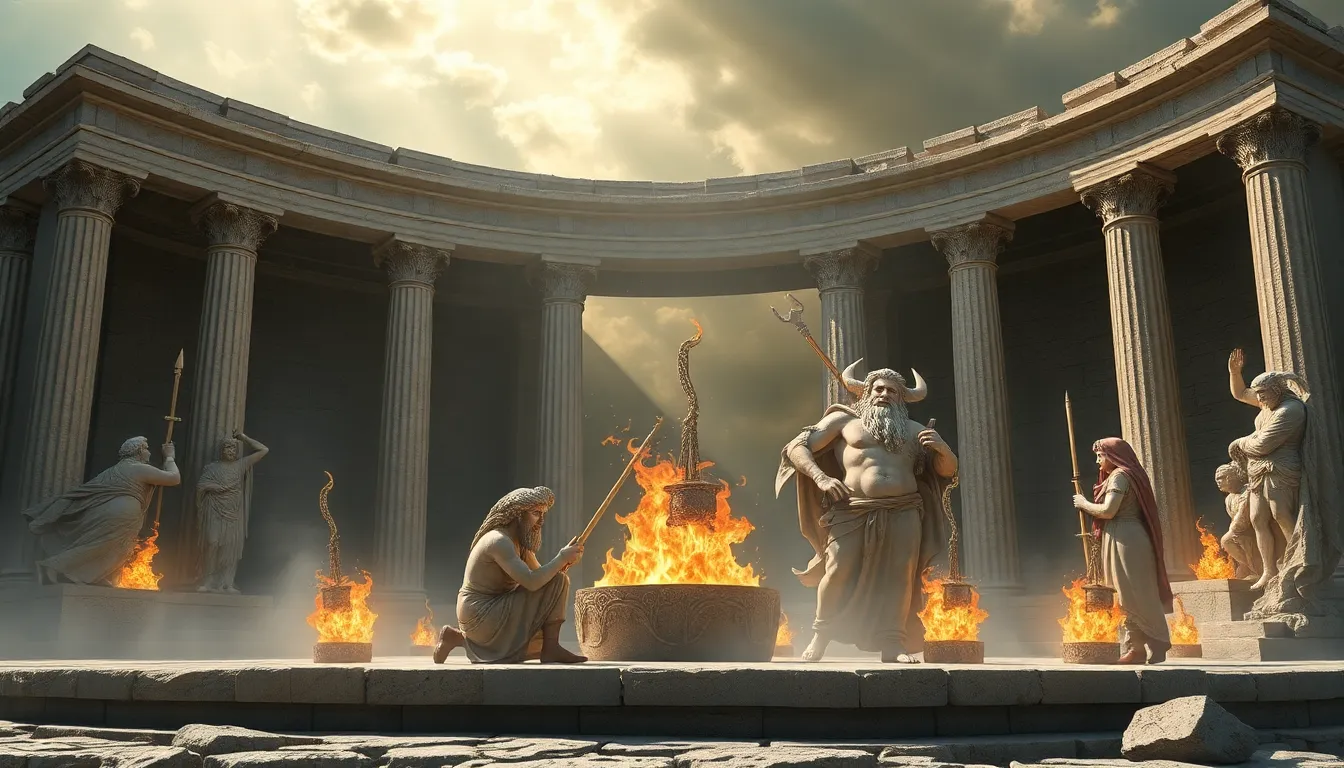
The Price of Immortality: Sacrifices in the Myths of Greek Gods
I. Introduction
Greek mythology, a rich tapestry of gods, goddesses, heroes, and monsters, has captivated human imagination for centuries. These ancient stories served not only as entertainment but also as vehicles for conveying moral lessons, cultural values, and explanations for the natural world. Among the central themes in Greek mythology is the concept of immortality, a state that separates gods from mortals and imbues divine beings with significant power yet often at a great personal cost.
This article explores the sacrifices made by the Greek gods in their pursuit of immortality. By examining these sacrifices, we uncover deeper truths about power, vulnerability, and the human condition, revealing that the quest for eternal life is fraught with challenges and sacrifices that echo through the ages.
II. The Nature of Immortality in Greek Mythology
Immortality in Greek mythology is defined as the ability to live forever, free from the constraints of death that afflict mortals. The gods of Olympus are often depicted as ageless and eternal, their existence characterized by an unwavering power that allows them to manipulate the world around them.
A. Definition and characteristics of immortality in Greek myths
- Immortality is a divine attribute, largely exclusive to gods and certain mythological figures.
- Immortal beings possess extraordinary powers, including regeneration, invulnerability, and the ability to influence fate.
- Despite their power, immortality does not equate to happiness, as many gods experience profound isolation or suffering.
B. Contrast between gods and mortals
The stark contrast between gods and mortals highlights the allure and burden of eternal life. Mortals live finite lives, often facing mortality with a sense of urgency that shapes their actions and relationships. In contrast, the gods, while endowed with immortality, often grapple with the consequences of their eternal existence, which can lead to feelings of ennui and detachment.
C. The allure and burden of eternal life
While immortality is often seen as a blessing, it also comes with significant burdens. The gods may witness the endless cycle of human suffering and joy, yet remain unable to fully engage with it. This duality forms a critical aspect of their stories, emphasizing that eternal life can be as much a curse as it is a gift.
III. Sacrifices Made by the Gods
The divine hierarchy in Greek mythology often dictates the nature and extent of sacrifices made by the gods. These sacrifices can take many forms, including relinquishing power, enduring suffering, or even accepting punishment for their actions.
A. The divine hierarchy and its implications
The gods operate within a complex hierarchy, with Zeus at the apex, followed by other Olympians, Titans, and lesser deities. This hierarchy shapes their interactions and the sacrifices they are willing to make for their own immortality or the well-being of others.
B. Examples of sacrifices made by major gods
- Prometheus: In defiance of Zeus, Prometheus stole fire from the gods to give to humanity. As punishment, he was bound to a rock where an eagle would eat his liver daily, only for it to regenerate each night, a cycle of perpetual suffering.
- Hades: As the ruler of the Underworld, Hades sacrificed his freedom and connection to the living world. His role as the god of the dead isolates him from the other gods, highlighting the loneliness that comes with his immortality.
C. The impact of these sacrifices on their relationships with mortals
The sacrifices made by the gods often influence their relationships with mortals. For instance, Prometheus’ gift of fire not only brought civilization to humanity but also created a rift between him and Zeus. This dynamic illustrates how the gods’ sacrifices can lead to both benevolence and conflict with human beings.
IV. The Cost of Immortality: Personal Loss and Suffering
Many gods in Greek mythology face profound personal losses as part of their immortal existence, leading to themes of loneliness and separation that resonate throughout their narratives.
A. The stories of gods who faced personal sacrifices
- Demeter and Persephone: Demeter’s grief over the abduction of her daughter Persephone by Hades led to seasonal changes on Earth. Her sorrow illustrates the emotional toll that such eternal bonds can exact, as she sacrifices her joy for the sake of her daughter’s safety.
- Apollo and Daphne: Apollo’s unrequited love for the nymph Daphne ultimately leads to her transformation into a laurel tree, symbolizing the pain of love that cannot be fulfilled, a sacrifice of connection for both.
B. Themes of loneliness and separation
Loneliness often accompanies immortality in Greek myths. The gods, despite their powers, experience isolation, as their divine nature sets them apart from mortals. This separation creates a longing for connection that is rarely fulfilled, reflecting the inherent sadness of eternal life.
C. The emotional toll of eternal life on divine beings
As these stories unfold, the emotional toll of immortality becomes evident. The gods are often depicted as struggling with their feelings, navigating the complexities of love, loss, and betrayal while trying to maintain their divine status.
V. Mortality as a Counterpoint to Immortality
Mortal heroes in Greek myths provide a stark contrast to the immortal gods, highlighting the transient nature of human life and the sacrifices that come with mortality.
A. The role of mortal heroes in Greek myths
- Achilles: Known for his prowess in battle, Achilles’ story is defined by his choice between a long life of obscurity or a short, glorious life. His ultimate fate serves as a poignant reminder of the value of mortality.
- Hercules: Hercules’ legendary labors reflect the struggles of mortals against impossible odds, emphasizing that true heroism often lies in accepting one’s limitations.
B. The contrast between mortal sacrifices and divine immortality
Mortal heroes often make profound sacrifices for the greater good, sometimes facing death for their values. This mortal experience contrasts sharply with the gods, who, despite their power, often act out of selfishness or hubris, leading to conflicts with humanity.
C. Lessons learned from mortality in relation to the desire for eternal life
The stories of mortal heroes often convey lessons about the importance of embracing life’s fleeting moments. Their sacrifices illuminate the idea that mortality, while limited, can be rich with meaning and purpose—something that is sometimes lost on the immortal gods.
VI. The Symbolism of Sacrifice in Greek Myths
Sacrifice serves as a powerful motif in Greek mythology, reflecting cultural values and beliefs about life, death, and the quest for balance.
A. The significance of sacrifice as a motif
Throughout Greek myths, sacrifice often symbolizes the tension between personal desires and the needs of the greater community. The gods frequently sacrifice their own comfort for the sake of humanity, illustrating a complex relationship between power and responsibility.
B. How sacrifices reflect cultural values and beliefs about life and death
These stories reveal the ancient Greeks’ understanding of life and death, highlighting the belief that sacrifice is necessary for growth and renewal. The cyclical nature of life, death, and rebirth is epitomized in myths involving agricultural deities like Demeter.
C. The role of sacrifice in achieving greater good or balance
Ultimately, sacrifices made by the gods and heroes serve to restore balance in the world. Whether through acts of kindness or tragic decisions, these sacrifices underscore the interconnectedness of life and the importance of making choices for the greater good.
VII. Contemporary Reflections on Immortality and Sacrifice
The themes of immortality and sacrifice in Greek mythology resonate in modern discussions about life, ethics, and the human experience.
A. Relevance of Greek myths in modern discussions about immortality
In an age where advancements in science and technology offer tantalizing glimpses of potential immortality, Greek myths serve as cautionary tales. They remind us that the pursuit of eternal life can lead to unforeseen consequences and ethical dilemmas.
B. Parallels between ancient myths and contemporary quests for eternal life
Modern society’s fascination with youth,